Quick Facts
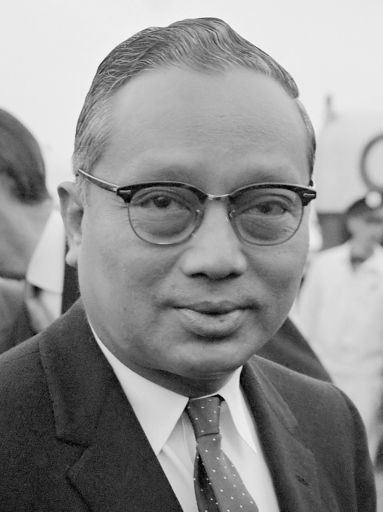
Soft-spoken Burmese diplomat who steered the United Nations through Cold War crises with moral clarity and patient negotiation.
Conversation Starters
Life Journey
Born in Pantanaw, Irrawaddy Delta, under British colonial rule in Burma. He grew up in a devout Buddhist environment where education and public service were prized amid nationalist ferment.
After completing his studies, he began a career in education, teaching and working in school administration. The experience grounded his belief that literacy, civics, and social welfare were inseparable from national progress.
He became associated with Burmese nationalist leaders and writers, including U Nu, who later became prime minister. Their shared interest in social reform and self-rule shaped Thant’s later preference for consensus politics.
During World War II, Burma was transformed by Japanese occupation and intense political realignment. Thant remained focused on education and administration, gaining first-hand experience of how war devastates institutions and civilians.
After Burma’s independence in 1948, he joined the government’s information and administrative work as the country struggled with insurgencies and nation-building. His close professional relationship with Prime Minister U Nu deepened during this period.
He took senior roles in national communications, helping shape public information policy in a young state. The post required careful messaging during internal conflicts and helped refine his disciplined, measured public voice.
He was appointed Burma’s ambassador to the United Nations, entering global diplomacy at the height of the Cold War. In New York he built credibility as a nonaligned representative, respected for restraint and careful listening.
After Secretary-General Dag Hammarskjold died in a plane crash near Ndola, the Security Council turned to Thant as a compromise candidate. His appointment reflected trust in his neutrality and administrative steadiness during crisis.
He was formally appointed Secretary-General, inheriting conflicts in Congo, Berlin, and Southeast Asia. Thant emphasized preventive diplomacy and strengthened the UN’s role as a forum where rivals could step back from escalation.
During the Cuban Missile Crisis, he urged John F. Kennedy and Nikita Khrushchev to accept a temporary standstill to avoid nuclear war. His quiet messages and public appeals helped create space for negotiated de-escalation.
He supported decolonization debates as newly independent states joined the UN in large numbers. Thant also pushed development and education as security issues, broadening the organization’s agenda beyond military conflict.
He repeatedly urged negotiations and restraint as U.S. involvement in Vietnam intensified. Although his mediation efforts were often blocked by distrust among Washington, Hanoi, and other capitals, he persisted in advocating talks.
Following the Six-Day War, he faced fierce criticism over the UN’s limited ability to prevent conflict and the withdrawal of peacekeeping forces from Sinai. Thant worked to sustain humanitarian relief and keep channels open for diplomacy.
As the Nuclear Non-Proliferation Treaty took shape, he supported international efforts to limit the spread of nuclear weapons. He framed arms control as a moral imperative, urging major powers to accept verifiable restraints.
By the early 1970s, his leadership style—quiet, principled, and pragmatic—earned broad respect among many member states. Though not a Nobel laureate, he was widely discussed for peace honors amid persistent global tensions.
He encouraged international cooperation on environmental risks culminating in the 1972 Stockholm Conference on the Human Environment. The initiative helped seed modern global environmental governance and new UN institutional priorities.
He left office after a decade marked by superpower rivalry, decolonization, and expanding UN programs. Thant departed with a reputation for integrity and personal austerity, despite frequent political attacks from powerful states.
He died in New York City, prompting international tributes from diplomats and leaders who valued his steadiness in crisis. His death highlighted the personal costs of global public service carried far from his Burmese home.
When his body was returned to Burma, mass public mourning turned into confrontation with the military government of Ne Win. Students seized the coffin and held a protest funeral, revealing the depth of national divisions.