Chumi
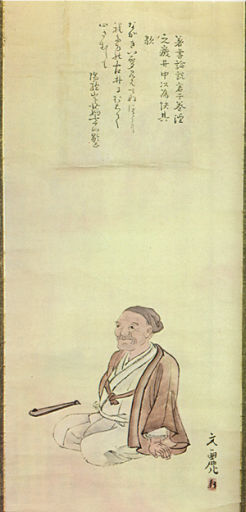
Ueda Akinari

Ueda Akinari

Writer

Start Chat

AI Personality

Quick Facts

Ugetsu Monogatari (Tales of Moonlight and Rain)
Harusame Monogatari (Tales of Spring Rain)
Kokugaku-leaning philological scholarship

Life Journey

1734Born in Osaka during the Tokugawa peace

Born in Osaka, a commercial and publishing hub of Tokugawa Japan where merchant culture supported vibrant popular literature. The city’s theaters, bookshops, and learned salons later shaped his taste for both classical and vernacular styles.

1737Survived smallpox and lasting physical hardship

As a young child he suffered a severe bout of smallpox, a common Edo-period killer that left him physically scarred and frequently ill. The experience is often linked to his lifelong seriousness and fascination with suffering, fate, and moral consequence.

1740Adopted into the Ueda merchant household

He was adopted by a Ueda family connected to Osaka’s merchant world, gaining economic stability and access to books and education. The tension between commerce and scholarship became a recurring theme in his self-image as an independent intellectual.

1752Entered Osaka’s circles of letters and book culture

In late adolescence he immersed himself in Osaka’s publishing networks and literary gatherings where haikai, fiction, and classical commentary overlapped. Exposure to popular gesaku humor and learned kanbun study gave him a wide stylistic range.

1756Began composing early fiction and satire

He started writing in forms influenced by contemporary popular literature, testing comic and moralistic modes aimed at an urban readership. These experiments trained him to handle voice, irony, and narrative framing that later anchored his supernatural tales.

1761Struggled with business responsibilities and literary ambitions

Running or assisting with merchant affairs pulled him toward practical obligations even as he pursued scholarship and writing. The push-and-pull between profit and learning sharpened his skepticism toward social pretension and moral compromise in city life.

1768Turned decisively toward study of classical texts and language

He deepened his engagement with Japanese classics and philology, studying diction and textual variants with a rigor associated with kokugaku-minded scholarship. This attention to linguistic nuance later gave his prose an archaic sheen and historical authority.

1771Major disruption during the Great Fire of Meiwa in Osaka

The Great Fire of Meiwa devastated Osaka, destroying neighborhoods and destabilizing many merchant households. The catastrophe reinforced his sense of impermanence and the fragility of worldly success, themes that echo through his moralized storytelling.

1773Studied medicine and began practicing as a physician

He trained in medicine and worked as a physician, a pragmatic path for an educated man outside official patronage. Clinical encounters with illness and death provided concrete detail for his later narratives, where bodily reality grounds supernatural events.

1776Relocated to Kyoto’s scholarly and artistic environment

He moved to Kyoto, the old imperial capital, where antiquarian study, poetry, and painting were cultivated alongside temple and court traditions. Kyoto’s classical aura and networks of learned friends helped him refine his voice as a scholar-writer.

1776Published Ugetsu Monogatari (Tales of Moonlight and Rain)

He released Ugetsu Monogatari, a collection that reworked Chinese and Japanese sources into elegant Edo prose filled with ghosts, desire, and karmic consequence. The book’s learned allusions and moral tension made it a landmark of Japanese supernatural fiction.

1778Expanded reputation among Kyoto literati and readers

Following Ugetsu’s success he became better known in Kyoto’s circles of poets, scholars, and book people who valued classical competence. His independence from samurai officialdom allowed him to critique vanity and hypocrisy with unusually sharp humor.

1783Engaged in debates on kokugaku, texts, and authority

He participated in the era’s contentious arguments over how to read ancient Japanese writings, questioning easy claims to purity or orthodoxy. His critical temperament pushed him to treat philology as an ethical discipline, not merely antiquarian taste.

1788Lived through the Great Tenmei Fire in Kyoto

The Great Tenmei Fire burned large parts of Kyoto, disrupting livelihoods, temples, and cultural institutions in the city. The disaster intensified his awareness of historical rupture and human vulnerability, reinforcing the elegiac tone in later writings.

1790Composed and revised Harusame Monogatari (Tales of Spring Rain)

He worked on Harusame Monogatari, stories more openly reflective and morally probing than his earlier collection, often mixing historical settings with uncanny turns. Circulating in manuscript before later publication, it shows his mature, austere craftsmanship.

1795Focused on scholarship, commentary, and selective medical practice

In later life he devoted increasing energy to research, annotation, and careful reading while continuing practical work when necessary. This period consolidated his identity as a rigorous independent scholar, suspicious of fashion yet devoted to textual precision.

1802Maintained influence through disciples, manuscripts, and salons

Even without official patronage he remained a reference point for students and friends who valued his sharp judgments and deep learning. His works circulated among readers who prized classical resonance, ensuring continued impact beyond immediate print fame.

1809Died in Kyoto, leaving a canon of eerie classicism

He died in Kyoto after decades balancing medicine, scholarship, and fiction across the late Edo literary world. His blend of philological rigor and haunting narrative artistry helped define Japanese ghost literature for later writers and critics.

Chat