Quick Facts
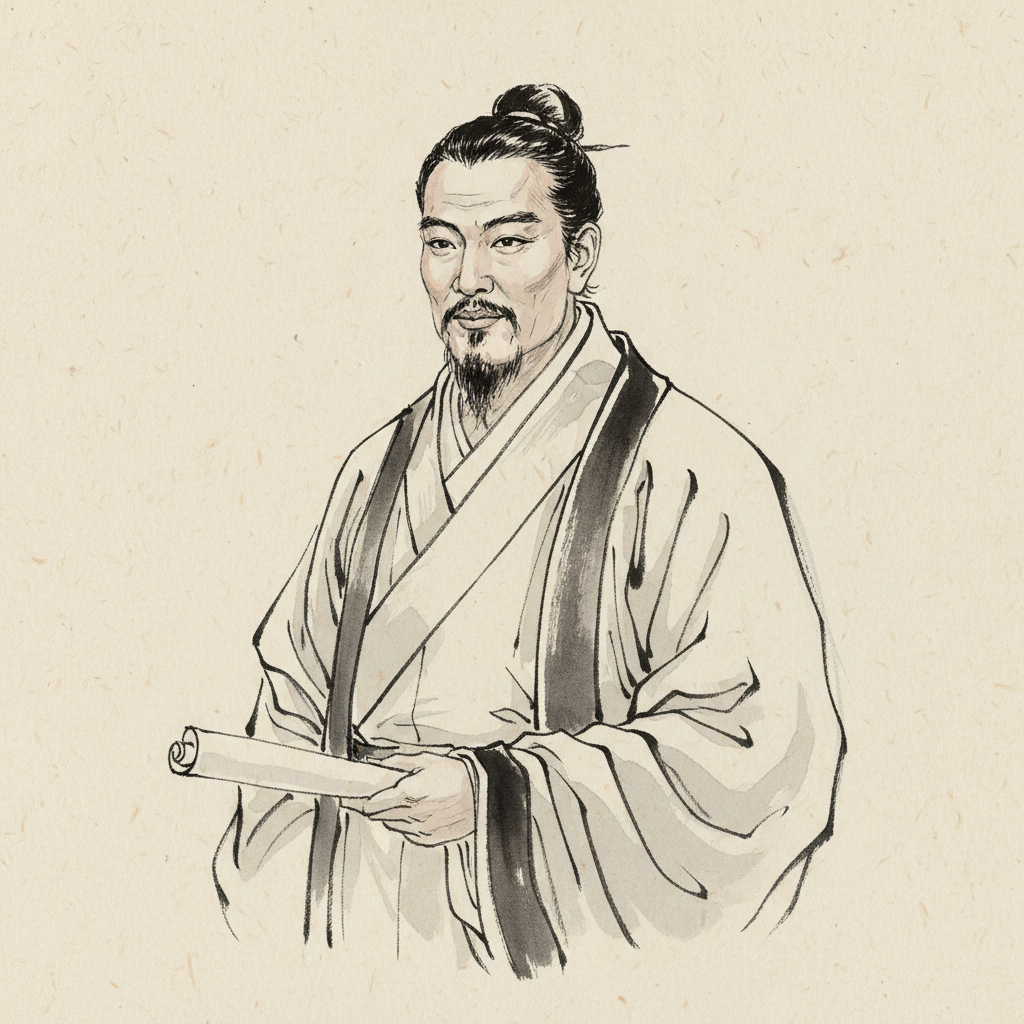
Ming-era novelist whose witty satire and mythic imagination shaped the beloved epic Journey to the West.
Conversation Starters
Life Journey
Wu Cheng'en was born in Huai'an, a canal city in Jiangsu linked to commerce and official travel. Growing up amid storytellers and literati, he absorbed both classical learning and lively local folklore that later fed his fiction.
As a child, he studied the Four Books and Five Classics in local academies, preparing for the civil service examinations. The discipline of essay-writing and moral rhetoric later became material for his sharp, comic critique of officials.
In his youth he collected ghost stories, religious legends, and marketplace jokes circulating along the Grand Canal. Ming drama and storytelling traditions helped him develop brisk dialogue, episodic plotting, and memorable comic set pieces.
Wu pursued the examination path prized by Ming society, likely sitting county and provincial levels over many years. The grind of essays, patronage, and disappointment sharpened his skepticism toward status and bureaucratic pretense.
His literary talent brought him attention among local scholars who exchanged poems and commentaries in salons and temples. He blended classical diction with vivid vernacular humor, a style that later distinguished his narrative voice.
Travel and correspondence connected him to officials and writers moving between Beijing, Nanjing, and Jiangnan. These networks exposed him to court news, administrative corruption, and regional religious practice, enriching his social observation.
He read popular scriptures, miracle tales, and temple legends circulating in Ming print culture. The interplay of immortals, bodhisattvas, and demons offered him a flexible mythic language for satire and moral testing in fiction.
Despite ability, he struggled to secure stable rank, a common fate for exam candidates without powerful patrons. This personal history informed his sympathetic portrayal of flawed travelers and his scathing caricatures of petty authority.
With official prospects uncertain, he invested greater energy in compiling and shaping narrative material. He drew on the monk Xuanzang’s Tang pilgrimage traditions and centuries of folk retellings, preparing ground for an epic novel.
He organized scattered legends into a coherent pilgrimage framework, pairing spiritual discipline with slapstick adventure. Sun Wukong’s rebellion, punishment, and redemption became a vehicle to explore power, faith, and human weakness.
Wu is traditionally linked to service connected with a Ming prince, handling low-level clerical duties rather than high policy. Exposure to courtly ritual and paperwork supplied concrete details that sharpened his depictions of heavenly bureaucracy.
Disillusioned with routine administration and limited prospects, he returned to a more private scholarly existence. The retreat allowed him to polish language, refine satire, and expand the novel’s dense web of gods, monsters, and officials.
He balanced Buddhist themes of compassion and karma with Daoist cosmology and popular temple practice. By placing pilgrims under constant trials, he created a moral laboratory where comedy and spiritual aspiration test each other.
Draft chapters likely moved through hand-copied networks before any commercial printing, inviting praise and revision. Such circulation was common in late Ming literary culture, where salons and patrons shaped what eventually reached presses.
By late life he is traditionally credited with completing the hundred-chapter structure known today. The finished work fused high myth with street humor, turning the pilgrimage into a panoramic satire of Ming society and the self.
Wu Cheng'en died in his hometown, and much of his renown grew after his death as the novel spread in print. Later readers celebrated his inventive imagination and biting wit, elevating Journey to the West into a Chinese classic.