Datos rápidos
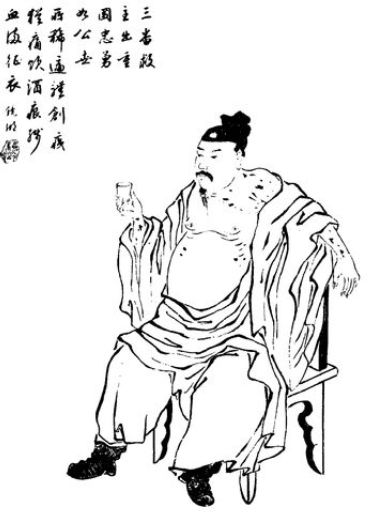
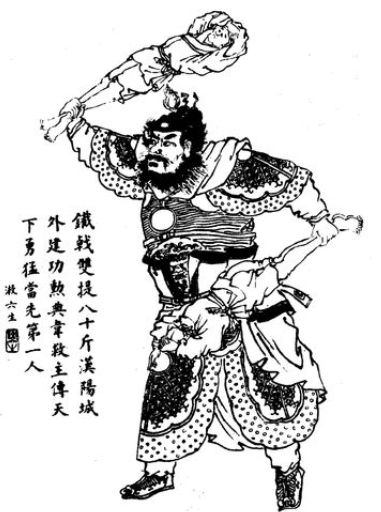
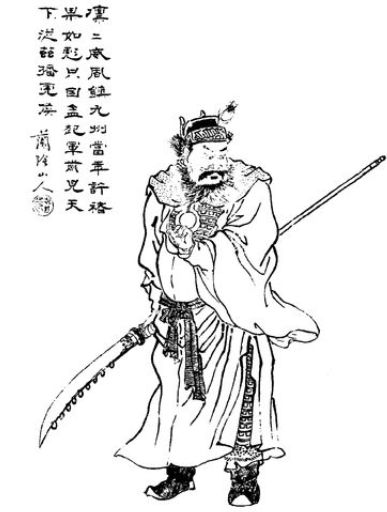
Un temible guerrero guardaespaldas cuya fuerza descomunal y lealtad franca lo convirtieron en un pilar del entorno de Cao Cao.
Inicios de conversación
Trayectoria vital
Xu Chu nació en el condado de Qiao, en la zona de la actual Bozhou, en Anhui, cuando la dinastía Han se debilitaba bajo caudillos y rebeliones. La tradición posterior lo recordó como inusualmente fuerte y de trato directo, cualidades muy valoradas en las milicias de frontera.
A medida que el desorden se extendía tras la muerte del emperador Ling y Dong Zhuo tomaba el poder en Luoyang, se dice que Xu Chu ayudó a reunir a hombres del lugar para proteger a su comunidad. En el caos del final de los Han, estos grupos privados de autodefensa solían convertirse en trampolines hacia los ejércitos de los caudillos.
Al combatir bandidos y facciones rivales en la región de Huainan, Xu Chu se labró un nombre por su valentía personal y su enorme fuerza física. Los líderes locales valoraban a quienes podían sostener puertas, escoltar suministros e intimidar a los saqueadores sin necesidad de complejas estructuras de mando.
Xu Chu se unió a las fuerzas en expansión de Cao Cao, que consolidaba su control mientras afirmaba proteger al emperador Xian. Su lealtad franca y su presencia intimidante lo hacían ideal para la seguridad cercana de un líder constantemente amenazado por asesinatos.
En el campamento de Cao Cao en Xuchang, Xu Chu fue asignado a la guardia interna responsable de la seguridad del líder en tiendas, consejos y marchas. En una época de traiciones repentinas, guardaespaldas fiables como Xu Chu eran activos políticos tanto como soldados.
Durante la guerra de alto riesgo de Cao Cao contra Yuan Shao, el frente de Guandu exigía una seguridad estricta alrededor de los puestos de mando y las líneas de suministro. Xu Chu sirvió en el cordón protector que permitió a Cao Cao dirigir las operaciones sin el temor constante de incursiones o infiltrados.
Tras Guandu, Cao Cao persiguió los restos de la coalición de Yuan Shao, avanzando hacia el norte para estabilizar territorios y reclutas. El papel de Xu Chu se centró en escoltar al comandante a través de zonas disputadas donde emboscadas, deserciones y ataques de venganza eran frecuentes.
Cao Cao realizó una campaña muy al norte contra los Wuhuan, buscando acabar con resistencias vinculadas a la estepa que protegían a los herederos de Yuan. En largas marchas más allá de las tierras agrícolas centrales, guardias de confianza como Xu Chu protegían al liderazgo durante tormentas, escasez y escaramuzas cerca de la frontera.
En la campaña que culminó cerca de los Acantilados Rojos, el ejército de Cao Cao se adentró en un terreno sureño desconocido y en alianzas volátiles. Xu Chu permaneció cerca durante consejos e inspecciones, donde la enfermedad, la deserción y los espías enemigos suponían un peligro constante.
Cuando Cao Cao se volvió hacia el oeste para enfrentarse a coaliciones en el corredor de Guanzhong, se apoyó en asistentes veteranos mientras desplazaba ejércitos por pasos y cruces de ríos. La presencia de Xu Chu reforzó la disciplina en el campamento interno, donde un solo ataque podía deshacer una campaña.
La lucha por Hanzhong contra las fuerzas de Liu Bei exigió al mando de Cao Cao, con rutas de suministro que serpenteaban por montañas y valles fortificados. Las tareas de Xu Chu se centraron en proteger el núcleo de liderazgo y asegurar el movimiento entre posiciones de campo y el cuartel general.
Cuando Cao Cao aceptó el título de Rey de Wei, su corte y jerarquía militar se formalizaron más, recompensando el servicio prolongado. Xu Chu se benefició de esta elevación, reflejando cómo la lealtad personal en el centro del poder podía traducirse en rango y honores oficiales.
Tras la muerte de Cao Cao y el establecimiento del estado de Wei por Cao Pi, la vieja guardia afrontó una delicada transición de lealtades y protocolo. Xu Chu siguió siendo un veterano valioso, símbolo de continuidad entre la casa guerrera de Cao Cao y el nuevo régimen imperial.
Los historiadores de la corte, al compilar relatos que más tarde se asociaron con los Registros de los Tres Reinos, preservaron la imagen de Xu Chu como alguien directo y fiable. Estos retratos ayudaron a legitimar a Wei al celebrar a hombres que protegieron a sus fundadores a lo largo de años de peligro.
Xu Chu murió después de una larga carrera militar, en gran medida cerca del centro del poder de Wei más que como comandante de campo independiente. Su reputación perduró gracias a las historias oficiales y a narraciones posteriores que amplificaron su fuerza e intrepidez para el público popular.