概要
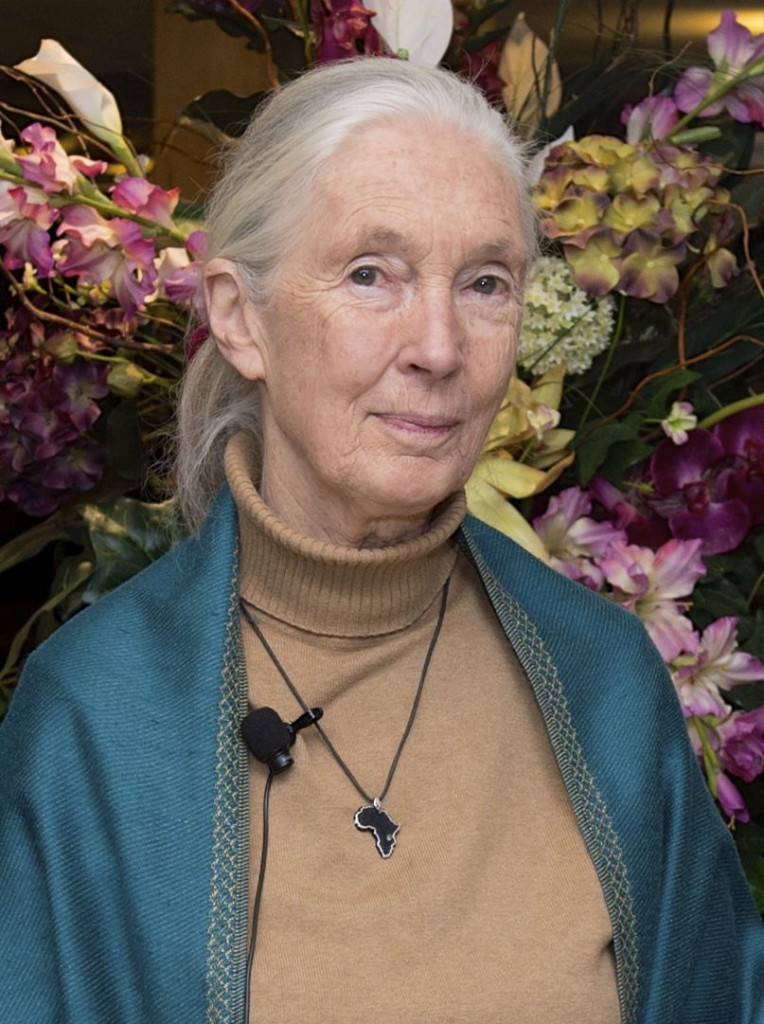
The British primatologist who revolutionized anthropology through her groundbreaking 60-year study of wild chimpanzee behavior in Gombe Stream National Park.
会話のきっかけ
人生の歩み
Jane Goodall was born to Mortimer Herbert Goodall, a businessman, and Margaret Myfanwe Joseph, a novelist. Her early fascination with animals was nurtured by her mother, who encouraged her curiosity about the natural world.
Her father gave her a stuffed chimpanzee toy named Jubilee. This gift sparked her lifelong affection for chimpanzees, and she still has the cherished toy today, beginning her journey towards primatology.
After finishing school, Goodall took a secretarial course and worked various jobs. She saved money for travel, driven by her dream of working with animals in Africa, despite lacking a university degree.
Goodall sailed to Kenya to visit a friend's farm. She contacted famed paleoanthropologist Louis Leakey, who hired her as a secretary at the Coryndon Museum, recognizing her passion and potential for field study.
At Leakey's initiative, Goodall arrived at the Gombe Stream Chimpanzee Reserve with her mother for companionship. With no formal scientific training, she began her unprecedented long-term field study of wild chimpanzee behavior.
Goodall observed a chimp she named David Greybeard using a blade of grass to fish for termites, and later modifying twigs for the purpose. This discovery challenged the unique definition of 'toolmaker' as human and revolutionized science.
Leakey arranged for Goodall to pursue a PhD in ethology at Newnham College, Cambridge, despite her lack of an undergraduate degree. She became one of only a few people to earn a PhD from Cambridge without first obtaining a BA or BSc.
She married Baron Hugo van Lawick, a wildlife photographer assigned by National Geographic to document her work at Gombe. Their partnership produced invaluable photographic and film records of the chimpanzees and a son, Hugo.
Goodall earned her PhD in Ethology with her thesis 'Behavior of the Free-Ranging Chimpanzee'. Her work at Gombe formed the basis, establishing her scientific credibility and pioneering new methodologies in animal behavior research.
Her only child, Hugo (nicknamed Grub), was born. She raised him in Gombe, incorporating him into her field research, which provided unique insights into mother-infant relationships among both chimpanzees and humans.
Goodall published her first popular science book for a general audience. It detailed her early years at Gombe and her revolutionary findings, bringing the complex social and emotional lives of chimpanzees to the worldwide public.
Goodall divorced van Lawick and married Derek Bryceson, a Member of Parliament in Tanzania and director of the country's national parks. His political connections helped protect Gombe and her research during a turbulent period.
She established the Jane Goodall Institute (JGI) to support ongoing research at Gombe and expand conservation efforts. The JGI would grow into a global organization promoting community-centered conservation and environmental education.
Derek Bryceson died after a long battle with cancer. His death was a profound personal loss for Goodall and marked a turning point, leading her to shift her focus from pure research to global activism and advocacy.
She published her seminal scientific work summarizing 25 years of research. That same year, a conference on chimpanzee conservation revealed the dire threats they faced, compelling her to become a full-time conservation advocate.
Goodall founded the Roots & Shoots program with a group of Tanzanian students. The program empowers young people to undertake projects benefiting people, animals, and the environment, now active in over 100 countries.
UN Secretary-General Kofi Annan named Goodall a United Nations Messenger of Peace. This prestigious appointment recognized her global environmental leadership and her work to inspire action for a more sustainable world.
Queen Elizabeth II honored Goodall with the title Dame Commander of the British Empire for her services to primatology, conservation, and the environment. This is one of the highest civilian honors in the United Kingdom.
The documentary highlighted her legacy and ongoing mission. Despite her age, she maintained an exhausting travel schedule of over 300 days a year, lecturing and advocating for conservation, animal welfare, and hope.
Goodall received the Templeton Prize, honoring her lifelong work bridging science and spirituality. The prize recognized her groundbreaking research and her message that life has meaning and purpose beyond the material world.
At age 90, Goodall published 'The Book of Hope' and continued her relentless advocacy. She remained a vital voice, emphasizing that despite environmental crises, there is still time to make a positive impact through collective action.