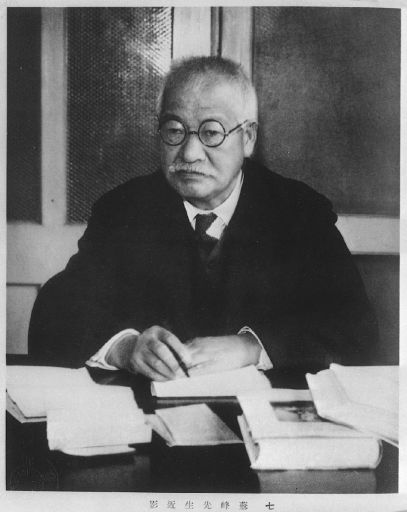
A pioneering Meiji-era journalist who championed liberal reform, then embraced nationalism while shaping modern Japanese public opinion.
会話のきっかけ
人生の歩み
He was born into a samurai family in Higo Province as the Tokugawa shogunate neared collapse. Growing up amid civil conflict and rapid modernization shaped his lifelong fixation on national strength and public opinion.
As a teenager he studied at Kumamoto Yogakko, where Western languages and political ideas circulated widely. This environment introduced him to liberal currents that contrasted sharply with former-domain samurai norms.
He relocated to Kyoto to pursue broader study and to meet activists, teachers, and publishers in the old imperial capital. The move expanded his contacts beyond Kyushu and positioned him for a national writing career.
At Doshisha English School he encountered Christian-influenced social reform ideas associated with educator Niijima Jo. The school’s cosmopolitan ethos encouraged him to argue that moral education and civic debate could strengthen Japan.
He went to Tokyo, the new political center, determined to influence national policy through print. There he learned the mechanics of modern publishing and began writing with a reformist, pro-parliamentary tone.
He published an early, widely discussed critique of Japanese society and politics during the Meiji constitutional movement. Its brisk style and sweeping judgments made him a young star among readers hungry for modern political arguments.
He launched the magazine Kokumin no Tomo to promote public debate on politics, education, and social change. The journal gathered writers and reform-minded readers, helping create a national audience for modern opinion journalism.
With the Imperial Diet convening, he founded Kokumin Shimbun to comment daily on parties, cabinet politics, and foreign affairs. The paper aimed to turn politics into a mass public conversation rather than an elite domain.
Reporting during the First Sino-Japanese War, he framed victory as proof of Japan’s modernization and regional destiny. His writing increasingly stressed unity and state capacity, a noticeable shift from earlier reformist criticism.
After Russia, Germany, and France forced Japan to moderate its gains, he warned that international politics rewarded only hard power. The episode reinforced his belief that newspapers should rally citizens behind national strategy.
During the Russo-Japanese War he used his platforms to defend the war as necessary for security and status. His commentary helped normalize a more assertive nationalism among urban readers following battlefield reports.
He analyzed the Hibiya riots after the Portsmouth Treaty, noting the new volatility of mass opinion in the capital. The unrest convinced him that managing public sentiment was becoming as crucial as cabinet negotiations.
When Japan formally annexed Korea, he wrote in ways that treated empire as a strategic and civilizational project. His stance aligned more closely with establishment thinking, even as critics questioned imperial legitimacy.
The death of Emperor Meiji and the start of the Taisho era brought new expectations for parties and public debate. He repositioned his journalism to remain influential amid shifting elites, movements, and a growing literate public.
After the Great Kanto Earthquake devastated the capital, he chronicled rebuilding and the social tensions that followed. His coverage tied reconstruction to national resilience while reflecting anxieties about disorder and rumor-driven violence.
Following the Manchurian Incident, he defended broader continental policy as necessary for security and economic survival. This position placed him among prominent voices legitimizing the military’s growing influence in public life.
As full-scale war expanded in China, he argued that unity and sacrifice were essential national virtues. His stature as an elder commentator amplified wartime narratives, even as dissenting journalism faced tightening controls.
Japan’s surrender forced a reckoning for intellectuals who had supported wartime policy. In the early Occupation atmosphere, his legacy became contested as Japan debated responsibility, democracy, and the future of the press.
He died after living through the late shogunate, Meiji modernization, Taisho mass politics, and the aftermath of World War II. His career left an enduring example of how journalism can both challenge and serve state power.