Datos rápidos
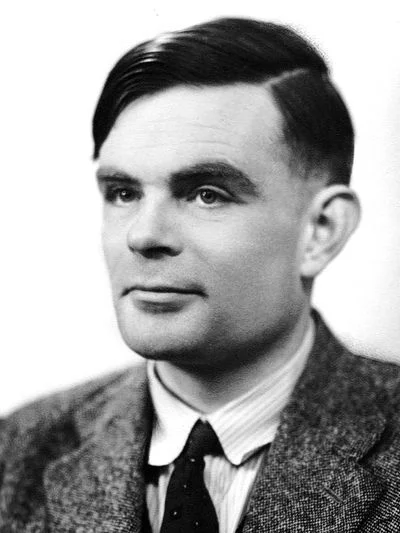
"Padre de la IA" Turing descifró Enigma y cambió las computadoras para siempre.
Inicios de conversación
Trayectoria vital
Alan Mathison Turing nació de Julius y Ethel Turing. Su padre era funcionario en la India Británica, y el joven Alan mostró signos tempranos de genialidad.
Turing comenzó su educación formal en la escuela St Michael's. Los profesores notaron sus excepcionales habilidades matemáticas incluso a esta temprana edad.
Turing se matriculó en la Escuela Sherborne, un prestigioso internado. A pesar de tener dificultades con el énfasis en los clásicos, destacó en matemáticas y ciencias.
Turing formó una profunda amistad con Christopher Morcom, un estudiante brillante que despertó su interés por la ciencia. La muerte de Morcom en 1930 le afectó profundamente.
Turing ganó una beca para King's College, Cambridge para estudiar matemáticas. Florecería en el estimulante ambiente intelectual.
Después de graduarse con honores de primera clase, Turing fue elegido Fellow de King's College con solo 22 años, reconociendo sus excepcionales habilidades matemáticas.
Turing publicó su revolucionario artículo introduciendo el concepto de la máquina de Turing, sentando las bases teóricas de la computación moderna.
Turing fue a Princeton para trabajar con Alonzo Church. Estudió lógica matemática y comenzó a trabajar en lógica ordinal y el concepto de máquinas oráculo.
Turing completó su tesis doctoral bajo Alonzo Church, titulada 'Sistemas de Lógica Basados en Ordinales', haciendo contribuciones significativas a la lógica matemática.
Al estallar la Segunda Guerra Mundial, Turing se unió a la Escuela de Códigos y Cifras del Gobierno en Bletchley Park, comenzando su crucial trabajo en descifrar códigos nazis.
Turing desarrolló técnicas para descifrar el más complejo Enigma naval, considerado indescifrable. Esta inteligencia salvó innumerables vidas aliadas.
Turing viajó a Estados Unidos para compartir técnicas criptográficas con la Marina estadounidense y trabajar en sistemas de transmisión de voz segura.
Las máquinas Bombe de Turing se volvieron operativas, acelerando dramáticamente el descifrado de mensajes encriptados con Enigma y cambiando el curso de la guerra.
Turing fue nombrado Oficial de la Orden del Imperio Británico por sus servicios en tiempos de guerra, aunque su papel crucial permaneció clasificado durante décadas.
Turing se unió al Laboratorio Nacional de Física y diseñó el Motor de Computación Automática (ACE), uno de los primeros diseños detallados para un computador de programa almacenado.
Turing se convirtió en Subdirector del Laboratorio de Máquinas de Computación de la Universidad de Manchester, trabajando en el computador Manchester Mark 1.
Turing publicó su famoso artículo proponiendo el 'Test de Turing' para la inteligencia de las máquinas, preguntando '¿Pueden pensar las máquinas?' y fundando el campo de la inteligencia artificial.
Turing fue elegido Fellow de la Royal Society por sus contribuciones a la lógica matemática y la computación, uno de los más altos honores científicos en Gran Bretaña.
Turing fue procesado por homosexualidad, entonces un delito en Gran Bretaña. Aceptó la castración química como alternativa a la prisión, una injusticia devastadora.
A pesar de su persecución, Turing continuó su trabajo pionero en morfogénesis, usando matemáticas para explicar cómo se forman patrones biológicos como rayas y manchas.
Turing fue encontrado muerto por envenenamiento con cianuro, dictaminado como suicidio. Su muerte a los 41 años truncó la vida de una de las mentes más brillantes de la historia. Fue indultado en 2013.