En bref
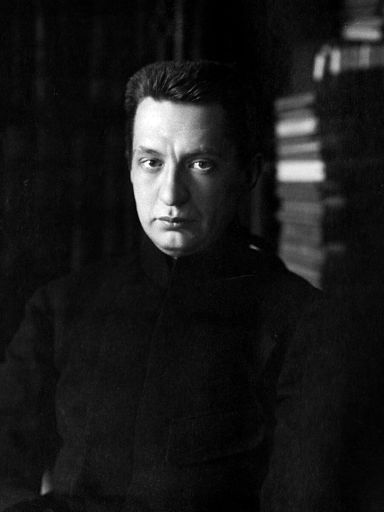
Charismatic revolutionary lawyer who led Russia's Provisional Government, struggling to steer democracy amid war and collapsing authority.
Sujets de conversation
Parcours de vie
Born into an educated family in Simbirsk in the Russian Empire, a provincial city on the Volga River. His upbringing in a professional milieu shaped his belief in reformist politics and public service.
Moved to the imperial capital to study at Saint Petersburg University, immersing himself in student politics and legal theory. The city’s unrest and censorship exposed him early to revolutionary debates and police surveillance.
Completed a law degree and started work in the legal world, building a reputation for courtroom skill and passionate speeches. He increasingly took on politically sensitive cases, linking professional life to opposition activism.
The upheavals of 1905 and the Tsarist crackdown hardened his hostility to autocracy and expanded his political contacts. He moved toward socialist-oriented reform, seeking constitutional change without full-scale civil collapse.
As a young lawyer, he gained prominence defending revolutionaries and victims of state repression in high-profile trials. His advocacy exposed abuses by the Okhrana and helped make him a recognizable figure in liberal circles.
Won election to the Fourth Duma, aligning with the Trudovik and broader socialist-leaning opposition. In parliament he attacked autocratic governance and positioned himself as a bridge between liberals and socialists.
With war beginning, he criticized the Tsarist government’s competence while balancing patriotic pressures. As casualties mounted, he argued that political reform and accountability were essential to sustaining national morale.
As shortages and military failures intensified, he became one of the loudest Duma voices warning of impending catastrophe. His speeches targeted ministerial chaos and helped legitimize calls for a responsible government.
During the February Revolution, he emerged as a key mediator between the Duma and the Petrograd Soviet, channeling mass anger into political change. His energy and oratory made him a symbol of the new revolutionary authority.
Joined the Provisional Government as Minister of Justice, pushing amnesties and legal reforms while trying to dismantle the old police apparatus. He aimed to legitimize the new regime through law, not terror, amid growing disorder.
As Minister of War, he toured front lines and garrisons, delivering dramatic speeches to revive discipline and commitment. He struggled to reconcile soldiers’ demands for peace with Allied expectations and Russia’s crumbling army.
Backed a major summer offensive to demonstrate Russia’s resolve to Britain and France and to restore morale. Initial gains collapsed into retreat and mutiny, accelerating radicalization and discrediting the Provisional Government’s strategy.
After political reshuffles, he became head of government, attempting to preserve a democratic path through coalition politics. He faced dual power with the Soviets, economic breakdown, and a public increasingly demanding “peace and land.”
When General Lavr Kornilov moved forces toward Petrograd, Kerensky treated it as a coup threat and rallied resistance. The crisis shattered trust with conservatives and empowered armed workers and Bolshevik influence in the capital.
Bolshevik forces led by Vladimir Lenin and Leon Trotsky seized key points in Petrograd, toppling the Provisional Government. Kerensky escaped, tried unsuccessfully to rally loyal troops, and soon went into exile as civil war began.
After leaving Russia, he became a prominent émigré voice arguing that Bolshevik rule betrayed the revolution’s democratic promise. He wrote and lectured while moving across Europe, following shifting political pressures and refugee networks.
With Europe engulfed in World War II and Nazi power spreading, he left France and eventually reached the United States. There he continued publishing political memoirs and commentary on Russia, revolution, and totalitarianism.
In later years he became a living witness sought by scholars and journalists studying the revolutions of 1917. Through lectures and writings, he defended his choices and highlighted the constraints of war, famine, and divided authority.
He died after a long life spent outside Russia, still associated with the failed democratic experiment of 1917. His death renewed debates about whether the Provisional Government ever had a realistic chance against extremists and war.