Chumi
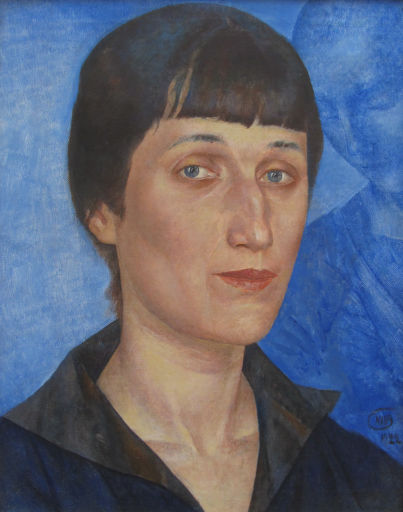
Anna Akhmatova

Anna Akhmatova

Poet

Start Chat

AI Personality

Quick Facts

Acmeist poetry
Requiem
Poem Without a Hero

Life Journey

1889Born near Odessa in the Russian Empire

Born Anna Andreyevna Gorenko near Odessa in the Russian Empire, later growing up by the Black Sea. Her family background and coastal landscapes shaped her early sense of imagery and rhythm.

1903Meets Nikolay Gumilyov and enters literary circles

As a teenager she met the poet Nikolay Gumilyov, who pursued her persistently and introduced her to modernist poetry. Their relationship drew her toward the St. Petersburg milieu that would define her career.

1910Marries Nikolay Gumilyov and travels in Europe

She married Nikolay Gumilyov, linking her to the emerging Acmeist movement and the journal world of St. Petersburg. The couple traveled in Europe, where she absorbed art, architecture, and new literary fashions.

1912Publishes debut collection 'Evening' and gives birth to Lev

Her first book, 'Evening,' appeared and quickly won attention for precise diction and intimate dramatic monologues. That same year she gave birth to her son Lev Gumilyov, balancing motherhood with rising fame.

1914Releases 'Rosary' as war reshapes Russian life

She published 'Rosary,' a major Acmeist collection whose emotional clarity resonated widely with readers. World War I and social strain intensified her themes of separation, loyalty, and endurance.

1917Revolution years and publication of 'White Flock'

Amid the February and October Revolutions, she remained in Petrograd as the old order collapsed. 'White Flock' appeared in this turbulent context, deepening her reputation while the future grew uncertain.

1921Execution of Nikolay Gumilyov and cultural crackdown

Her former husband Nikolay Gumilyov was arrested and executed by the Cheka, a shock that reverberated through Russia’s literary community. The new Soviet cultural climate tightened, making her position increasingly precarious.

1922Publishes 'Anno Domini MCMXXI' and grows isolated

She released 'Anno Domini MCMXXI,' capturing post-revolutionary disillusionment with a restrained, classical voice. As Soviet criticism hardened against “bourgeois” lyricism, public publication opportunities narrowed.

1925Effectively banned from publishing original poetry

By the mid-1920s, Soviet publishers largely stopped printing her new poems, pushing her into silence and private circulation. She survived through translation, scholarship, and the loyalty of friends who preserved manuscripts.

1935Arrests of Lev Gumilyov and Nikolay Punin

Her son Lev Gumilyov and her partner, art historian Nikolay Punin, were arrested during Stalin’s tightening terror. She appealed to Soviet authorities and began living the daily fear of queues, interrogations, and informants.

1938Lev Gumilyov imprisoned; 'Requiem' takes shape

Lev Gumilyov was again arrested and sent into the Gulag system, leaving her nearly powerless. She composed the cycle later known as 'Requiem,' memorizing lines and sharing them orally to avoid written evidence.

1941Evacuated during World War II to Central Asia

With the German invasion and the Siege of Leningrad looming, she was evacuated with other cultural figures. In Tashkent she read poems publicly, worked with wartime institutions, and endured illness and dislocation.

1944Returns to Leningrad after wartime evacuation

She returned to a devastated Leningrad, where loss and trauma marked nearly every household. Her standing briefly improved as wartime patriotism expanded cultural space, yet political danger soon returned.

1946Zhdanov decree denounces her; expelled from Writers' Union

Andrei Zhdanov publicly attacked her in the 1946 cultural purge, branding her poetry ideologically suspect. She was expelled from the Writers’ Union, cutting off income and forcing renewed reliance on translations and patrons.

1949Nikolay Punin arrested again; dies in the Gulag

Nikolay Punin was arrested again during late Stalinism and sent to labor camps, where he later died. The loss compounded her isolation and sharpened her sense of memorial duty toward the silenced and disappeared.

1956Thaw-era rehabilitation and Lev's release

After Stalin’s death and Khrushchev’s thaw, restrictions eased and her name began to reappear in print. Lev Gumilyov was released and rehabilitated, allowing a fragile reunion after years of imprisonment and uncertainty.

1964International recognition with the Etna-Taormina Prize

Western readers and scholars increasingly treated her as a major European poet and witness to totalitarianism. She received the Etna-Taormina Prize in Italy, symbolizing belated global recognition despite Soviet constraints.

1965Receives an honorary doctorate from Oxford University

Oxford University awarded her an honorary doctorate, affirming her stature in world literature. The ceremony highlighted the gap between her international acclaim and decades of censorship at home.

1966Dies after long illness; buried near St. Petersburg

She died after years of heart and lung problems, leaving behind poems preserved through memory, samizdat, and devoted friends. Her funeral drew writers and admirers who saw her as the conscience of a shattered century.

Chat