Chumi
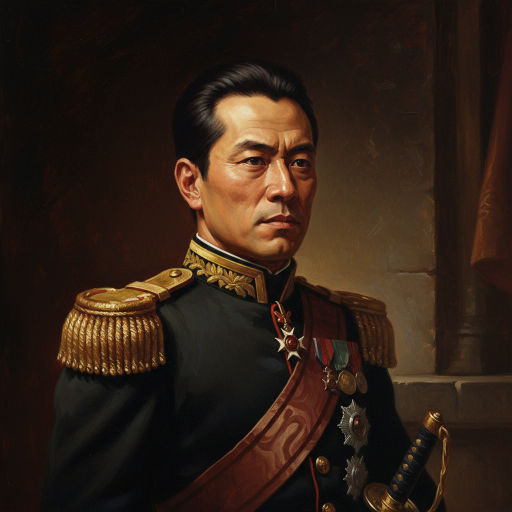
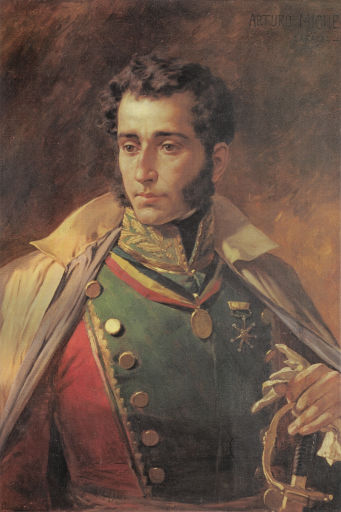
Antonio Jose de Sucre

Antonio Jose de Sucre

Military officer

Start Chat

AI Personality

Quick Facts

Battle of Pichincha
Battle of Ayacucho
Liberation of Ecuador and Peru

Life Journey

1795Born into a Creole family in Cumaná

Born to a prominent Creole family in Cumaná, then in the Captaincy General of Venezuela. The Caribbean port’s ties to Spain and the Enlightenment shaped his early education and military ambitions.

1810Joins the revolutionary cause after the Caracas movement

Inspired by the 1810 Caracas junta and growing anti-imperial unrest, he entered the patriot forces as a young cadet. The collapse of royal authority created rapid promotion opportunities for talented officers like Sucre.

1811Serves as an officer in Venezuela's early independence armies

He served in the turbulent campaigns of Venezuela’s First Republic, where patriot armies faced royalist counterattacks and internal disunity. The experience taught him logistics, discipline, and the costs of political fragmentation.

1813Builds reputation as a skilled staff officer and organizer

During renewed fighting, Sucre gained notice for careful planning, artillery knowledge, and clear written orders. Commanders valued his ability to turn scattered recruits into coherent units despite shortages and shifting fronts.

1817Works with Bolívar’s headquarters in the Orinoco region

As Bolívar consolidated power near the Orinoco, Sucre contributed to staff work and operational planning. The patriot base at Angostura became a political and military hub, and Sucre emerged as a trusted professional officer.

1819Supports the Gran Colombia project after the Angostura Congress

He backed Bolívar’s vision of Gran Colombia, linking Venezuela and New Granada to sustain independence. The Angostura Congress formalized new institutions, and Sucre’s loyalty positioned him for high command and diplomacy.

1820Negotiates the Armistice and Treaty of War Regularization

Sucre helped negotiate the 1820 armistice with Spanish commander Pablo Morillo, seeking to humanize a brutal civil war. The Treaty of War Regularization set rules for prisoners and civilians, a landmark in Latin American conflict.

1821Promoted as Bolívar prepares for the northern campaigns

After the pivotal year of 1821 and the push to secure Gran Colombia, Sucre rose in rank and responsibility. Bolívar relied on his steady temperament for complex operations involving politics, supply lines, and fragile alliances.

1822Wins the Battle of Pichincha, liberating Quito

On 24 May 1822, Sucre led patriots up the slopes of Pichincha and defeated royalist forces guarding Quito. The victory brought the Audiencia of Quito into the independence cause, opening the way to integrate Ecuador into Gran Colombia.

1822Enters Quito and consolidates the new government

After Pichincha, he managed delicate civil-military administration in Quito, balancing local elites with Gran Colombian authority. His restraint helped prevent reprisals and stabilized the region for the next phase of the Peru campaign.

1823Sent south to support the liberation of Peru

Bolívar dispatched Sucre to Peru as the war shifted to the Andes, where Spanish power still held key strongholds. Coordinating with Peruvian leaders and Colombian veterans, he organized forces amid rival factions and scarce funds.

1824Defeats royalists at Junín and prepares the final campaign

In 1824, the patriot army pressed toward decisive confrontation, combining cavalry shock with disciplined infantry. Sucre’s planning helped maintain cohesion across diverse units, setting conditions for a final battle against the viceroyalty’s forces.

1824Secures victory at the Battle of Ayacucho

On 9 December 1824, Sucre commanded at Ayacucho and broke the main Spanish army under Viceroy José de la Serna. The capitulation effectively ended Spanish rule in South America’s heartland and made Sucre a continental hero.

1825Oversees the transition to the new Republic of Bolivia

With Upper Peru becoming Bolivia, Sucre supervised the military and political transition from royal authority to republican institutions. He worked with local assemblies and Bolívar’s advisers to avoid chaos while demobilizing and paying troops.

1826Elected President of Bolivia and launches reforms

Elected Bolivia’s first constitutional president, he pursued administrative order, fiscal stability, and professionalized armed forces. His government relied on Bolívar’s constitutional ideas, but faced resistance from regional caudillos and economic hardship.

1828Survives uprising and resigns the Bolivian presidency

Political turmoil and a violent mutiny in 1828 exposed the fragility of Bolivian institutions and the dangers facing reformers. Wounded and disillusioned, Sucre resigned and sought to withdraw from factional struggles consuming the new republic.

1829Leads Gran Colombian forces in the Battle of Tarqui

As war erupted between Gran Colombia and Peru, Sucre took command and won at Tarqui, protecting Ecuadorian territory. The conflict highlighted competing national projects and deepened strains inside Gran Colombia’s uneasy federation.

1830Assassinated while traveling through the mountains of New Granada

Amid the breakup of Gran Colombia and escalating rivalries, Sucre traveled toward Quito but was ambushed and killed. His death in the remote Berruecos region shocked contemporaries, removing a unifying figure from post-independence politics.

Chat