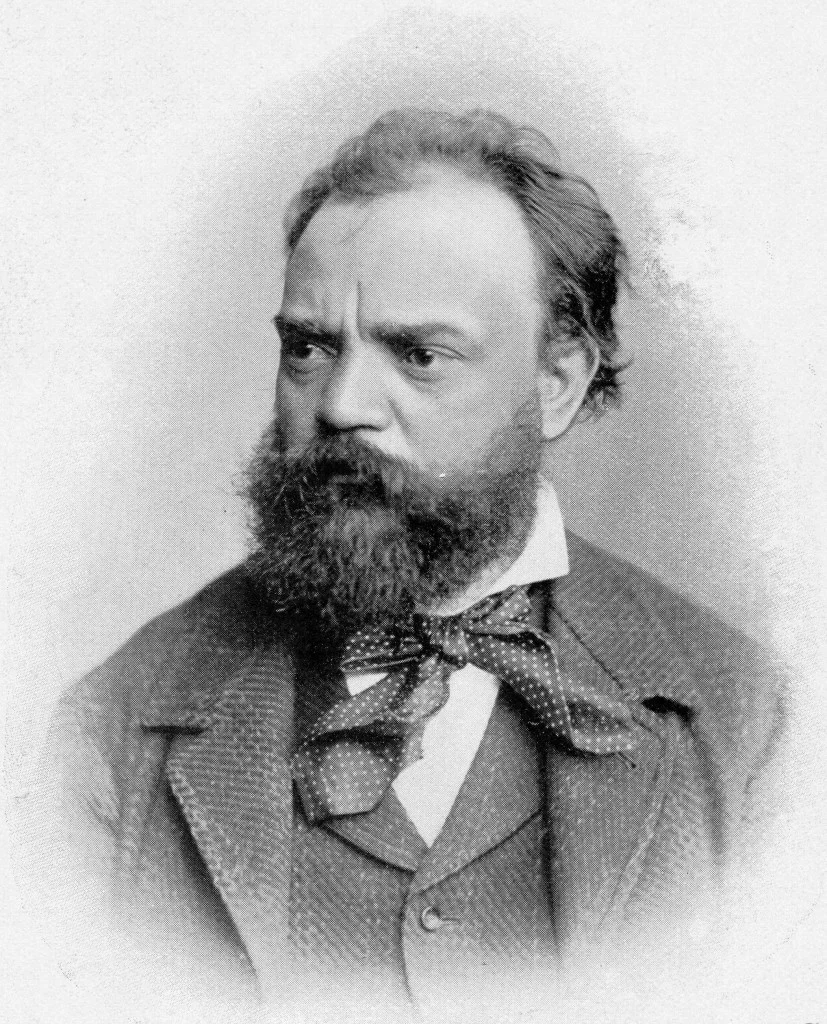
Quick Facts
New World Symphony. Czech composer who captured both homeland folk tunes and American spirit.
Conversation Starters
Life Journey
Antonín Dvořák was born in the village of Nelahozeves near Prague to a butcher and innkeeper, beginning a life that would establish Czech music on the world stage.
Dvořák enrolled at the Prague Organ School, where he studied organ, music theory, and composition, laying the foundation for his future career.
Dvořák joined the Provisional Theatre Orchestra as a violist, playing under Bedřich Smetana and gaining valuable experience in orchestral music.
Dvořák composed his first symphony, known as 'The Bells of Zlonice,' marking his emergence as a serious composer of orchestral music.
Dvořák married Anna Čermáková, a singer and the sister of his former love interest. Their marriage would last until his death and produce nine children.
Dvořák won an Austrian State Prize for composition, which brought him to the attention of Johannes Brahms, who became a lifelong supporter.
The publication of the Moravian Duets and Slavonic Dances brought Dvořák international fame and established him as a leading composer of his generation.
Dvořák was appointed professor of composition at the Prague Conservatory, beginning his influential teaching career.
Dvořák made his first of nine trips to England, conducting his Stabat Mater to great acclaim and beginning a lasting relationship with British audiences.
Dvořák accepted the position of director at the National Conservatory of Music in New York, beginning a transformative period in American music.
Dvořák composed his most famous work, the Symphony No. 9 'From the New World,' which premiered at Carnegie Hall to enormous success.
Dvořák composed his Cello Concerto in B minor, widely considered the greatest cello concerto ever written and a masterpiece of the Romantic era.
After three years in America, Dvořák returned to his beloved homeland, resuming his teaching at the Prague Conservatory.
Dvořák's Requiem received its premiere in Birmingham, England, further cementing his reputation as one of Europe's foremost composers.
Dvořák was appointed director of the Prague Conservatory, the highest musical position in Bohemia, recognizing his status as the nation's greatest living composer.
Antonín Dvořák died in Prague after suffering a stroke. He was given a state funeral, and his legacy as one of the greatest Romantic composers endures.