Quick Facts
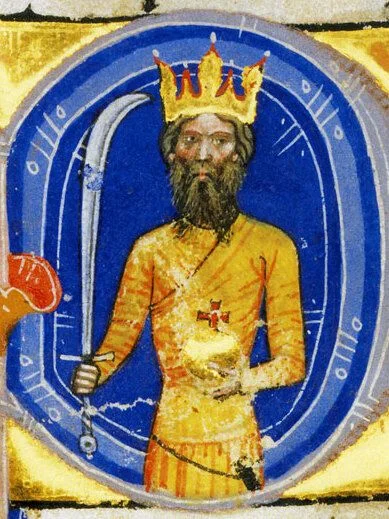
Scourge of God" Attila: United Huns, terrorized Rome, built empire.
Conversation Starters
Life Journey
Attila was born into the royal family of the Huns, a nomadic warrior people from the Central Asian steppes. His uncle Rua ruled the Hunnic confederacy that had terrified Rome for decades. The child would become the most feared conqueror of his age.
Young Attila was sent to the Roman court as a diplomatic hostage, a common practice for cementing treaties. In Italy, he learned Latin, Roman military tactics, and the empire's strengths and weaknesses. This knowledge would later serve his conquests.
When King Rua died, Attila and his elder brother Bleda inherited joint kingship of the Hunnic Empire. The brothers immediately renegotiated treaties with Constantinople, doubling the annual tribute and asserting Hunnic dominance over Rome's eastern frontier.
Attila launched devastating raids into the Eastern Roman Empire while its armies were distracted in Persia. City after city fell—Singidunum, Naissus, Serdica. The Huns' siege techniques, learned from Roman engineers, made walls useless against them.
Attila killed his brother Bleda in circumstances that remain murky—officially a hunting accident, almost certainly murder. Now sole ruler, Attila commanded the largest empire in European history, stretching from the Rhine to the Urals.
Attila's second great campaign ravaged the Balkans and reached the walls of Constantinople itself. An earthquake had damaged the city's defenses, but the Huns lacked naval power to cross the straits. Rome bought peace with massive tribute.
The historian Priscus visited Attila's court on a Roman embassy, leaving the only detailed eyewitness account. He described Attila as short, broad-chested, with a large head and small eyes—simple in dress but commanding in presence.
Princess Honoria, sister of Western Emperor Valentinian III, sent Attila her ring begging rescue from a forced marriage. Attila claimed this as a marriage proposal and demanded half the Western Empire as dowry. It became his pretext for invasion.
Attila invaded Gaul with a vast army of Huns, Goths, and Germanic allies. Cities burned across modern France. The world seemed to be ending. Roman general Aetius desperately assembled a coalition including his former enemies, the Visigoths.
The armies met in one of history's bloodiest battles. The Visigoth king Theodoric I fell, but the coalition held. For the first time, Attila retreated without victory. The battle saved Western Europe from Hunnic domination, though both sides were devastated.
Attila returned to attack Italy itself. Aquileia was destroyed so completely its location was forgotten. Milan and other cities fell. Refugees fleeing to lagoon islands would found Venice. Rome lay open and defenseless.
Pope Leo I met Attila and somehow convinced him to withdraw from Italy. Legend attributed this to divine intervention, but plague, famine, and Eastern Roman attacks on the Hunnic homeland likely influenced the decision. Rome was spared.
Attila took yet another wife, a young Gothic woman named Ildico. The wedding feast was celebrated with excessive drinking. That night, Attila retired to his marriage bed, where destiny awaited him in an unexpected form.
Attila died on his wedding night, apparently from a severe nosebleed while incapacitated by alcohol. Some suspected poison or murder by his bride, but most historians accept the accidental explanation. His warriors mourned by slashing their own faces.
Attila was buried in a triple coffin of gold, silver, and iron, filled with treasures from his conquests. The burial party was executed to keep the location secret. To this day, his tomb has never been found, preserving the mystery of the Scourge of God.
Within a year of Attila's death, his empire dissolved. His sons fought each other while subject peoples revolted. At the Battle of Nedao, the Huns were decisively defeated. The terrifying empire vanished as quickly as it had risen.
Attila's son Dengizich led the last major Hunnic force against the Eastern Empire and was killed. His head was displayed in Constantinople. The Huns scattered into history, absorbed by other peoples, leaving only legends and fear.
In Germanic legend, Attila became Etzel, a noble king in the Nibelungenlied. In Hungarian tradition, he was a founding ancestor. To Romans, he remained the Scourge of God—divine punishment for their sins. History remembers him as the embodiment of conquest.