Quick Facts
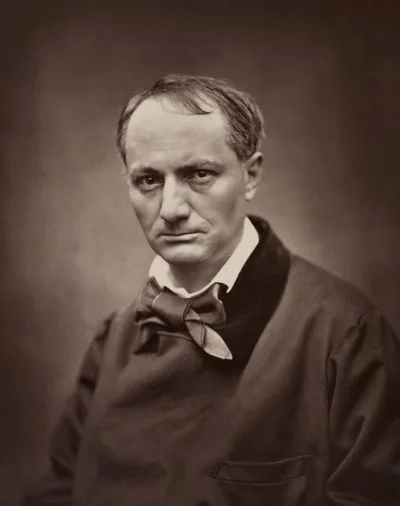
Flowers of Evil" poet: Baudelaire, father of symbolism and modernity.
Conversation Starters
Life Journey
Charles Pierre Baudelaire was born on April 9, 1821, in Paris. His father Joseph-Francois was a cultured civil servant who introduced Charles to art. He died when Charles was only six.
After his father's death, Baudelaire's mother remarried Major Jacques Aupick, a strict military man. Charles deeply resented his stepfather, and their difficult relationship would shape his rebellious character.
Baudelaire was expelled from Lycee Louis-le-Grand for a minor disciplinary infraction. Though he passed his baccalaureat, his rebellious nature was already evident.
His stepfather, hoping to reform him, sent Baudelaire on a voyage to Calcutta. He only reached Mauritius before returning, but the exotic imagery would influence his poetry.
Coming of age, Baudelaire inherited his father's fortune. He also met Jeanne Duval, a mixed-race actress who became his lover and muse for decades, inspiring many poems.
Baudelaire's extravagant spending depleted half his inheritance. His family obtained a legal order placing him under financial guardianship, limiting him to a small monthly allowance.
Baudelaire published his first art criticism, reviewing the Salon of 1845. He emerged as an influential art critic championing Delacroix and later Manet.
In a period of depression and financial desperation, Baudelaire attempted suicide. Though he survived, his struggles with depression and addiction continued throughout his life.
Baudelaire discovered the works of Edgar Allan Poe, recognizing a kindred spirit. He would spend years translating Poe into French, making him famous in Europe.
Baudelaire participated in the February Revolution, fighting on the barricades. His political involvement was brief but reflected his hatred of bourgeois society.
Baudelaire published his first translations of Poe and a biographical essay. These translations introduced Poe to the French literary world.
Baudelaire pursued actress Marie Daubrun, who inspired some of his most beautiful poems. His complex relationships with women would fuel his poetry.
Baudelaire published Les Fleurs du Mal (The Flowers of Evil), his masterpiece. The book was prosecuted for obscenity, and six poems were banned, but it revolutionized French poetry.
Baudelaire was convicted of offenses against public morality. He was fined and forced to remove six poems. The scandal only increased the book's fame.
Baudelaire published Les Paradis artificiels, essays on wine, hashish, and opium. Drawing on his own experiences, he explored altered states of consciousness.
The second edition appeared with new poems replacing the banned ones. Baudelaire's reputation as France's greatest modern poet grew.
Baudelaire moved to Brussels hoping for literary success. Instead, he found only disappointment and increasing illness from syphilis.
After a stroke left him paralyzed and aphasic in 1866, Baudelaire was brought back to Paris. He died on August 31, 1867, aged 46. He transformed French poetry, pioneering symbolism and modernism.