Quick Facts
Charles the Wise. Rebuilt France from ashes of defeat and drove the English back.
Conversation Starters
Life Journey
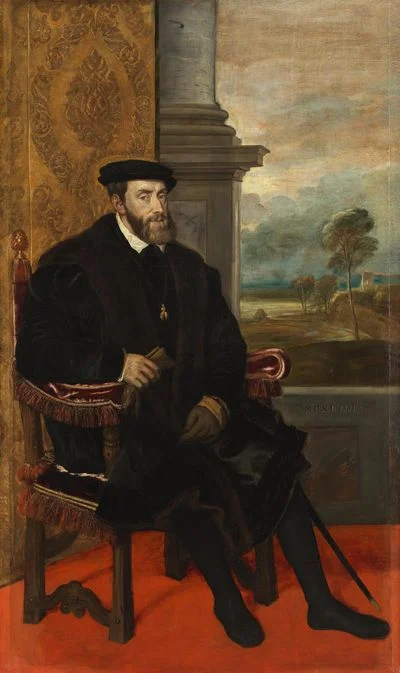
Charles was born on February 24, 1500, in Ghent. He was the eldest son of Philip the Handsome and Joanna of Castile. Through inheritance, he would unite an unprecedented empire.
Upon his father Philip's sudden death, six-year-old Charles inherited the Burgundian Netherlands. His aunt Margaret of Austria became regent while he was educated.
Charles was declared of age and assumed personal rule of the Netherlands. He began learning the art of governance under the guidance of Adrian of Utrecht.
Following the death of his grandfather Ferdinand II, Charles became King of Spain, ruling Castile, Aragon, and the Spanish colonies. He traveled to Spain to claim his throne.
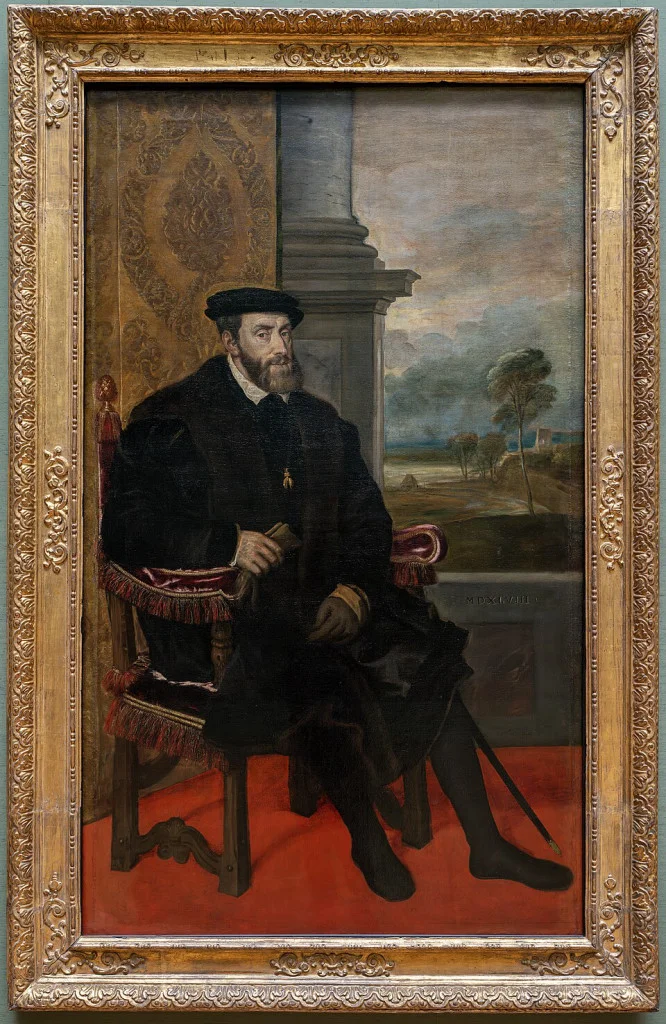
Charles was elected Holy Roman Emperor as Charles V, defeating Francis I of France. He now ruled an empire 'on which the sun never set,' spanning Europe and the Americas.
Charles presided over the Diet of Worms where Martin Luther defended his writings. Charles declared Luther an outlaw, beginning decades of religious conflict.
Imperial forces defeated France at Pavia, capturing King Francis I himself. This was Charles's greatest military triumph, establishing Habsburg dominance in Italy.
Charles married Isabella of Portugal in a political match that became a genuine love. Their union produced Philip II and other children.
Imperial troops, unpaid and mutinous, sacked Rome and imprisoned Pope Clement VII. Though Charles had not ordered it, the event shocked Europe and damaged his reputation.
Pope Clement VII crowned Charles as Holy Roman Emperor in Bologna, the last such papal coronation. This reconciliation followed years of conflict with the papacy.
Charles personally led an expedition that conquered Tunis from the Ottoman vassal Barbarossa. He freed thousands of Christian slaves and established Habsburg presence in North Africa.
Empress Isabella died in childbirth. Charles was devastated and never remarried. He wore black for the rest of his life in mourning.
Charles concluded the Peace of Crepy with Francis I, ending another round of Habsburg-Valois wars. The peace allowed him to focus on the Protestant problem.
Charles defeated the Protestant Schmalkaldic League at Muhlberg, capturing key Protestant leaders. This was his greatest success against the Reformation.
Protestant princes allied with France and nearly captured Charles at Innsbruck. He fled through the Alps, his health and spirit broken.
The Peace of Augsburg established the principle 'cuius regio, eius religio,' allowing princes to determine their territories' religion. Charles's dream of religious unity was dead.
In an emotional ceremony, Charles abdicated his titles, dividing his empire between his son Philip II (Spain) and brother Ferdinand I (Holy Roman Empire).
Charles V died on September 21, 1558, at the monastery of Yuste where he had retired. He had ruled the largest European empire since Charlemagne, though ultimately unable to preserve Christian unity.