Quick Facts
Revolutionary agrarian leader who championed land reform, rallied peasant armies, and became an enduring symbol of social justice.
Conversation Starters
Life Journey
Born in Anenecuilco, Morelos, Emiliano Zapata grew up amid sugar haciendas expanding under Porfirio Diaz. His family belonged to a village with communal land traditions, shaping his lifelong focus on ejidos and local autonomy.
As a young man in Morelos, Zapata saw villages pressured by debt peonage and legal tricks that stripped communal plots. Local elders in Anenecuilco preserved land titles, and he learned to treat documents as weapons against hacendados.
Zapata was chosen as president of Anenecuilco's village council to press land claims against nearby sugar estates. He organized delegations to courts and officials, insisting that villages—not hacienda owners—held legitimate rights to the soil.
After Francisco I. Madero issued the Plan of San Luis Potosi, Zapata mobilized peasants in Morelos to rebel against Porfirio Diaz. The uprising fused national democratic rhetoric with urgent local demands to restore village lands taken by haciendas.
In May 1911, Zapata's forces fought a brutal street battle to take Cuautla from federal troops. The victory pressured Diaz's regime and elevated Zapata as a military leader, while emphasizing that land reform must accompany political change.
After Madero became president, Zapata demanded immediate restitution of village lands in Morelos. Madero urged disarmament and gradual reform, but Zapata saw this as betrayal and refused to demobilize while haciendas retained stolen acreage.
In November 1911, Zapata issued the Plan de Ayala with Otilio Montano, calling for land restitution and expropriation of haciendas. It named Madero a traitor and demanded 'Tierra y Libertad,' giving the Zapatista cause a clear program.
Zapata organized a decentralized guerrilla army rooted in Morelos villages, relying on local leaders and knowledge of terrain. Raids targeted sugar estates and federal garrisons, turning the countryside into a protracted war zone against central authority.
Following the Decena Tragica and Madero's murder, Zapata rejected Victoriano Huerta's dictatorship as another betrayal of the revolution. Zapatistas intensified fighting in Morelos, framing their struggle as both anti-tyranny and pro-land restitution.
As Huerta fell, Zapata aligned with Francisco 'Pancho' Villa to resist Venustiano Carranza's constitutionalist dominance. Their alliance was uneasy but strategic, uniting northern and southern forces around hostility to centralizing elites and cautious reforms.
In December 1914, Zapata entered Mexico City and met Villa in Xochimilco, cementing a revolutionary partnership. Though Zapata preferred to return south, the moment symbolized peasant power confronting national politics at the capital's heart.
Back in Morelos, Zapatistas implemented the Plan de Ayala by returning lands and reviving village governance. They experimented with local councils and managed production around sugar estates, trying to sustain war efforts while pursuing social justice reforms.
Carrancista generals launched repeated offensives to crush Zapata's base in Morelos, using scorched-earth tactics and garrisons. Zapata survived through mobility and village support, but the conflict devastated communities and strained the movement's resources.
When Carranza promulgated the 1917 Constitution, Article 27 promised land reform but implementation remained uncertain. Zapata dismissed promises without immediate restitution, arguing that legal texts meant little unless haciendas were actually dismantled in practice.
As Villa weakened and Carranza consolidated power, Zapata explored contacts with other anti-Carranza forces to keep pressure on the regime. His commanders guarded Morelos while negotiating cautiously, aware that federal agents sought to infiltrate and divide them.
On April 10, 1919, Zapata was lured to Hacienda de Chinameca by Colonel Jesus Guajardo, who feigned defection from Carranza. Soldiers opened fire as he entered, killing him and turning his death into a martyrdom that amplified his legend.
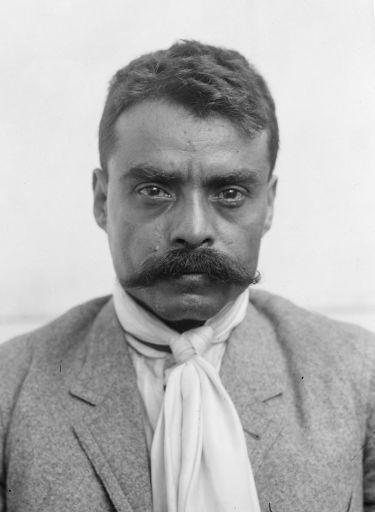
After his death, Zapatismo endured in slogans, corridos, and local struggles for ejidos, inspiring later movements. Zapata's image—mustache, sombrero, and rifle—came to represent principled resistance to exploitation and unfulfilled revolutionary promises.