Quick Facts
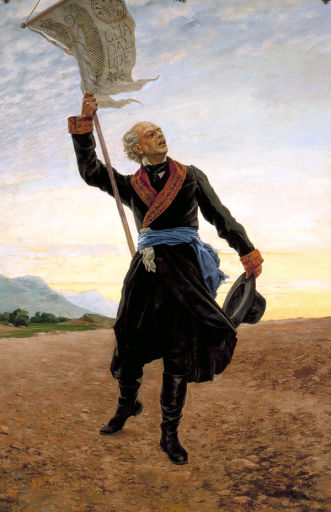
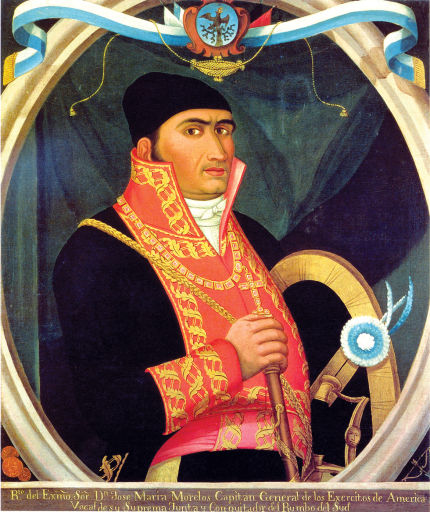
A daring priest-general who organized Mexico’s independence struggle, championing equality, sovereignty, and constitutional government.
Conversation Starters
Life Journey
Born in Valladolid, Michoacan, in the Viceroyalty of New Spain, to a modest family tied to local trades. His early life exposed him to colonial hierarchies and the everyday burdens borne by Indigenous and mixed-race communities.
As a young man he took practical work and traveled through Michoacan’s towns and rural routes. The experience gave him knowledge of terrain, commerce, and local networks that later aided insurgent logistics and recruitment.
He entered the Colegio de San Nicolas in Valladolid, where Miguel Hidalgo y Costilla served as a leading figure. The school’s intellectual climate and reformist ideas shaped his sense of social justice and public responsibility.
Morelos was ordained after years of preparation within the colonial church structure. His clerical role brought him close to parishioners’ grievances, from taxes to forced labor, deepening his critique of Spanish rule.
He was appointed cura in Caracuaro, a remote and poor parish in Tierra Caliente. There he learned to manage scarcity, mediate disputes, and organize community life—skills that later translated into disciplined insurgent administration.
After Hidalgo launched the uprising in September 1810, Morelos sought him out to offer support. Hidalgo tasked him with raising forces in the south, turning a local priest into a commander with a defined strategic mission.
He organized small, mobile columns and captured several towns across the south, building momentum after early insurgent setbacks elsewhere. His leadership emphasized discipline, supply lines, and cooperation with regional fighters and leaders.
Royalist forces under Felix Maria Calleja besieged insurgents at Cuautla for weeks in 1812. Morelos’s forces held out under hunger and bombardment, then executed a daring breakout that preserved the movement’s core leadership.
In late 1812, he took Oaxaca, gaining weapons, printing capacity, and a major administrative center. The victory allowed insurgents to collect revenues, issue orders, and present themselves as an alternative government in New Spain.
His forces moved against Acapulco, a strategic port connected to Pacific trade routes and royal communications. The campaign tightened insurgent control in the south and demonstrated his focus on ports, roads, and chokepoints.
Morelos promoted a representative assembly, the Congress of Chilpancingo, to legitimize the rebellion politically. It gathered insurgent deputies and sought to replace personal leadership with institutions and written law.
He delivered 'Sentimientos de la Nacion,' calling for independence, popular sovereignty, and the abolition of slavery and caste distinctions. The document linked Catholic faith with republican principles, shaping later constitutional efforts.
Under congressional authority, insurgent representatives issued a formal declaration of independence from Spain. The act aimed to rally support at home and signal to foreign powers that the movement sought statehood, not mere rebellion.
The insurgent Congress promulgated the Constitution of Apatzingan, reflecting Enlightenment ideas and local realities. Morelos supported this constitutional framework to institutionalize rights, representation, and limits on executive power.
Royalist commanders increased pressure with better-funded armies and coordinated offensives across key corridors. Morelos’s forces faced shortages, internal strain, and the challenge of defending the Congress while sustaining field operations.
While escorting members of the insurgent Congress, he was captured by royalist forces led by Manuel de la Concha. His arrest deprived the insurgency of its most capable organizer at a moment when political institutions were fragile.
Colonial authorities subjected him to ecclesiastical proceedings that stripped his priestly status, then a civil trial for treason. The process showcased Spain’s effort to discredit insurgent legitimacy by punishing a prominent clergyman-leader.
He was executed on December 22, 1815, after refusing to renounce the cause of independence. His death turned him into a martyr-figure, and his political writings continued to influence insurgent and later republican leaders.