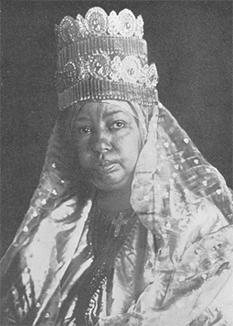
Datos rápidos
En Adwa, estuvo al lado de Menelik comandando tropas. "Prefiero la muerte a la rendición", declaró, y lo decía en serio.
Inicios de conversación
Trayectoria vital
Taitu Betul nació en Gondar, Etiopía, en una familia noble de la dinastía salomónica. Su nacimiento marcó el inicio de una vida que influiría significativamente en la historia etíope.
Taitu recibió su educación temprana en Gondar, donde aprendió los valores tradicionales etíopes, religión y alfabetización básica.
Taitu se casó con Menelik II, una figura política importante que más tarde se convertiría en Emperador de Etiopía. Este matrimonio fue una alianza estratégica que fortaleció la posición política de Menelik.
Menelik II se convirtió en Emperador de Etiopía y Taitu Betul fue coronada Emperatriz. Su papel como asesora política y su influencia en los asuntos de estado comenzaron a crecer significativamente.
Taitu desempeñó un papel crucial en la fundación de Addis Abeba como nueva capital de Etiopía. Su influencia en la selección del sitio y el apoyo al desarrollo de la ciudad fue fundamental.
Taitu se opuso firmemente a las reclamaciones italianas sobre territorios etíopes y desempeñó un papel clave en la movilización de apoyo y recursos contra la agresión italiana.
Estalló la Primera Guerra Ítalo-Etíope y Taitu participó activamente en el esfuerzo bélico, proporcionando asesoramiento estratégico y apoyo moral a las fuerzas etíopes.
Taitu y Menelik II lideraron las fuerzas etíopes hacia una victoria decisiva sobre el ejército italiano en la Batalla de Adua, asegurando la soberanía etíope y el reconocimiento internacional.
Taitu apoyó el establecimiento de escuelas e instituciones culturales en Addis Abeba, promoviendo la educación y la preservación del patrimonio etíope.
La salud de Menelik II comenzó a deteriorarse y Taitu asumió más responsabilidades en los asuntos de estado, convirtiéndose efectivamente en regente y manteniendo la estabilidad.
Taitu desempeñó un papel crucial en el mantenimiento y fortalecimiento de las relaciones diplomáticas con las potencias europeas, asegurando la soberanía continua de Etiopía.
Taitu apoyó los esfuerzos de Menelik II para asegurar a su nieto Lij Iyasu como heredero al trono etíope.
Menelik II falleció y la influencia de Taitu en la corte comenzó a disminuir. Continuó apoyando al nuevo régimen pero enfrentó crecientes desafíos políticos.
Taitu se retiró de la vida pública, pasando sus años restantes en Addis Abeba. Sus contribuciones a la soberanía y desarrollo de Etiopía fueron ampliamente reconocidas.
Taitu Betul murió en Addis Abeba, dejando un legado de liderazgo fuerte, resistencia contra el colonialismo y contribuciones significativas a la historia etíope.