Quick Facts
A dazzling Momoyama master who transformed monumental screen painting with bold ink, gold-leaf splendor, and power.
Conversation Starters
Life Journey
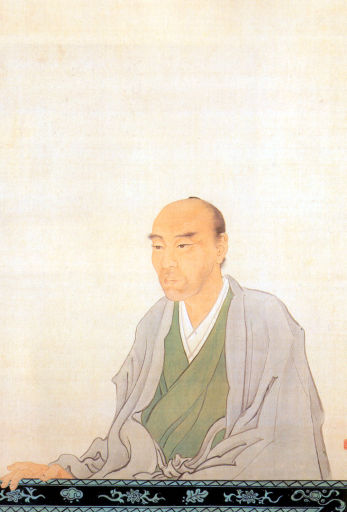
Born in Kyoto, Japan, into the influential Kano school of painters. He grew up surrounded by studio training, Chinese-style brush models, and elite patrons who relied on Kano artists for official imagery.
As a child in Kyoto, Japan, he began rigorous brush practice under family supervision. Copying ink models and studying composition prepared him for the workshop pace demanded by temples, court nobles, and military leaders.
He refined his craft under his father, Kanō Shōei, in Kyoto, Japan, learning Kano methods of figure drawing and landscape structure. The studio emphasized speed, clarity, and authority—skills vital for large architectural commissions.
In Kyoto, Japan, he began receiving recognition for unusually bold brushwork and commanding scale. Patrons sought images that projected power, and his compositions suited the emerging Momoyama taste for splendor and impact.
He took on broader management duties within the Kano workshop in Kyoto, Japan, coordinating assistants for complex commissions. The Kano system relied on master designs, division of labor, and strict quality control to meet deadlines.
As Oda Nobunaga moved to dominate central Japan, Kyoto, Japan became a hub of new military patronage. Eitoku’s grand, assertive style aligned with the visual language of authority demanded by warlords and their retinues.
He and the Kano atelier produced ambitious wall and screen paintings for Oda Nobunaga’s Azuchi Castle in Azuchi, Japan. The program used gold grounds and monumental motifs to proclaim regime power during the turbulent Sengoku era.
Working between Kyoto and elite residences, he emphasized sweeping ink contours over shimmering gold leaf. This visual contrast made animals, trees, and rocks read instantly across cavernous halls designed for ceremony and intimidation.
In Kyoto, Japan, he developed dynamic depictions of Chinese lions (karajishi), symbols of guardianship and authority. Such paintings fit the Kano school’s role as official image-makers for powerful patrons and prestigious institutions.
He advanced towering cypress (hinoki) motifs that filled architectural fields with living presence in Kyoto, Japan. The simplified forms and massive trunks suited fusuma and byobu formats, turning nature into a political-stage backdrop.
After Oda Nobunaga’s death in 1582, patron networks rapidly changed across Kyoto, Japan. Eitoku and his workshop continued serving top leaders by adjusting themes and scale to new building projects and new symbols of legitimacy.
As Toyotomi Hideyoshi consolidated power, Eitoku’s atelier found new opportunities connected to national unification. In Kyoto, Japan, his decorative schemes matched Hideyoshi’s preference for brilliance, ceremony, and architectural spectacle.
He oversaw large painting cycles for expansive residences and ceremonial rooms tied to the Toyotomi regime. Working from Kyoto, Japan, he coordinated apprentices to deliver cohesive iconography across many sliding doors and screens.
By the late 1580s in Kyoto, Japan, his success reinforced the Kano school as the premier provider of authoritative imagery. The workshop model—master design plus skilled assistants—became a standard for high-volume elite patronage.
He continued mentoring younger painters in Kyoto, Japan, passing down compositional templates and brush strategies. This transmission ensured that his Momoyama monumentality could be replicated and adapted by later Kano generations.
He died in Kyoto, Japan, leaving behind a workshop tradition that shaped Japanese elite interiors for decades. Although many castle paintings were later lost to fire and rebuilding, his style survived through copies and Kano lineages.