Quick Facts
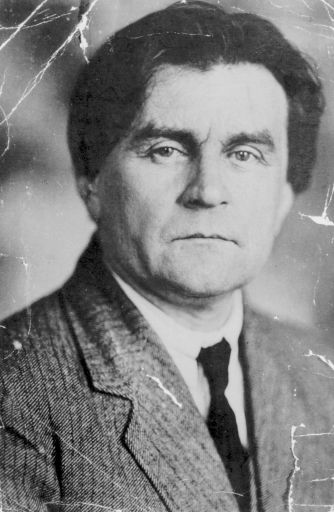
Radical avant-garde painter who pioneered Suprematism, reducing art to pure geometric forms and spiritual intensity.
Conversation Starters
Life Journey
Born into a Polish Catholic family in Kyiv Province, then part of the Russian Empire. His father worked in sugar factories, and the family’s frequent moves exposed him to Ukrainian village crafts and icon traditions.
After relocating to Kursk, he took a job as a draftsman while pursuing painting with determination. He studied from reproductions and local instruction, building a foundation before entering major art circles.
He moved to Moscow, the empire’s vibrant art center, seeking training and recognition. There he encountered modernist currents and the competitive exhibition culture that shaped early Russian avant-garde networks.
He attended classes at the Moscow School of Painting, Sculpture and Architecture, absorbing academic methods while testing them. Moscow’s galleries and salons introduced him to Symbolism, Post-Impressionism, and new European ideas.
Malevich began exhibiting in the circles that would define the Russian avant-garde, alongside artists like Mikhail Larionov and Natalia Goncharova. These shows challenged conservative taste and promoted bold experimentation in form and color.
Influenced by Cubism and Italian Futurism, he produced Cubo-Futurist paintings that fractured objects into dynamic planes. This period pushed him from depiction toward autonomous form, preparing the conceptual leap to Suprematism.
He created striking stage designs for the futurist opera "Victory over the Sun," with a libretto by Aleksei Kruchenykh. The production’s anti-rational spirit encouraged him to treat geometry as a primary artistic language.
At the "0.10" exhibition, he presented Suprematism as a new art of pure feeling, independent of objects. "Black Square" was hung high like an icon, signaling a deliberate break with representation and tradition.
He expanded Suprematism into series of floating squares, crosses, and circles, exploring balance and weightlessness. The works circulated through avant-garde exhibitions, placing him at the center of radical artistic debate in wartime Russia.
The 1917 Revolution reshaped patronage, institutions, and artistic purpose across Russia. Malevich argued that abstract art could align with revolutionary renewal, while also defending its autonomy from propaganda demands.
He joined the Vitebsk art school initially organized by Marc Chagall, bringing Suprematist ideas into the classroom. His charismatic theory and methods attracted students and turned the school into a major avant-garde laboratory.
He led UNOVIS (Champions of the New Art), a student-artist collective that signed works with a shared black square. The group applied Suprematism to posters, design, and public projects, seeking a total transformation of visual culture.
In Petrograd/Leningrad he joined the State Institute of Artistic Culture (GINKhUK), where theory and research were institutionalized. He defended Suprematism’s philosophical aims as Constructivists pushed utilitarian design for the new state.
Malevich traveled to Warsaw and Berlin, exhibiting widely and meeting European modernist audiences. He left many paintings and manuscripts in the West, a decision that later helped preserve his legacy under Soviet restrictions.
Amid tightening cultural policy, he was arrested and interrogated as suspicion fell on independent artistic movements. Though released, he faced severe limits on exhibiting and publishing, as Socialist Realism gained dominance.
With Soviet art policy enforcing legibility and ideology, he painted stylized peasants and portraits with restrained modernist structure. The figures’ blank faces and rigid forms subtly echoed Suprematist geometry and inner resistance.
He died after prolonged illness, and friends organized a funeral that honored his Suprematist identity. A black square motif appeared on the coffin and procession materials, affirming his radical vision despite official hostility.