Quick Facts
A poet-warrior king who rose from shepherd to unite Israel, shaping faith, politics, and sacred song.
Conversation Starters
Life Journey
David was born in Bethlehem to Jesse, of the tribe of Judah, in the hill country of ancient Canaan. Later biblical tradition presents him as the youngest son, raised amid clan life and pastoral work that formed his early identity.
As a youth, David tended flocks near Bethlehem, learning survival skills and the rhythms of village worship. Stories of defending sheep from predators and composing songs helped establish him as both brave and artistically gifted.
The prophet Samuel visited Jesse’s household in Bethlehem and anointed David, signaling a future kingship in Israel’s turbulent era. This secret rite set David in quiet opposition to King Saul, whose rule faced growing instability.
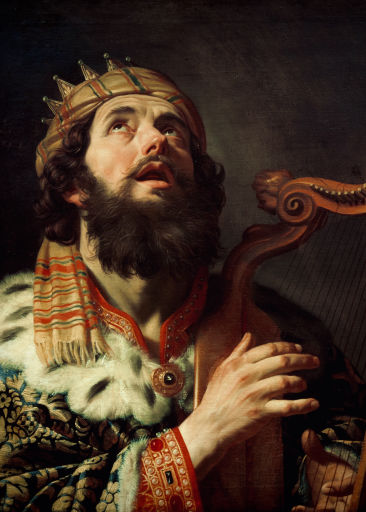
David entered King Saul’s service, where music was used to soothe the king during periods of distress. Serving at the royal court exposed him to elite politics, military organization, and the fragile loyalties of tribal leadership.
During a standoff with Philistine forces, David faced the champion Goliath and killed him with a sling stone, turning panic into Israelite confidence. The victory made him famous across Israel and drew Saul’s attention, admiration, and later fear.
David led successful raids and campaigns that increased Israel’s security against surrounding enemies, especially the Philistines. Popular songs praising David’s victories heightened his public stature and intensified Saul’s suspicion of a rival.
David married Michal, strengthening his connection to Saul’s dynasty while remaining politically vulnerable at court. The marriage bound him to royal expectations and made his eventual break with Saul even more personally charged and dangerous.
David forged a famous bond with Jonathan, Saul’s son, who recognized David’s rising destiny and protected him from court intrigue. Their covenant reflected the era’s complex family politics, where loyalty to God and loyalty to dynasty could collide.
As Saul’s hostility escalated, David fled into the countryside with supporters, living as a fugitive outside royal protection. The wilderness years tested his leadership, as he negotiated with villages and avoided provoking a civil war.
David visited the priestly center at Nob and received bread and a weapon, an episode later tied to violent reprisals by Saul. The incident highlighted how David’s flight pulled priests, clans, and local sanctuaries into national power struggles.
David attracted debtors, discontented men, and displaced families, forming a mobile force that operated from caves and hill fortresses. This improvised community became the nucleus of a future royal army, bound by shared risk and reward.
David sought asylum with Achish of Gath, navigating the dangerous politics of living among Israel’s enemies. The arrangement gave him breathing room from Saul while raising hard questions about loyalty, survival, and public perception.
After Saul’s death in battle, David was acclaimed king by the tribe of Judah and established his base at Hebron. His rule began regionally, requiring diplomacy with elders and careful restraint to avoid igniting wider conflict among tribes.
David negotiated with northern leaders and consolidated authority beyond Judah, forming a more unified Israelite monarchy. The transition from tribal confederation to centralized rule demanded alliances, appointments, and control over military commanders.
David seized the Jebusite city of Jerusalem, a politically neutral site between tribal territories, and established it as his administrative center. The move strengthened national unity and created a durable seat of power with strategic defenses.
David organized a public procession to relocate the Ark of the Covenant, linking his kingship with Israel’s sacred symbol and worship life. The ceremony fused politics and piety, while also revealing tensions about ritual practice and royal authority.
The prophet Nathan delivered an oracle promising David a lasting dynasty, shaping Israel’s royal ideology for generations. This covenant tradition later influenced Jewish and Christian expectations about righteous rule and messianic hope.
David’s affair with Bathsheba, wife of Uriah the Hittite, led to a cover-up that culminated in Uriah’s death in battle. Nathan confronted David with a parable of injustice, making this episode a defining moral crisis of his reign.
Conflicts among David’s children escalated into Absalom’s revolt, forcing David to flee Jerusalem and endure a humiliating political reversal. The rebellion ended with Absalom’s death, and David’s grief exposed the cost of power within a royal household.
In old age, David arranged the transition of power to Solomon, seeking stability after years of war and internal strife. His death closed a formative reign that left Jerusalem central and his dynasty embedded in Israel’s sacred memory.