Chumi
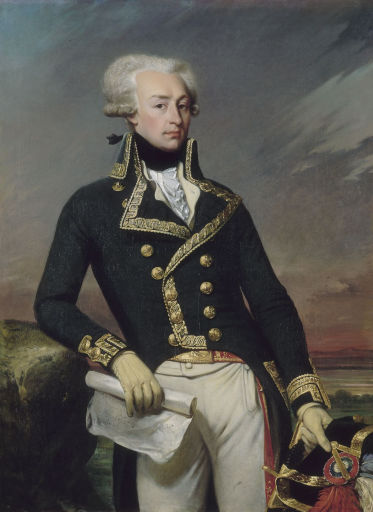
Marquis de Lafayette

Marquis de Lafayette

Military officer

Start Chat

AI Personality

Quick Facts

Major general in the American Revolutionary War
Key symbol of Franco-American alliance
Leader in the early French Revolution and author of constitutional rights proposals

Life Journey

1757Born into an Auvergne noble family

Born Marie-Joseph Paul Yves Roch Gilbert du Motier in the château at Chavaniac-Lafayette, he inherited a proud military lineage. His upbringing combined aristocratic duty with early exposure to Enlightenment ideas circulating in France.

1759Father killed in the Seven Years' War

His father, Michel du Motier, died at the Battle of Minden while fighting the British, leaving Lafayette an orphaned heir in a martial tradition. The loss deepened his sense of honor and obligation to public service.

1771Becomes an orphaned heir with a large fortune

After the deaths of his mother and grandfather, he inherited significant wealth and the Lafayette name, giving him unusual independence for a teenager. The fortune later financed his political causes and his voyage to America.

1773Receives a commission in the French army

He entered the elite military world as an officer in the French forces, learning court politics and professional soldiering. Service in peacetime garrisons left him hungry for a cause worthy of his ambitions.

1774Marries Adrienne de Noailles

He married Marie Adrienne Françoise de Noailles, linking him to one of France’s most powerful aristocratic families. Adrienne became his steadfast partner, managing estates and enduring imprisonment during the Revolution.

1776Inspired by the American fight for independence

Hearing of the American rebellion in salons and at court, he became convinced it embodied Enlightenment liberty in action. He sought contacts among American envoys and French supporters of the insurgent colonies.

1777Defies royal orders and sails for America

Despite King Louis XVI’s attempts to stop him, he purchased the ship La Victoire and sailed at his own expense to join the Continental cause. The bold decision risked his career and fortune but made him a transatlantic symbol of liberty.

1777Appointed major general in the Continental Army

He presented himself to the Continental Congress and accepted service without pay, gaining a major general’s commission. His youth drew skepticism, but his willingness to fight and fund supplies quickly won respect.

1777Wounded at the Battle of Brandywine

At Brandywine he was shot while rallying troops during a chaotic retreat, demonstrating personal bravery under fire. The wound and his conduct helped cement his bond with General George Washington.

1778Endures Valley Forge and joins Washington’s inner circle

He spent the harsh winter encampment at Valley Forge, sharing privations that strengthened his credibility with American soldiers. Washington treated him like an adopted son, mentoring him in command and politics.

1779Returns to France to secure military support

He sailed back to lobby the French government, pressing ministers and court figures to back the American alliance with troops and ships. His advocacy helped align French strategy with Washington’s needs and the wider war against Britain.

1781Helps trap Cornwallis in the Yorktown campaign

In Virginia he maneuvered against Lord Cornwallis, coordinating with American forces until French troops under Rochambeau and the fleet of de Grasse arrived. The combined operations culminated in the decisive siege that secured American independence.

1784Triumphal tour of the United States

He visited many states as a celebrated ally, meeting legislators, veterans, and civic leaders who viewed him as a hero of independence. The journey reinforced his lifelong commitment to republican ideals and Franco-American friendship.

1789Elected to the Estates-General and backs a rights declaration

Chosen as a deputy of the nobility for Riom, he arrived as France’s fiscal crisis erupted into revolution. Working with Thomas Jefferson in Paris, he promoted drafts that fed into the Declaration of the Rights of Man and of the Citizen.

1789Becomes commander of the Paris National Guard

After the storming of the Bastille, he took command of the National Guard, seeking to keep order while preserving revolutionary gains. He adopted the tricolor cockade, trying to unite king, nation, and the people under a constitutional framework.

1791Political crisis after the Champ de Mars massacre

When crowds gathered demanding the king’s deposition after the Flight to Varennes, the National Guard fired and killed demonstrators at the Champ de Mars. The bloodshed damaged his reputation with radicals and accelerated polarization in Paris politics.

1792Flees France and is captured by Austrian forces

Denounced by extremists and fearing arrest, he attempted to leave revolutionary France as the monarchy collapsed. He was seized by Austrian troops and treated as a dangerous revolutionary, beginning years of captivity in foreign prisons.

1797Released from imprisonment after diplomatic pressure

Held at places including Olmütz, he was finally freed as Napoleon Bonaparte’s victories reshaped European diplomacy. His release owed much to negotiations tied to the Treaty of Campo Formio and to international advocacy for his family.

1824Returns to America for a celebrated farewell tour

Invited as the ‘Nation’s Guest,’ he toured all 24 states, greeted by parades, legislatures, and aging veterans of the Revolution. Congress honored him with money and land grants, reaffirming his unique place in American memory.

1830Influential role in the July Revolution

During the July Days he supported the uprising against Charles X and briefly commanded the National Guard again. He backed Louis-Philippe as a constitutional ‘citizen king,’ hoping to secure liberal reforms without renewed terror.

1834Dies after a lifetime of transatlantic revolution

He died in Paris as a revered liberal symbol, mourned by French constitutionalists and Americans who remembered Yorktown. He was buried in Picpus Cemetery, with soil from Bunker Hill placed on his grave as a lasting tribute.

Chat