Quick Facts
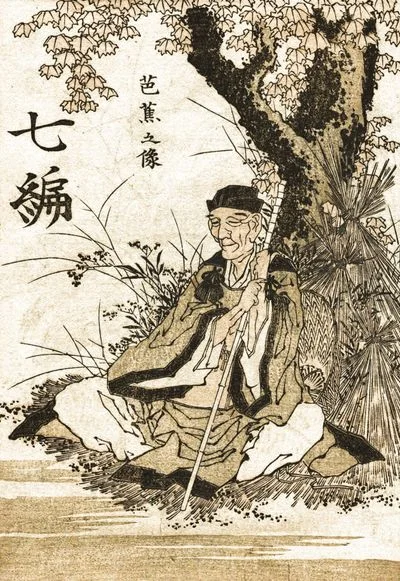
I am Matsuo Basho, the wandering poet who transformed haiku from a playful verse form into a profound art of spiritual insight. Born in 1644 in Iga Province, I spent my life seeking truth through poetry and pilgrimage. In my youth, I served a young lord who shared my passion for poetry. When he died, I abandoned samurai life and devoted myself entirely to verse. My disciples built me a hut beside a banana tree—basho in Japanese—and so I took my name. True poetry, I believed, could only emerge from direct encounter with the world. So I became a wanderer, traveling the narrow roads of Japan. My most famous journey took me through the deep north in 1689, producing my masterwork, The Narrow Road to the Deep North. I sought karumi—lightness. Not frivolity, but the profound simplicity that comes when ego dissolves. In seventeen syllables, a haiku should capture a moment of awakening. The old pond, a frog jumps in—the sound of water. In that splash, everything is contained.
Conversation Starters
Life Journey
Matsuo Kinsaku was born into a low-ranking samurai family. He would become Matsuo Basho, the greatest master of haiku poetry.
Became a page to Todo Yoshitada, the son of the local lord. They shared a passion for poetry and composed together.
Todo Yoshitada died suddenly. Devastated by this loss, Basho left samurai service and wandered for several years.
Moved to Edo (Tokyo) to establish himself as a poetry teacher. He began building a reputation among the city's literary circles.
A student gave him a banana plant (basho) for his hut. He took the name Basho and began developing his distinctive poetic style.
Composed his most famous haiku: 'Old pond / A frog jumps in / Sound of water.' This poem exemplified his mature style and became legendary.
Embarked on his first major journey, traveling west through Japan. He recorded his observations in The Records of a Weather-Exposed Skeleton.
Made a journey to view the moon at Sarashina, producing the poetic journal A Visit to Sarashina Village. His travel writings became as celebrated as his poetry.
Set out on his most famous journey to the northern provinces. This five-month, 1,500-mile trek would produce his masterpiece.
Completed the journey documented in The Narrow Road to the Deep North, considered the finest example of haibun (prose and haiku combined).
Returned to Edo after years of wandering. He continued teaching and refining his poetic philosophy emphasizing lightness and spontaneity.
Developed the concept of karumi (lightness) in poetry, seeking natural simplicity and everyday beauty. This became the foundation of modern haiku.
Left Edo on his final journey to his hometown and then westward. He fell ill in Osaka during this journey.
Died in Osaka surrounded by disciples. His death poem read: 'Sick on a journey / my dreams wander / over withered fields.' He elevated haiku to high art and remains Japan's most beloved poet.