Quick Facts
A shrewd Parthian king who forged an empire, humbled Seleucids, and blended Iranian and Hellenistic power traditions.
Conversation Starters
Life Journey
Born into the Arsacid dynasty that ruled Parthia from northeastern Iran. His upbringing likely involved noble cavalry traditions and court politics shaped by rivalry with the Seleucid Empire and neighboring steppe powers.
As a prince, he would have learned mounted warfare, archery, and the management of powerful clan leaders. Court life emphasized alliances and hostages, tools the Arsacids used to survive between larger empires.
He became king of Parthia as the Arsacid state sought to expand beyond its eastern Iranian base. The Seleucid realm was distracted by internal conflict, giving him room to press westward with bold campaigns.
He strengthened royal authority by balancing major Parthian houses with loyal military governors. By rewarding cavalry leaders and securing key strongholds, he prepared the kingdom for sustained wars against Seleucid satraps.
Parthian forces pushed into Media, targeting a wealthy region that connected Iran to Mesopotamia. The campaign exploited Seleucid weakness and aimed to seize cities, treasure, and the legitimacy that came with old Achaemenid lands.
After victories, he set loyal governors over Media and demanded tribute from local elites. Parthian rule blended Iranian aristocratic power with existing urban institutions, reducing resistance while extracting revenue for further conquest.
He moved into Babylonia, a prize for any Near Eastern ruler because of its cities and grain wealth. Holding the region meant confronting Seleucid garrisons and negotiating with influential temple and civic communities.
Parthian troops occupied Seleucia on the Tigris, signaling that the Arsacids could rule Greek-speaking urban centers. The capture brought skilled administrators, coin mints, and access to Mesopotamia’s commercial networks.
He seized Ctesiphon near the Tigris, creating a strategic base opposite Seleucia. The move let Parthia project power into Mesopotamia while keeping communication lines open back to Iranian heartlands and noble cavalry musters.
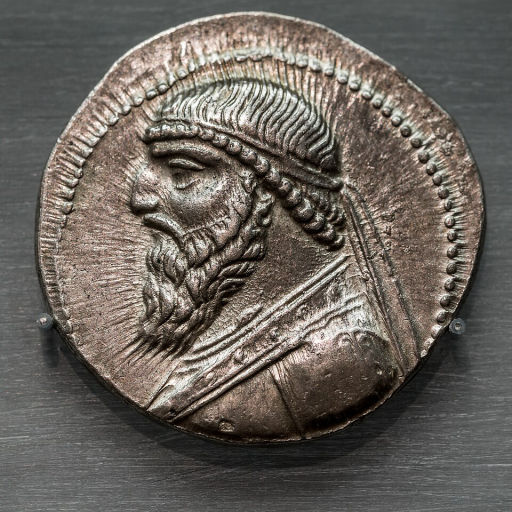
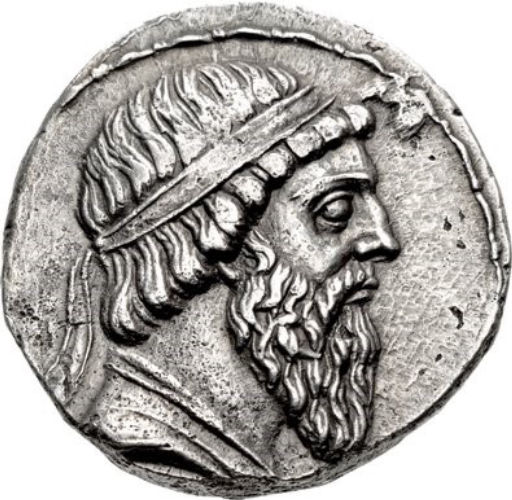
On coinage and proclamations, he used titles such as "King of Kings" while also engaging Greek political language. This dual strategy appealed to Iranian elites and to city populations accustomed to Seleucid-style monarchy.
Seleucid commanders attempted to recover lost territories, but Parthian cavalry tactics and flexible alliances blunted their efforts. By holding key river cities, he secured customs revenues and supply corridors for future wars.
Demetrius II invaded to regain Mesopotamia but was defeated and taken captive by Parthian forces. Keeping him alive as a royal hostage gave Mithridates leverage in diplomacy and a symbol of Parthia’s new supremacy.
Demetrius II was treated as a valuable political asset rather than a mere prisoner. His captivity discouraged some enemies, encouraged defections among rival claimants, and demonstrated that Parthia could manage Hellenistic dynastic politics.
By holding Media and Mesopotamia, Parthia gained influence over caravan routes linking Central Asia to the Mediterranean world. He relied on local intermediaries and fortified nodes to protect tolls, merchants, and strategic passes.
In Greek-founded cities he tolerated civic councils and coinage conventions while asserting Arsacid supremacy. At the same time, he rewarded Iranian nobles with lands and offices, preventing the court from being dominated by city elites.
Late in his reign he faced the constant need to defend long borders and keep newly conquered provinces loyal. He prepared the transition to the next Arsacid ruler by maintaining noble alliances and stable command structures.
He died having reshaped the political map of the Near East, reducing Seleucid control to a shrinking western core. His conquests in Media and Mesopotamia laid foundations that later Parthian kings would defend against Rome.