Quick Facts
An empire-building Aztec ruler whose fateful diplomacy with Spaniards accelerated Tenochtitlan's fall and reshaped the Americas.
Conversation Starters
Life Journey
Born into the royal lineage of the Mexica in the island city of Tenochtitlan, where politics and ritual intertwined. Court education prepared him for priestly discipline, diplomacy, and war within the Triple Alliance system.
As a young noble, he studied Nahuatl sacred calendars, state ritual, and governance under experienced priests and commanders. This training in temples and schools shaped his reputation for austerity and careful statecraft.
Serving during the reign of Ahuitzotl, he rose as a respected warrior and commander in imperial expansion. Victories brought captives for public ceremonies and strengthened tribute demands on distant provinces under Mexica oversight.
He became a key figure among nobles and advisers who managed tribute, justice, and diplomacy across the empire. His disciplined demeanor and ritual knowledge increased his authority among priestly elites in the Sacred Precinct.
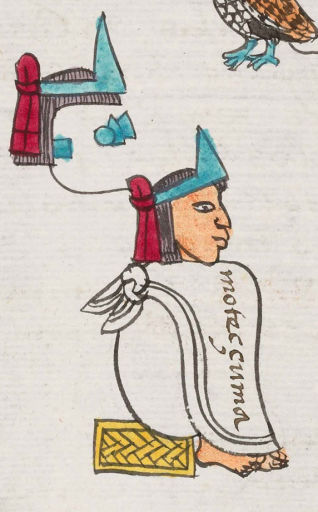
After Ahuitzotl died, leading nobles selected Moctezuma as Huey Tlatoani to guide the empire and its gods. Coronation rites in Tenochtitlan linked military legitimacy to divine mandate and reinforced hierarchy across subject polities.
He tightened rules of access to the palace and elevated expectations for noble conduct in ceremonies and councils. These reforms projected sacred authority while signaling that imperial order depended on strict etiquette and centralized control.
Imperial officials reviewed tribute flows of maize, cotton, and luxury goods from many altepetl, reducing evasions and local bargaining. The system enriched Tenochtitlan and fueled monumental building and ritual obligations in the capital.
During the Xiuhmolpilli cycle, priests renewed the sacred fire to ensure the sun would rise again. The ceremony reinforced Moctezuma's role as mediator between gods and people, uniting allies and subjects in shared ritual time.
Food shortages and local strains tested the tribute system, prompting intensified oversight and punitive actions against resistance. The crisis highlighted tensions between Mexica demands and the autonomy of subject city-states across Mesoamerica.
Persistent conflict with Tlaxcala and shifting rivalries forced careful military planning and diplomacy by imperial captains. The standoff limited expansion eastward and created openings for future Spanish-Indian alliances against Tenochtitlan.
Messengers brought news of Spanish ships and armed foreigners near the coast, prompting anxious debate at court. Moctezuma ordered reconnaissance and gifts, trying to assess intentions while managing omens interpreted by priests.
As Cortes advanced inland, Moctezuma sent envoys bearing gold, textiles, and ritual regalia to deter or redirect the newcomers. The exchange, filtered through translators like Malintzin, revealed misunderstandings and escalating Spanish ambition.
In November, Moctezuma greeted Cortes on causeways leading into the lake city, staging ceremony and hospitality. The decision sought to control events through protocol, but it placed the imperial court within reach of Spanish coercion.
After a clash tied to Spanish demands and tensions in the capital, Cortes seized Moctezuma to secure leverage over Mexica leaders. Though still treated as ruler in appearance, his captivity fractured authority and emboldened resistance.
While Cortes was absent, Pedro de Alvarado attacked celebrants at a major festival in the Sacred Precinct, igniting revolt. Fighting engulfed Tenochtitlan, and Moctezuma's attempts to calm the people exposed his precarious position.
Moctezuma died in late June amid street battles between Mexica forces and Spanish occupiers, with accounts disputing the exact cause. His death accelerated the rise of Cuitlahuac and hardened resolve against the invaders in the capital.
Soon after his death, Mexica warriors attacked the fleeing Spaniards on causeways, turning retreat into disaster remembered as La Noche Triste. The event showed the empire's resilience even as smallpox and alliances would soon shift the war.