Quick Facts
Silent Spring. Started the environmental movement by exposing DDT.
Conversation Starters
Life Journey
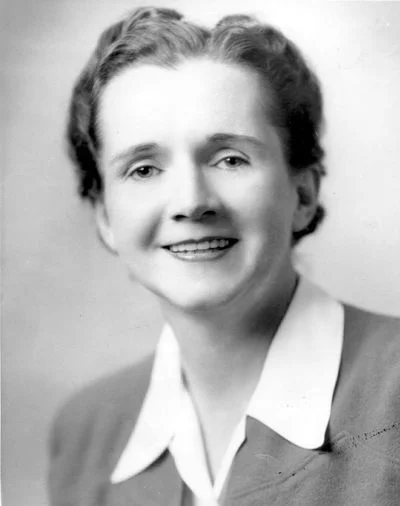
Rachel Louise Carson was born on a small family farm near Springdale, Pennsylvania. Growing up surrounded by nature, she developed an early love for the natural world that would shape her entire life and career.
Young Rachel had her first story published in St. Nicholas Magazine, a prestigious children's publication. This early success revealed her dual passions for writing and nature that would define her legacy.
Carson enrolled at Pennsylvania College for Women to study English literature. Her plans to become a writer would soon be transformed by an inspiring biology professor who opened her eyes to the wonders of science.
After taking a required biology course, Carson made the pivotal decision to switch her major from English to biology. This choice would allow her to combine her literary talents with scientific inquiry in unprecedented ways.
Carson spent her first summer at the Woods Hole Marine Biological Laboratory, where she saw the ocean for the first time. This encounter with the sea ignited a lifelong fascination with marine biology and ocean ecosystems.
Carson completed her Master's degree in zoology at Johns Hopkins University. Despite financial hardships during the Great Depression that prevented further studies, she had gained a solid scientific foundation.
Carson began working for the U.S. Bureau of Fisheries as a junior aquatic biologist. She wrote radio scripts about marine life, beginning her career of making complex scientific topics accessible to the public.
After her father's death and sister's passing, Carson became the sole provider for her mother and two orphaned nieces. This responsibility drove her to seek additional income through freelance writing about nature.
Carson's essay 'Undersea' was published in The Atlantic Monthly, earning critical acclaim for its poetic yet scientifically accurate portrayal of ocean life. This piece would become the foundation for her first book.
Carson's first book, Under the Sea-Wind, was published. Though initially overshadowed by World War II, this lyrical account of coastal marine life demonstrated her unique ability to blend science with beautiful prose.
Carson was promoted to Editor-in-Chief of publications at the U.S. Fish and Wildlife Service. This position gave her access to the latest marine research while she continued writing books on evenings and weekends.
The Sea Around Us was published to enormous acclaim, remaining on the New York Times bestseller list for 86 weeks. The book won the National Book Award and was translated into over 30 languages.
The success of The Sea Around Us allowed Carson to resign from her government position and dedicate herself entirely to writing. She also purchased a coastal cottage in Maine where she could study tidepools.
Carson completed her sea trilogy with The Edge of the Sea, a guide to the Atlantic coastal ecosystems. The book combined scientific accuracy with her characteristic poetic prose, furthering her reputation as a nature writer.
After receiving a letter from a friend about bird deaths following DDT spraying, Carson began intensive research into synthetic pesticides. This investigation would consume the next four years and change environmental policy forever.
Carson was diagnosed with breast cancer while still researching pesticides. Despite radiation treatments and declining health, she pressed on with her work, determined to complete what she knew would be her most important book.
Silent Spring was published, documenting the devastating effects of pesticides on the environment. The chemical industry attacked her fiercely, but the book mobilized public opinion and led directly to the banning of DDT and the creation of the EPA.
Despite being gravely ill, Carson testified before a Senate subcommittee on pesticide hazards. Her calm, scientific testimony helped convince legislators of the need for environmental protection laws.
Rachel Carson died of heart failure related to breast cancer. She lived to see Silent Spring validated by a presidential science advisory committee. Her legacy includes the environmental movement and the creation of the Environmental Protection Agency.