Quick Facts
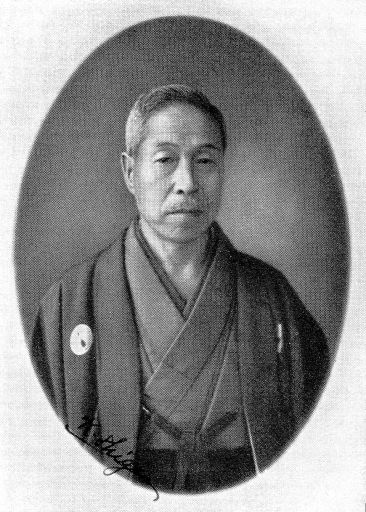
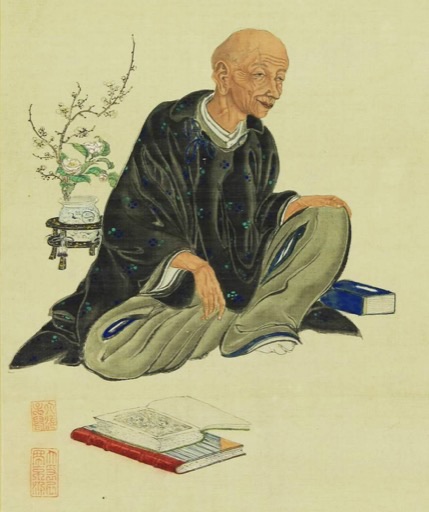
Sugita Genpaku (1733-1817) was a pioneering Japanese physician who revolutionized Japanese medicine by introducing Western anatomical knowledge through his landmark translation of Kaitai Shinsho (New Book of Anatomy) in 1774. Born into a family of samurai physicians in Edo (Tokyo), he became fascinated with Dutch learning (rangaku) when he witnessed the striking accuracy of Western anatomical illustrations compared to traditional Chinese medical texts. Together with Maeno Ryotaku and other colleagues, he undertook the monumental task of translating the Dutch translation of a German anatomical text, despite having virtually no knowledge of the Dutch language. This three-year translation effort, accomplished through painstaking comparison and deduction, opened Japan to Western scientific knowledge and established rangaku as a legitimate field of study. Genpaku's memoir Rangaku Kotohajime (The Beginning of Dutch Studies) documents this revolutionary endeavor. His work challenged centuries of Chinese medical tradition in Japan and laid the groundwork for Japan's rapid modernization in the Meiji era.
Conversation Starters
Life Journey
Born into the Sugita family, hereditary physicians serving the Obama domain. His father was a respected practitioner of traditional Chinese medicine, and young Genpaku was expected to follow in this tradition. Growing up in Edo exposed him to the intellectual currents of the Tokugawa period.
Commenced formal training in traditional Chinese medicine under his father and other established physicians. He mastered the classical texts of Chinese medical theory while beginning to hear rumors of remarkable Western medical knowledge trickling in through the Dutch trading post at Nagasaki.
Became an official physician serving the Obama domain, following his family tradition. This position provided him with financial stability and social standing while allowing him to pursue his growing interest in Western learning on the side.
Obtained a copy of Ontleedkundige Tafelen, the Dutch translation of a German anatomical text by Johann Adam Kulmus. The detailed illustrations fascinated him, though he could not read a single word of the Dutch text. This acquisition would change the course of his life.
Attended the dissection of an executed criminal at Kozukappara, comparing what he observed with both Chinese medical texts and the Dutch anatomical illustrations. The Dutch diagrams proved remarkably accurate, while traditional Chinese depictions were revealed as symbolic rather than anatomical. This revelation shocked him profoundly.
Immediately after the dissection, met with colleagues Maeno Ryotaku and Nakagawa Junnan to begin translating the Dutch text. Despite knowing almost no Dutch, they resolved to decipher the text word by word through logical deduction and comparison, a process that would consume three years of intense effort.
After two years of painstaking work, the team achieved breakthroughs in understanding key anatomical terms. They had to create new Japanese words for concepts that had no equivalent in traditional Chinese medicine, essentially inventing a new medical vocabulary.
Published Kaitai Shinsho (New Book of Anatomy), Japan's first translation of a Western medical text. The work included detailed anatomical illustrations and descriptions that revolutionized Japanese understanding of human anatomy. It sparked intense interest in Western learning throughout Japan.
In the process of translating Kaitai Shinsho, Genpaku and his colleagues had to invent entirely new Japanese terms for anatomical concepts unknown in Chinese medicine. Words like shinkeishinkei (nerve) and nankotsu (cartilage) were coined, creating the foundation of modern Japanese medical terminology.
Founded an informal academy for the study of Dutch learning, attracting students eager to access Western scientific knowledge. This circle became a center for translating and studying Western texts, nurturing the next generation of rangaku scholars.
Lost his dear friend and translation partner Maeno Ryotaku. Their collaboration had been essential to the success of Kaitai Shinsho, and Genpaku mourned the loss of the man who had shared his revolutionary vision for Japanese medicine.
Dutch learning gradually gained acceptance among the shogunate and domain governments, with translation bureaus being established. The success of Kaitai Shinsho had proven the value of Western knowledge, and Genpaku saw his life's work validated.
At age 82, composed Rangaku Kotohajime (The Beginning of Dutch Studies), a memoir documenting the history of rangaku and the story of the Kaitai Shinsho translation. This work preserved the history of the rangaku movement for future generations.
Spent his final year reflecting on the transformation he had helped bring about in Japanese medicine and learning. He had witnessed the rangaku movement grow from a small circle of curious physicians to a nationwide intellectual movement.
Died peacefully in Edo, having lived to see Western learning become established in Japan. His translation work had opened the door to Western science and medicine, laying the foundation for Japan's rapid modernization in the following century.