Chumi
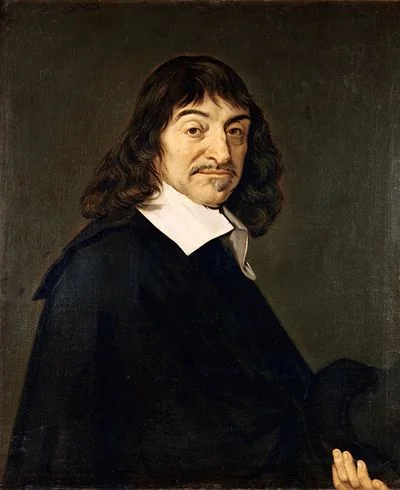
René Descartes

René Descartes

Philosopher

Start Chat

AI Personality

Quick Facts

Cogito Ergo Sum
Cartesian Coordinates
Cartesian Dualism

Life Journey

1596Born to a noble family in Touraine

René Descartes was born into a family of minor nobility. His father was a councillor in the Parliament of Brittany. His birthplace would later be renamed 'Descartes' in his honor.

1597Mother died in childbirth

Descartes' mother Jeanne Brochard died giving birth to another child. Young René, described as sickly from birth, was raised by his grandmother and a nurse.

1607Entered Jesuit college La Flèche

Descartes enrolled at the Collège Royal Henry-Le-Grand, one of the most prestigious Jesuit schools in Europe. Here he studied classics, science, and mathematics for eight years.

1616Earned law degree from Poitiers

Following his father's wishes, Descartes obtained a law degree from the University of Poitiers. However, he never practiced law, instead seeking knowledge through travel and experience.

1618Joined Dutch army, met Isaac Beeckman

Descartes enlisted in the Dutch States Army. He met physicist Isaac Beeckman, who reignited his passion for mathematics and natural philosophy, profoundly influencing his intellectual development.

1619Three dreams inspired philosophical method

On November 10, Descartes experienced three vivid dreams that he interpreted as a divine sign. These visions inspired his lifelong quest to develop a unified scientific method based on reason.

1621Began years of European travel

Descartes resigned from the army and spent several years traveling through Germany, Italy, and France. He studied 'the great book of the world' while developing his philosophical ideas.

1628Settled in the Dutch Republic

Seeking intellectual freedom and solitude, Descartes moved to the Dutch Republic where he would spend most of his remaining life. The tolerant atmosphere allowed him to work undisturbed.

1633Suppressed treatise after Galileo's condemnation

Learning of Galileo's condemnation by the Inquisition, Descartes withheld publication of his treatise 'The World' which supported heliocentrism. He feared similar persecution by the Church.

1635Daughter Francine born

Descartes had a daughter, Francine, with his servant Helena Jans van der Strom. Though born out of wedlock, he loved her dearly and planned to educate her in France.

1637Published Discourse on the Method

Descartes published his groundbreaking 'Discourse on the Method,' introducing his famous proposition 'I think, therefore I am' and laying foundations for modern Western philosophy.

1640Daughter Francine died

Five-year-old Francine died of scarlet fever. Descartes called her death the greatest sorrow of his life. This personal tragedy deepened his philosophical reflections on the soul.

1641Published Meditations on First Philosophy

Descartes published his 'Meditations,' systematically doubting all beliefs to establish certain knowledge. This work became a cornerstone text in Western philosophy and epistemology.

1644Published Principles of Philosophy

Descartes published his 'Principles of Philosophy,' presenting his physics and cosmology in textbook form. He hoped it would replace Aristotelian physics in European universities.

1649Invited to Sweden by Queen Christina

Queen Christina of Sweden, eager for philosophical instruction, invited Descartes to her court. Despite reluctance about the harsh climate, he accepted and arrived in autumn.

1649Began tutoring Queen Christina

Descartes began giving philosophy lessons to Queen Christina at 5 AM, the only time she had free. The early hours in the cold Swedish winter took a severe toll on his health.

1650Died of pneumonia in Stockholm

Descartes contracted pneumonia after only months in Sweden. He died on February 11, 1650, reportedly saying 'So, my soul, a time for parting.' His body was later moved to Paris.

Chat