Quick Facts
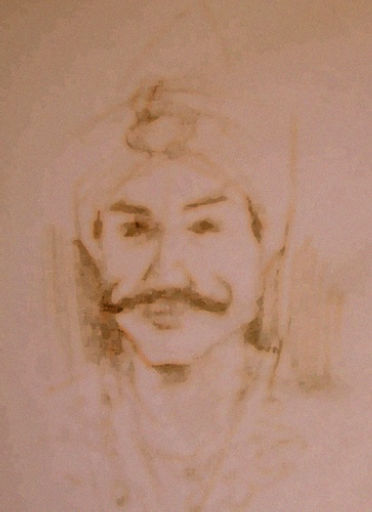
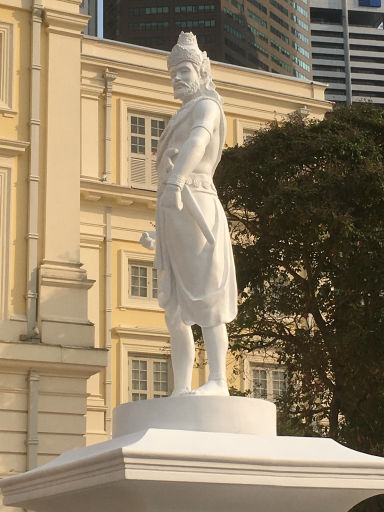
A Srivijayan prince-turned-founder whose legendary lion sighting shaped Singapore’s origin story and royal identity.
Conversation Starters
Life Journey
Born into a ruling family tied to the Srivijayan sphere, later remembered as a prince of Palembang. His early identity is preserved mainly through the Malay Annals, blending court memory with legend.
He grew up amid river ports and sea routes linking Sumatra to Java, the Malay Peninsula, and China. Court education emphasized diplomacy, tribute etiquette, and the control of harbors that taxed passing ships.
Regional politics were unsettled by the rise of Java’s Singhasari and later Majapahit influence over Sumatra’s coasts. These pressures likely encouraged ambitious princes to seek new bases and allies across the Straits.
As a young noble, he gained standing among chiefs and retainers who managed labor, ships, and riverine fortifications. Later tradition frames him as capable of gathering followers for a major expedition.
He assembled boats, provisions, and a retinue suited for coastal travel and settlement building. Maritime Southeast Asian courts often moved by sea, and founding a new port could secure revenue and legitimacy.
The voyage crossed one of the world’s busiest medieval waterways, crowded with Malay, Javanese, Tamil, and Chinese traders. Control of a safe anchorage here meant access to tolls, alliances, and information networks.
Temasek was known as a coastal settlement with links to regional commerce and sea people. Its position near sheltered waters made it attractive for a court seeking both security and customs income.
The Malay Annals recount that he saw a majestic beast identified as a lion, interpreted as a powerful omen. The story explains the name “Singapura,” and functions as a royal foundation myth for authority.
He established a new polity by ritual proclamation and the appointment of chiefs, embedding his court into local networks. Such foundations relied on controlling landing places, freshwater access, and the loyalty of sea captains.
A functioning port needed scribes, weighers, and leaders who could regulate trade and settle disputes. The court’s prestige depended on distributing imported cloth, ceramics, and metals to bind followers and allies.
He cultivated ties with coastal groups across the peninsula and islands, securing pilots and supplies for shipping. These relationships reduced raids and helped position Singapura as a credible stop for long-distance merchants.
Control of narrow channels and anchorages allowed his rulers to levy dues and protect convoys. In a maritime world, influence often meant commanding strategic chokepoints rather than large inland territories.
Court tradition emphasized lineage claims and ceremonial display to persuade followers that rule was divinely favored. Later chronicles connect him to prestigious ancestors, reflecting how genealogy served politics in Malay courts.
By organizing succession and noble offices, he aimed to make Singapura more than a temporary camp. The narrative presents him as a progenitor whose descendants and successors carried the polity’s name forward.
Details of his death are not securely dated, but his memory endured in the Sejarah Melayu as a foundational ruler. The story’s survival reflects how later courts preserved origin myths to explain authority and place.
The Sejarah Melayu, compiled in the early 17th century within the Johor Sultanate milieu, preserved his foundation narrative. Its blend of history and myth helped later Malay rulers articulate lineage, etiquette, and legitimacy.