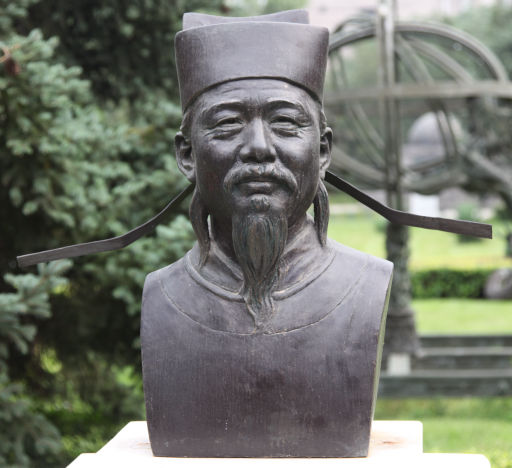
Kurzinfo
Ein Universalgelehrter der Song-Dynastie, der Beobachtung, Staatskunst und Mathematik zu bahnbrechenden Einsichten über Natur und Technik verband.
Gesprächseinstiege
Lebensweg
Shen Kuo wurde während der nördlichen Song-Dynastie geboren, vermutlich in Qiantang, wo die Gelehrtenkultur enzyklopädisches Lernen hoch schätzte. Die amtlichen Verbindungen seiner Familie brachten ihn früh mit Verwaltung, klassischen Texten und technischen Handwerken in Kontakt.
Als Jugendlicher studierte er konfuzianische Klassiker neben Arithmetik, Kalenderkunde und Geografie, wie sie in Prüfungshaushalten üblich waren. Lehrer und Verwandte betonten sorgfältiges Festhalten von Daten, eine Gewohnheit, die später seine wissenschaftlichen Notizbücher prägte.
Auf dem Weg durch Jiangnan und den unteren Jangtse begegnete er Wasserbauwerken, Salzverwaltung und lokalen Vermessungspraktiken. Diese Reisen schärften seinen Blick für Gelände, Wasserwege und die Mechanik hinter öffentlicher Infrastruktur.
Nach dem Aufstieg im Prüfungssystem der Song-Dynastie begann Shen in Ämtern zu dienen, die Haushaltsführung und technische Aufsicht verlangten. Die meritokratische Bürokratie verschaffte ihm Zugang zu Karten, Archiven und spezialisierten Handwerkern.
In Zusammenarbeit mit lokalen Verwaltungen begutachtete er Deiche, Kanäle und Entwässerung, um Überschwemmungen zu verringern und Ackerland zu schützen. Er verglich gemessene Wasserstände und Bodenbedingungen und behandelte Ingenieurkunst als Frage von Belegen und Entwurf.
Shen verfeinerte Methoden zur Messung von Entfernungen und Höhen, die die staatliche Kartografie stärkten. Indem er auf einheitliche Maßstäbe und überprüfte Orientierungspunkte pochte, half er, Karten zu Verwaltungswerkzeugen für Besteuerung und Verteidigungsplanung zu machen.
Während der Neuen Politik Wang Anshis diente Shen in Ämtern, in denen Finanzreformen und technische Kompetenz hoch geschätzt wurden. Das politische Klima war umstritten, belohnte jedoch Beamte, die Probleme quantifizieren und praktikable Lösungen vorschlagen konnten.
Shen arbeitete mit Hofspezialisten an astronomischen Beobachtungen für den Staatskalender, einem zentralen Symbol kaiserlicher Legitimität. Er betonte Instrumentengenauigkeit und wiederholbare Messungen und hielt Abweichungen fest, die Korrekturen verlangten.
Mit der Bewertung der militärischen Einsatzbereitschaft beauftragt, untersuchte er Versorgungswege, Befestigungen und Geländebedingungen, die Truppenbewegungen beeinflussten. Seine Berichte behandelten Geografie als strategische Daten und verknüpften kartografische Details mit realen operativen Ergebnissen.
In Verhandlungen mit der von den Chitan geführten Liao-Dynastie nutzte Shen Karten und historische Dokumente, um Gebietsansprüche zu begründen. Die Mission zeigte, wie Gelehrsamkeit, Belege und Überzeugungskraft als Instrumente der Außenpolitik wirken konnten.
Er bewertete Visiertechniken und die Grenzen bestehender Geräte der Hofastronomen. Durch das Beharren auf systematischer Beobachtung und Bewusstsein für Messfehler trug er dazu bei, Astronomie als messbasierte Disziplin statt als Omenkunde zu verstehen.
Als sich die Hofpolitik gegen Reformbeamte wandte, geriet Shen in Anschuldigungen und amtliche Untersuchungen. Die Episode bremste seinen Aufstieg und drängte ihn trotz seines Rufs als fähiger Fachmann aus dem Zentrum der Macht.
Nach dem Rückzug aus hohen Ämtern widmete Shen mehr Zeit der Erforschung natürlicher Phänomene und technischer Künste außerhalb des Hofalltags. Er sammelte Berichte von Handwerkern und Beamten und prüfte sie durch eigene Experimente und Berechnungen.
Shen beschrieb, dass magnetisierte Nadeln nicht exakt in Nord-Süd-Richtung ausgerichtet sind, eine frühe Aussage zur magnetischen Deklination. Er verband dies mit der Navigation und zeigte, wie sorgfältige Beobachtung Alltagstechnik auf See und Flüssen verbessern kann.
Nachdem er versteinerten Bambus in nördlichen Regionen gesehen hatte, argumentierte er, das Gebiet müsse früher wärmer und feuchter gewesen sein. Zudem erklärte er, wie Sedimentation und Erosion Berge und Küsten umformen, und nahm damit spätere Ideen der Geomorphologie vorweg.
Auf seinem Anwesen, das als Traumteich bekannt war, ordnete er jahrzehntelange Beobachtungen zu einem Werk, das später als Traumteich-Aufzeichnungen bekannt wurde. Die Sammlung reichte von Mathematik und Optik bis zu Ingenieurwesen und Archäologie und war für informierte Leser verfasst.
In seinen späteren Jahren erweiterte er Abhandlungen und Korrespondenz zu Verwaltungspraxis und technischen Problemen, gestützt auf seine Hoferfahrung. Freunde und Mitbeamte verbreiteten seine Ideen und trugen dazu bei, eine ungewöhnlich empirische Stimme der Song-Zeit zu bewahren.
Shen Kuo starb in der späten Phase der nördlichen Song-Zeit und hinterließ ein Vermächtnis, das Staatskunst und wissenschaftliche Neugier verband. Seine Schriften bewahrten Methoden der Beobachtung und des skeptischen Prüfens, die spätere chinesische Gelehrsamkeit und Technikgeschichte beeinflussten.