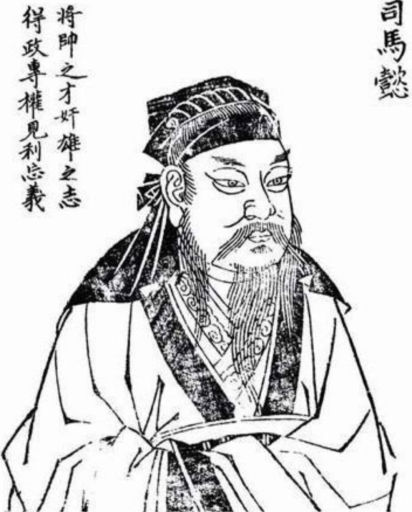
Quick Facts
A patient strategist and calculating statesman who outlasted rivals, reshaping the Three Kingdoms through quiet, decisive power.
Conversation Starters
Life Journey
Born to the prominent Sima family as the Eastern Han dynasty weakened under warlords and court factions. Growing up amid regional militarization, he received a classical education that emphasized history, law, and statecraft.
As Cao Cao consolidated northern China, Sima Yi became known locally for sharp judgment and careful self-presentation. His cautious demeanor, later framed as feigned illness, reflected the dangers of serving powerful patrons in chaotic politics.
Sima Yi was recruited into Cao Cao's expanding bureaucracy and began work in posts that required reliable paperwork and political discretion. In the Wei court environment, he learned how military authority and civil administration reinforced each other.
With Cao Cao elevated as Duke of Wei, Sima Yi advanced into more sensitive advisory roles tied to policy and personnel. He cultivated alliances among officials while carefully avoiding open rivalry with established Cao loyalists.
After Cao Pi forced Emperor Xian's abdication and founded the Wei dynasty, Sima Yi adapted quickly to the new imperial order. He helped stabilize court routines and command structures during a fragile transfer of legitimacy.
When Cao Rui succeeded Cao Pi, the court relied on experienced administrators and generals to secure the throne. Sima Yi's standing grew as he handled state affairs and military planning during shifting alliances among Wei elites.
Zhuge Liang launched the first major Northern Expedition from Hanzhong, testing Wei defenses along the frontier. Sima Yi helped coordinate responses, emphasizing supply security, fortified positions, and denying Shu decisive battlefields.
During repeated Shu advances, Sima Yi prioritized attrition and logistics, forcing Zhuge Liang to stretch supply lines through difficult terrain. Wei commanders focused on holding key passes and granaries rather than risking a single dramatic engagement.
At the Wuzhang Plains, Sima Yi refused provocations and maintained a defensive posture to exhaust Shu forces. Zhuge Liang died during the campaign, and Wei's steady containment preserved the frontier and boosted Sima Yi's prestige.
Sima Yi led a major expedition against Gongsun Yuan, who ruled Liaodong and alternated diplomacy with Wei and Eastern Wu. After a hard siege and flooding tactics at Xiangping, he captured the city and reasserted Wei control in the northeast.
After Emperor Cao Rui died, Cao Fang ascended as a minor, and power concentrated in a regency led by Sima Yi and Cao Shuang. Their partnership was unstable, as each sought influence over appointments, armies, and access to the young emperor.
Cao Shuang sidelined senior officials and promoted his associates, reshaping the command structure around his household. Sima Yi adopted a low profile, presenting himself as retired and infirm while quietly tracking court factions and troop loyalties.
When Cao Shuang escorted Emperor Cao Fang to the Gaoping Tombs, Sima Yi moved troops to control Luoyang and key gates. With support from officials like Sima Fu and court guards, he forced Cao Shuang to surrender and dismantled his faction.
After surrender terms were offered, Cao Shuang and close relatives were executed, along with principal supporters in government and the military. The purge secured Sima Yi's authority and signaled that real power in Wei had shifted decisively to the Sima clan.
General Wang Ling plotted to replace Emperor Cao Fang, reflecting resistance to Sima dominance in the state. Sima Yi acted swiftly with mobilization and intimidation, crushing the conspiracy and discouraging further challenges from Wei commanders.
Sima Yi died with the regency firmly controlled by his family and trusted officials, leaving his sons Sima Shi and Sima Zhao positioned to rule. His political architecture enabled the eventual usurpation of Wei and the founding of the Jin dynasty by Sima Yan.