Quick Facts
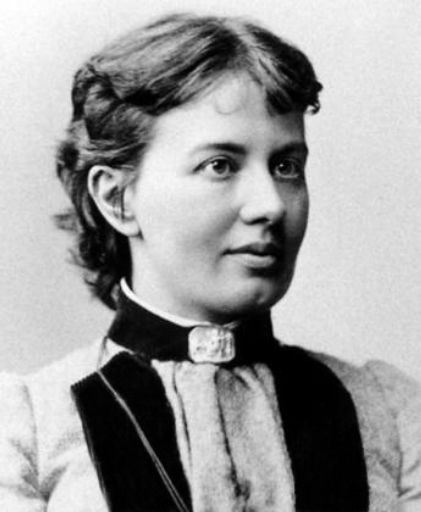
Pioneering Russian mathematician who broke academic barriers, advancing analysis and mechanics while balancing literature, activism, and family life.
Conversation Starters
Life Journey
She was born into a noble family, with Vasily Korvin-Krukovsky as her father and Elisabeth Schubert as her mother. Her early childhood unfolded on family estates, where tutors and books provided rare educational access for a girl.
In the family house, pages of calculus notes reportedly served as makeshift wallpaper, helping ignite her curiosity. Tutors encouraged her aptitude, and she quickly outpaced typical lessons offered to young women in Russia.
She sought higher mathematics through private instruction, studying analysis and geometry beyond the gymnasium curriculum. Influential mentors in the Russian intellectual milieu supported her ambition despite social conventions.
To bypass restrictions on unmarried women traveling and enrolling abroad, she married Vladimir Kovalevsky, a young intellectual. The arrangement reflected the era’s gender barriers and the radical strategies women used to pursue education.
She traveled with her husband to Germany and sought formal scientific training unavailable to her at home. German universities were hesitant to admit women, forcing her to combine unofficial attendance with private scholarly work.
At Heidelberg, she was permitted to sit in on classes with special approval, an exception rarely granted to women. She absorbed rigorous methods in physics and mathematics, building the foundation for later research in analysis.
After being barred from formal enrollment, she studied privately with Karl Weierstrass, one of Europe’s leading analysts. He recognized her talent and guided her through original research-level problems with extraordinary intensity.
With Weierstrass’s support, she submitted papers on partial differential equations, Abelian integrals, and Saturn’s rings. The University of Göttingen granted her a doctorate in absentia, a landmark achievement for women in mathematics.
Her research established precise conditions for existence and uniqueness of analytic solutions to certain partial differential equations. Building on Augustin-Louis Cauchy’s ideas, her theorem became a cornerstone of modern mathematical analysis.
Back in Russia, she found universities and academies largely closed to women regardless of credentials. The mismatch between her doctorate and limited employment options intensified her turn toward writing and public intellectual life.
She became a mother while continuing mathematical work under challenging circumstances and intermittent financial strain. Letters from this period show her negotiating expectations of domestic life with an uncompromising scientific identity.
Her circle intersected with the era’s reformist and radical currents, and the family faced instability and debt. These stresses coincided with professional setbacks, deepening her resolve to seek an academic position abroad.
Mathematician Gösta Mittag-Leffler championed her appointment, overcoming resistance to a woman professor. In Stockholm she began lecturing and publishing steadily, gaining the institutional base denied to her in Russia and Germany.
She advanced from lecturer to professor, becoming one of the first women in Europe to hold a modern university chair in mathematics. Her lectures and mentorship helped normalize women’s intellectual authority in Scandinavian academia.
She investigated the motion of a spinning rigid body under gravity, attacking a classical mechanics problem studied since Euler and Lagrange. Her methods blended analysis and physics, showing how deep mathematics could unlock mechanics.
The French Academy of Sciences awarded her the Prix Bordin for her celebrated work on the rotation of a rigid body, later called the Kovalevskaya top. The prize committee increased the award amount, reflecting the work’s exceptional merit.
Her reputation brought broader recognition, including election to prominent academies and strengthened international correspondence. She became a visible symbol of women’s capacity for original research in the late nineteenth century.
She wrote fiction and memoir-like pieces that drew on Russian intellectual life and the constraints placed on women. The combination of literary voice and scientific authority broadened her influence beyond specialist mathematics circles.
She died in early 1891, still active in research and teaching at Stockholm University. Friends and colleagues across Europe mourned a rare figure who reshaped analysis and opened doors for women in professional science.