Quick Facts
An eccentric Edo-period painter famed for wild brushwork, biting humor, and fiercely original ink-and-color imagery.
Conversation Starters
Life Journey
Born in Kyoto during the mid-Edo era, he grew up amid busy merchant streets and thriving workshops. The city’s temples, theaters, and painting studios offered constant models for later satire and drama.
As a child in Kyoto, he encountered Buddhist imagery, ink landscapes, and humorous prints sold near shrine precincts. These early contrasts—piety beside entertainment—fed his later taste for sharp visual juxtapositions.
He trained through disciplined copying of older paintings and calligraphy, a standard Edo method for building technique. By repeating forms and then distorting them, he learned how to turn tradition into personal invention.
Kyoto’s Kanō-school authority and imported Chinese painting manuals provided the official vocabulary of brushwork and composition. He studied these norms closely yet sought a deliberately rough, unpolished intensity that shocked polite taste.
He moved among poets, monks, and bohemian connoisseurs who prized wit and individual flair over academy rules. Kyoto’s salons rewarded audacity, encouraging him to paint exaggerated faces, odd proportions, and biting humor.
Through constant sketching and improvisation, he built a style of abrupt lines, heavy ink, and surprising blank spaces. Viewers read the brushwork as temperament—an image of speed, mood, and defiant independence.
Patrons in Kyoto commissioned hanging scrolls with monks, immortals, and everyday characters rendered with theatrical presence. His figures often felt like caricatures, yet their psychological sharpness made them unforgettable in elite homes.
He pushed beyond small works, trying bolder pigments and broader compositions suited to interiors. Folding screens and large scrolls let him combine comedy, menace, and grandeur in a single sweeping design.
Kyoto’s Zen temples and sermon culture offered stories of sudden insight, fools, and holy outsiders. He treated these motifs as tools for irony, painting saints and eccentrics as vividly human rather than serenely idealized.
Collectors discussed his work as both thrilling and improper, a challenge to refined Kano decorum. The tension between skilled control and deliberate ugliness became his calling card within Kyoto’s competitive art marketplace.
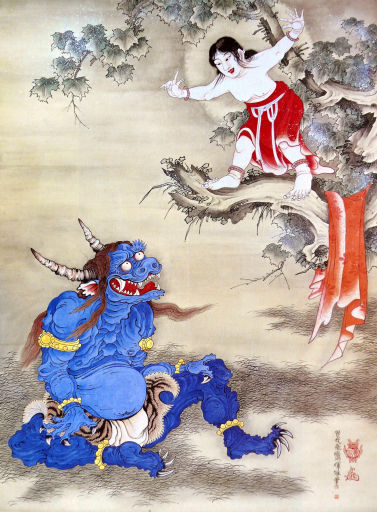
He painted Buddhist guardians, recluses, and legendary figures with looming silhouettes and exaggerated gestures. Rather than devotional calm, he emphasized spiritual intensity and the comic fragility of ordinary human desire.
His faces became sharper: bulging eyes, crooked mouths, and wary glances that suggested inner life. Audiences recognized types from urban Kyoto—clerics, rogues, and patrons—mirrored back with uncomfortable honesty.
Alongside figures, he produced landscapes that quoted Chinese models while breaking their calm with abrupt angles and splashes of ink. This mix let him show both the grand stage of nature and the absurd actors within it.
Wealthy townsmen and cultured aficionados commissioned works precisely because they felt risky and new. In an era of codified taste, his paintings served as conversation pieces that signaled boldness and discernment.
On multi-panel screens, he packed scenes with figures that collide, argue, and loom across space. The format amplified his gift for choreography, turning rooms into stages filled with motion and sharp social observation.
His later works often used heavier ink loads and stark contrasts that made bodies feel carved from shadow. Distortion became purposeful rather than accidental, heightening emotion and pushing viewers to read meaning in extremes.
By the end of the 1770s he was widely associated with Kyoto’s kijin—artists celebrated for eccentric conduct and unconventional vision. His name circulated among collectors who prized individuality over strict lineage.
He died in Kyoto after a career that challenged orthodox ideals of beauty and decorum. Later viewers valued his work as a rare Edo example of raw expressiveness, satire, and fearless brush invention.