Quick Facts
An unyielding Han envoy whose long captivity among the Xiongnu became a lasting symbol of loyalty and endurance.
Conversation Starters
Life Journey
Su Wu was born in the Western Han amid Emperor Wu’s campaigns that reshaped the northern frontier. Growing up under a militarized court, he learned that diplomacy with the Xiongnu could decide war or peace.
As a young man, Su Wu began serving in Han officialdom, mastering documents, ritual, and the chain of command. These skills prepared him for dangerous embassy work where a single phrase could trigger conflict.
By mid-career, Su Wu was known in Chang'an for strict integrity and careful speech. Senior ministers valued him as someone who would not be bought, threatened, or drawn into factional intrigue at court.
The Han court appointed Su Wu to lead an embassy to the Xiongnu Chanyu during tense frontier diplomacy. He carried the emperor’s credentials and a ceremonial staff, symbols of authority and national dignity.
Su Wu reached the Xiongnu political center and encountered suspicion amid shifting alliances and hostage politics. Negotiations strained as both sides tested resolve, aware that insult could justify raids or reprisals.
A coup-like incident within the Xiongnu camp led to claims that Han envoys were implicated or sympathetic. Su Wu’s delegation was detained as the Chanyu used the crisis to pressure him into submission.
Pressed to abandon the Han, Su Wu rejected offers of rank and safety under the Xiongnu. To avoid forced betrayal, he attempted suicide, signaling that duty to the emperor outweighed his own survival.
The Xiongnu confined Su Wu and reportedly deprived him of food to break his will. He endured extreme hardship and illness, yet continued to identify himself publicly as a Han envoy under imperial mandate.
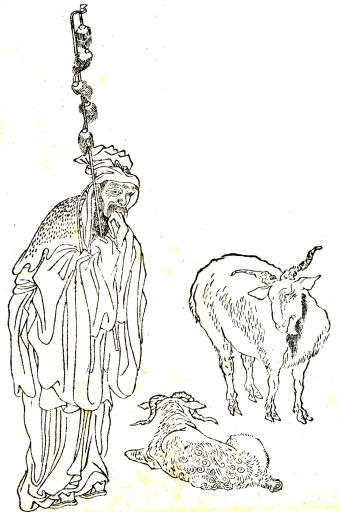
Unable to compel defection, the Chanyu banished Su Wu to distant grazing lands far from the court. He was made to herd sheep and cattle, a calculated humiliation meant to erase his diplomatic status.
Even in exile, Su Wu preserved the envoy’s staff and seals as emblems of Han legitimacy. Later tradition emphasized that he treated these objects like a living commission from the emperor, not a relic.
Xiongnu leaders and Han turncoats repeatedly urged Su Wu to accept office and marry into steppe elites. He refused each approach, choosing poverty and isolation over any gesture that implied disloyalty.
In long solitude, Su Wu sustained himself through strict routine and adherence to Han moral ideals. His story later highlighted how personal discipline and reverence for the emperor could outlast physical captivity.
As leadership and strategy shifted, Han and Xiongnu negotiators revisited exchanges and truces. Su Wu’s continued survival became a diplomatic issue, demonstrating how a single envoy could symbolize state honor.
After years of stalemate, the Xiongnu court reassessed Su Wu’s case and softened its stance. His refusal to yield earned reluctant respect, clearing the way for negotiations about his return to Han territory.
Su Wu was finally permitted to leave the steppe after roughly two decades of detention and exile. Returning with the staff he had guarded, he embodied the Han ideal that loyalty could survive any ordeal.
Back in the Han capital, officials praised Su Wu for preserving dignity under coercion and isolation. His case was recorded in historical writing and cited in court discourse as a benchmark of ministerial virtue.
In his later years, Su Wu’s experience shaped advice on frontier policy and the treatment of envoys. He became a living lesson for younger officials about speaking carefully, enduring hardship, and avoiding betrayal.
After his death, Su Wu’s story circulated widely through histories and literature, especially in the Han legacy of official virtue. Poets and statesmen invoked him to argue that principle should prevail over fear.