Quick Facts
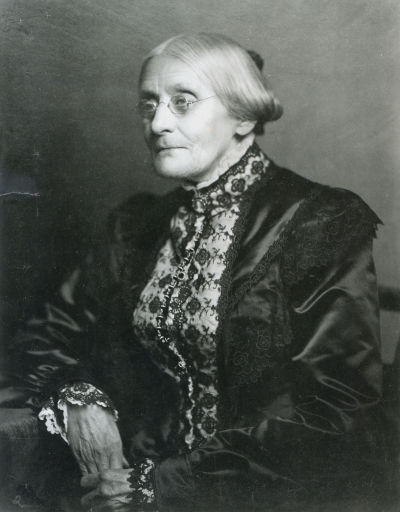
Relentless organizer who transformed women’s suffrage into a national movement through speeches, strategy, and civil disobedience.
Conversation Starters
Life Journey
Born to Daniel Anthony and Lucy Read Anthony in a Quaker household that stressed equality and discipline. The family’s reform-minded faith and community debates shaped her early sense of moral duty and public action.
The Anthonys relocated to Battenville, where Daniel Anthony ran a cotton mill and supported abolitionist causes. Their home became a place where reform ideas circulated, exposing her to activism beyond the Quaker meeting.
Economic turmoil from the Panic of 1837 strained the family’s finances and disrupted stability. The experience impressed on her the precariousness of work and the need for social reforms protecting ordinary families.
She took positions in local schools and learned firsthand that women teachers were paid less than men for similar work. The injustice of wage inequality became an early driver of her public arguments for equal rights.
Anthony’s temperance work introduced her to petition drives, conventions, and the mechanics of mass organizing. She saw women barred from full participation, a pattern that pushed her toward women’s rights activism.
In Seneca Falls she met Elizabeth Cady Stanton, beginning a decades-long alliance combining Stanton’s writing with Anthony’s organizing. Together they built networks, drafted resolutions, and kept women’s rights on the national agenda.
After being prevented from addressing a temperance meeting because she was a woman, she sharpened her focus on political equality. The incident became a personal proof that reform required women’s full civic participation.
Working as an agent for the American Anti-Slavery Society, she organized lectures and conventions amid frequent hostility. Her tours built stamina, sharpened rhetoric, and tied women’s rights to broader struggles for human freedom.
With Stanton, she organized the Women’s Loyal National League to back the Union and press for abolition. Their petition campaign gathered hundreds of thousands of signatures urging Congress to end slavery nationwide.
Anthony helped found The Revolution and managed its publication work while promoting the motto “Men, their rights and nothing more; women, their rights and nothing less.” The paper amplified suffrage, labor, and legal equality debates.
After disputes over the 14th and 15th Amendments, she and Stanton formed the National Woman Suffrage Association. The NWSA pursued a federal amendment and challenged laws that treated women as second-class citizens.
Anthony cast a ballot in Rochester, arguing the 14th Amendment’s citizenship language protected women’s voting rights. Federal officials arrested her and others, turning the act into a carefully staged constitutional challenge.
In Canandaigua, Judge Ward Hunt directed a guilty verdict and imposed a $100 fine, denying a jury’s independent decision. Anthony refused to pay, using the proceedings to publicize the contradiction between citizenship and disenfranchisement.
At the Philadelphia Centennial, she and allies delivered a Declaration of Rights of Women to officials near Independence Hall. The bold intervention linked America’s founding ideals to women’s unfinished struggle for political equality.
Working with Elizabeth Cady Stanton and Matilda Joslyn Gage, she helped compile History of Woman Suffrage. The multi-volume project preserved speeches, petitions, and organizational records that might otherwise have been lost.
She supported merging the NWSA with the American Woman Suffrage Association to form the National American Woman Suffrage Association. The consolidation strengthened fundraising, coordinated state campaigns, and reduced public factionalism.
As NAWSA president, she toured widely, trained organizers, and pressed politicians to confront women’s disenfranchisement. Her leadership emphasized disciplined campaigning and pragmatic coalition-building across regions and parties.
Anthony handed NAWSA leadership to Carrie Chapman Catt, encouraging a new generation to modernize strategy. She remained a revered figurehead, offering guidance and insisting the movement keep national focus.
She died in Rochester after a lifetime of lectures, conventions, and relentless travel to build the suffrage cause. Though she did not live to see the 19th Amendment, her organizational legacy shaped its eventual passage.