Quick Facts
Died in a duel, revolutionized algebra.
Conversation Starters
Life Journey
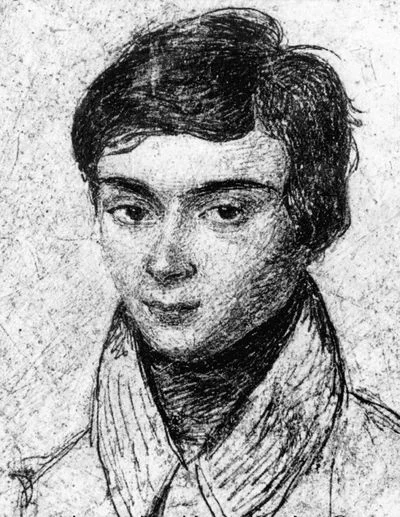
Évariste Galois was born to Nicolas-Gabriel Galois, mayor of Bourg-la-Reine, and Adélaïde-Marie Demante. His mother provided his early education, instilling in him a love of classical literature and learning.
Galois entered the prestigious Lycée Louis-le-Grand in Paris. Initially a good student, he soon became bored with the standard curriculum and began studying advanced mathematics on his own.
Galois discovered Legendre's 'Éléments de Géométrie' and devoured it in days. He then read the original works of Lagrange and Abel, mastering advanced mathematics that took others years to understand.
Galois published his first paper on continued fractions in the Annales de Mathématiques. He was already developing revolutionary ideas about polynomial equations that would transform algebra.
Galois failed the entrance examination for the prestigious École Polytechnique, reportedly due to his inability to explain his intuitive mathematical leaps. This rejection embittered him against the academic establishment.
Galois's father committed suicide after a political scandal involving forged documents attributed to him by political enemies. This tragedy deeply affected Galois and intensified his republican political views.
Galois failed the École Polytechnique entrance exam a second time, allegedly throwing an eraser at an examiner who questioned his methods. This permanently closed the door to France's premier scientific institution.
Galois submitted his groundbreaking work on polynomial equations to the French Academy of Sciences. Augustin-Louis Cauchy was assigned to review it but lost the manuscript, a devastating setback for the young mathematician.
Galois entered the less prestigious École Normale to study mathematics. He continued developing his theory of groups and their application to solving polynomial equations.
During the July Revolution that overthrew Charles X, Galois was locked in by the director of École Normale to prevent students from joining the uprising. His republican activism intensified, leading to conflicts with authorities.
Galois was expelled from École Normale for a letter criticizing the director's actions during the revolution. He joined the radical republican Artillery of the National Guard, which was soon disbanded by the government.
Galois was arrested at a republican banquet for allegedly threatening King Louis-Philippe. Though acquitted, he was arrested again months later for wearing the banned uniform of the Artillery and imprisoned for six months.
Galois was released from prison during a cholera epidemic. He became involved with a woman named Stéphanie-Félicie Poterin du Motel, which would lead to the duel that ended his life.
The night before his fatal duel, Galois frantically wrote down his mathematical discoveries in a letter to his friend Auguste Chevalier. He scrawled 'I have no time' in the margins, knowing he might not survive.
Galois was mortally wounded in a duel, possibly over a romantic affair, and died the next day. His last words to his brother were 'Don't cry, I need all my courage to die at twenty.' His mathematical legacy, founding group theory and Galois theory, was only recognized years later.