Quick Facts
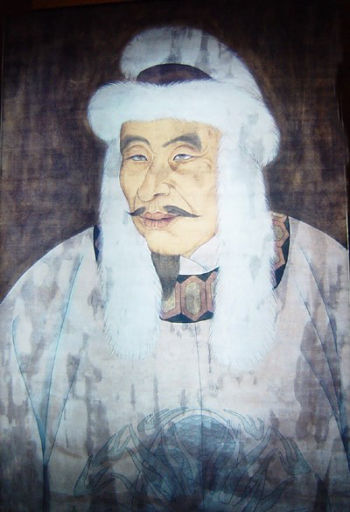
A decisive Jurchen warlord who forged the Jin dynasty, breaking Liao dominance and reshaping Northeast Asian politics.
Conversation Starters
Life Journey
Aguda was born into the Wanyan clan among the Jurchen tribes of the upper Songhua region. Raised in a frontier society shaped by hunting, horsemanship, and clan politics, he learned to navigate alliances and rivalries early.
As a young warrior, he built a reputation in raids and defensive campaigns that protected Jurchen communities from rival groups. Elders valued his discipline and judgment, and his growing following strengthened Wanyan influence in the region.
The Jurchens lived under the Liao dynasty’s loose overlordship, paying tribute while enduring exploitation by officials and merchants. Aguda observed how Liao demands for falcons, horses, and labor bred resentment that could be mobilized politically.
Through negotiation and targeted force, Aguda consolidated support among key Jurchen lineages. He used marriage ties, gift exchange, and shared military aims to reduce infighting, preparing the ground for a larger anti-Liao movement.
Tensions sharpened as Liao officials pressed harsher exactions and treated Jurchen leaders with contempt at court and border markets. Aguda framed resistance as a defense of honor and livelihood, turning local grievances into a unifying cause.
Aguda openly rebelled, rallying Jurchen fighters with promises to end Liao exploitation and restore autonomy. Early operations struck Liao garrisons and supply lines, demonstrating speed and coordination that surprised larger but less agile opponents.
Jin sources remember a pivotal battle at Ningjiangzhou where Aguda’s forces routed a Liao army despite being numerically smaller. The victory boosted morale, attracted new tribal contingents, and signaled that Liao authority in the northeast was cracking.
Aguda declared the establishment of the Jin (“Gold”) dynasty, transforming a tribal uprising into an imperial project. He adopted state rituals and titles to legitimize rule, while keeping Jurchen commanders central to the new political order.
To administer conquered territory, Aguda began formalizing offices, taxation practices, and legal norms alongside Jurchen customary authority. He relied on trusted Wanyan relatives and capable generals, balancing tribal loyalty with emerging bureaucracy.
Jin armies pushed outward to seize fortified towns that anchored Liao control in the region. These captures provided grain stores, weapons, and administrative sites, allowing Aguda to sustain longer campaigns and integrate new populations.
Aguda’s court explored coordination with the Northern Song dynasty, which sought to recover the Sixteen Prefectures lost to earlier regimes. Envoys and letters negotiated mutual pressure on Liao, though both sides pursued their own strategic goals.
As Jin territory grew, Aguda refined command structures to coordinate cavalry raids, siege operations, and garrison control. He elevated proven leaders and enforced discipline, ensuring that battlefield success translated into durable control of towns and routes.
Jin forces advanced beyond the old frontier, forcing Liao officials to flee or defect and disrupting imperial communications. The campaign demonstrated that the revolt had become a bid for regional supremacy, not merely local autonomy.
Aguda’s state increasingly governed farming communities and city dwellers alongside steppe and forest peoples. He encouraged pragmatic administration—securing taxes, protecting markets, and appointing officials—so conquest produced revenue, not chaos.
With the war still ongoing, Aguda reinforced the authority of the Wanyan house to prevent factional splits. He relied heavily on close kin and veteran commanders, creating a leadership core that could continue campaigns after his death.
By this stage, Liao resistance had fragmented as cities fell and commanders defected under pressure. Aguda’s sustained offensives and careful consolidation undermined Liao legitimacy, paving the way for Jin dominance in the north.
Aguda died while the Jin dynasty was still consolidating its conquests and redefining power in East Asia. Leadership passed within the Wanyan clan, and his institutional groundwork enabled successors to continue the drive against Liao remnants and beyond.