En bref
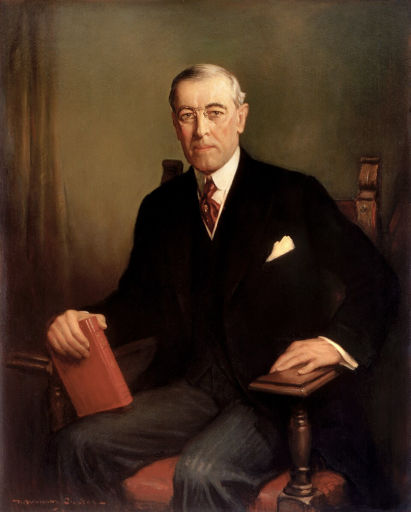
Scholar-president who reshaped American government and global diplomacy, championing idealism while leaving a contested legacy at home.
Sujets de conversation
Parcours de vie
Born to Presbyterian minister Joseph Ruggles Wilson and Jessie Woodrow Wilson in Staunton. His early childhood coincided with sectional crisis, shaping a lifelong interest in history, politics, and moral purpose in public life.
Raised in the Confederate South as his father served as a minister and public supporter of the Confederate cause. War disruptions and Reconstruction politics exposed him to bitter national divisions and the realities of state power.
Began higher education at Davidson College but struggled with health issues and an unstable routine. The setback redirected him toward more focused self-study and a later return to formal schooling with stronger ambition.
Enrolled at the College of New Jersey, immersing himself in debate, writing, and campus politics. He honed a belief that effective government required energetic leadership and coherent party discipline.
Completed his degree at Princeton and quickly turned toward law and public affairs as practical routes to influence. His senior work and oratory reflected early fascination with constitutional structure and executive authority.
After studying law at the University of Virginia, he was admitted to the bar and tried practicing in Atlanta. Finding routine legal work uninspiring, he pivoted toward scholarship as a better path to political reform.
Completed a doctorate in political science at Johns Hopkins, among the first Americans to do so in the field. His research emphasized comparative institutions and the need for responsible, efficient administration in democracy.
Married Ellen Axson, an artist and the daughter of a Presbyterian minister, forming a partnership that shaped his private life and public image. Their marriage brought stability during his demanding early academic career.
Released an influential essay arguing for professional civil administration separated from partisan spoils. The piece became a foundational text in public administration, promoting expertise, efficiency, and modern bureaucratic governance.
Accepted a professorship at Princeton, becoming a prominent lecturer known for clear, forceful arguments about constitutional government. His classroom reputation and published work positioned him as a national intellectual figure.
Elected president of Princeton, he pursued ambitious reforms to modernize teaching and reshape student life. His proposals, including the preceptorial system, succeeded in part but sparked fierce resistance from alumni and trustees.
With support from Democratic leaders, he won the governorship and surprised many by backing progressive reforms. He pushed regulation of utilities, election changes, and anti-corruption measures that built national credibility.
Won a three-way election against William Howard Taft and Theodore Roosevelt, benefiting from a split Republican vote. He campaigned on the 'New Freedom,' promising antitrust action, tariff reform, and cleaner governance.
Backed the Underwood Tariff to reduce rates and introduced a modern income tax after the Sixteenth Amendment. He signed the Federal Reserve Act, creating a central banking system to stabilize credit and currency nationwide.
After a German U-boat sank the British liner Lusitania, killing Americans, he navigated rising public anger while urging restraint. Diplomatic pressure produced temporary German pledges, but U.S. neutrality grew harder to sustain.
Won a narrow victory over Charles Evans Hughes amid the slogan 'He kept us out of war.' Despite campaigning for peace, he also supported military preparedness as European conflict and submarine warfare escalated.
Asked Congress for a declaration of war after Germany resumed unrestricted submarine warfare and the Zimmermann Telegram became public. Mobilization expanded federal power, while measures like the Espionage Act raised civil liberties concerns.
Presented the Fourteen Points to Congress as a blueprint for a postwar order based on open diplomacy, self-determination, and collective security. The speech made him a symbol of international idealism and reshaped Allied war aims.
Traveled to the Paris Peace Conference and worked with leaders like Georges Clemenceau and David Lloyd George to craft the settlement. He championed the League of Nations, but compromises on reparations and borders fueled controversy.
Collapsed after an exhausting speaking tour pushing Senate approval of the treaty, then endured a severe stroke. His incapacity shifted influence to close advisers and his wife, Edith Bolling Wilson, amid a constitutional gray zone.
Departed the White House after the Senate rejected the Treaty of Versailles and U.S. entry into the League of Nations. The defeat marked a turning point toward American interwar skepticism of international commitments and institutions.
Lived largely secluded following his stroke, receiving visitors and reflecting on his presidency and international aims. He died in Washington and was buried at Washington National Cathedral, remembered for both reform and deep controversy.