Quick Facts
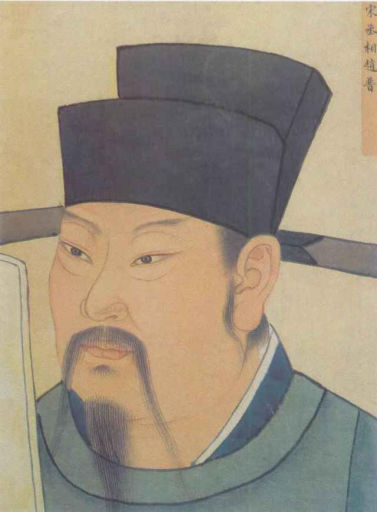
A shrewd Song dynasty strategist who helped secure civil governance, balancing ruthless pragmatism with Confucian statecraft.
Conversation Starters
Life Journey
Born amid the political fragmentation of the late Five Dynasties period, when competing regimes fought across North China. The constant turnover of courts and generals shaped his early understanding of power, loyalty, and survival.
As the Later Zhou consolidated parts of the north, Zhao Pu began serving in administrative roles that trained him in documents, finance, and personnel. He learned to read factional signals at court and to craft advice that rulers could act upon quickly.
He attached himself to the rising general Zhao Kuangyin, observing campaigns and the discipline of elite troops. By offering frank assessments and practical plans, he became a valued counselor rather than a mere clerk in the military household.
During the Later Zhou’s push to stabilize the realm, he helped coordinate civil administration supporting armies in the field. He emphasized provisioning, appointments, and local order, arguing that war depended on credible civilian institutions behind the lines.
When Zhao Kuangyin took the throne as Emperor Taizu, Zhao Pu became a key architect of the new regime’s political messaging and staffing. He helped frame the transition as restoring order after chaos, soothing officials who feared another military usurpation.
In early Song councils, he argued that the dynasty must prevent autonomous warlords by tightening central appointments and audit systems. His proposals aligned with Taizu’s goal of limiting field commanders’ independence while maintaining effective defense.
As rival states submitted, Zhao Pu worked to convert former enemies into manageable prefectures with standardized tax and legal practices. He advised careful treatment of local elites, using titles and posts to reduce resistance while securing revenue for the center.
He pressed for rigorous selection of officials and clearer chains of responsibility in ministries, aiming to curb nepotism and military patronage. By leveraging Confucian norms, he promoted a bureaucracy that could outlast individual commanders and factions.
Factional tensions at court periodically weakened his position, as competing advisers sought to control access to Emperor Taizu. Zhao Pu’s blunt style created enemies, yet his administrative competence kept him in the orbit of key decisions and reforms.
With the Song still absorbing territories, he reemerged in high-level deliberations on taxation, prefectural oversight, and military logistics. He argued that consistent rules and predictable punishment were essential to persuading newly annexed regions to comply.
After Emperor Taizu’s death, the throne passed to his brother Zhao Guangyi, Emperor Taizong, reshaping court alliances. Zhao Pu adapted quickly, offering continuity in governance while signaling loyalty to the new ruler during a sensitive transition.
Under Taizong, he served as a top strategist in policy debates over centralization and frontier defense against the Khitan Liao. His advice stressed disciplined administration and a cautious approach to military adventures that could endanger the young dynasty.
As Taizong pursued reunification, Zhao Pu contributed to planning that linked battlefield goals to governance after victory. He emphasized securing cities, registering households, and appointing reliable civil officials immediately to prevent renewed separatism.
He supported stronger fiscal monitoring and clearer departmental boundaries to reduce corruption and prevent any single clique from dominating. These measures reinforced the Song pattern of bureaucratic governance, where policy relied on paperwork, audits, and review.
Following costly clashes with the Khitan Liao, Zhao Pu argued for stabilizing internal administration and rebuilding supplies rather than chasing glory. He framed security as a long-term contest of resources, morale, and institutional resilience, not single battles.
In old age, he remained a reference point for early Song statecraft, cited for practical counsel and hard-edged realism. Younger officials studied his career as proof that civil administration could tame military power and keep the throne secure.
He died having served at the heart of two reigns and the dynasty’s formative consolidation. Court memorials praised his administrative skill and strategic judgment, even as later historians debated the severity of his political methods.