Datos rápidos
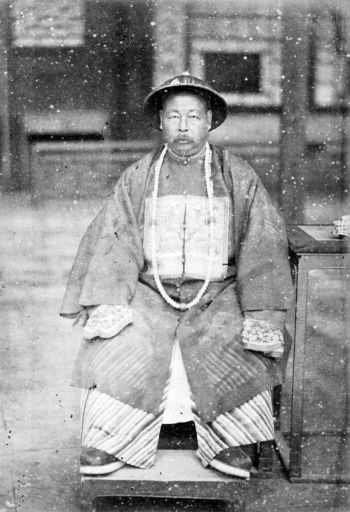
A scholar-general who crushed major rebellions, modernized regional industry, and reconquered Xinjiang for the Qing empire.
Inicios de conversación
Trayectoria vital
Zuo Zongtang was born to a Han Chinese family in Xiangyin County near Changsha, in Hunan province. Raised in a tradition of classical learning, he absorbed Confucian texts and local statecraft debates that shaped his later priorities.
As a teenager, he pursued rigorous study of the Four Books and Five Classics while reading practical writings on finance, agriculture, and frontier defense. Local tutors in Hunan encouraged his wide curiosity beyond examination essays and poetry.
He sought advancement through the Qing civil service examinations, but his path was uneven and slower than the elite metropolitan track. The setbacks pushed him toward practical administration and military affairs rather than pure academic prestige.
By midlife he had built a reputation among Hunan officials for sharp strategic judgment and mastery of logistics. Networks around provincial leaders drew on his advice as the empire faced fiscal strain and growing social unrest.
When the Taiping Heavenly Kingdom surged through south China, Zuo entered provincial service and helped organize local defense under leading Hunan figures. He worked alongside networks linked to Zeng Guofan, emphasizing disciplined recruitment and supply.
He gained battlefield experience coordinating columns, fortifications, and riverine transport in central China. Qing commanders valued his ability to integrate militia-style troops with regular forces while maintaining strict discipline and provisioning.
Amid overlapping crises from the Taiping and other insurgencies, Zuo received higher administrative and military authority. He was tasked with restoring tax collection and rebuilding garrisons, linking governance tightly to battlefield logistics.
The Qing court dispatched Zuo to confront widening violence in the northwest, where sectarian and local conflicts fed larger Muslim uprisings. He argued that restoring granaries, roads, and orderly taxation was essential to lasting security.
He directed multi-year operations around key walled cities, combining siege warfare with amnesties and selective punishment. Working with provincial officials, he prioritized reopening markets and farm production to cut rebel provisioning networks.
Zuo supported arsenals, training reforms, and the procurement of modern weapons to strengthen Qing field armies. He promoted practical technical talent and sought to make supply chains more reliable across long interior distances.
With authority in the northwest, he pushed campaigns westward along the route toward Lanzhou, emphasizing transport animals, depots, and staged advances. His approach aimed to avoid overstretch while steadily reclaiming county seats and passes.
After hard fighting, his forces reasserted Qing control over strategic nodes and reinstalled magistrates to resume governance. Zuo stressed famine relief and land recovery, arguing stability required visible restoration of everyday livelihoods.
As Yakub Beg’s regime and foreign influence threatened the far west, Zuo urged the court to commit to a reconquest rather than abandon the region. He framed Xinjiang as a strategic shield for Gansu and a test of Qing credibility.
Zuo organized a massive westward advance, relying on carefully planned depots, grain transport, and disciplined marching schedules. His army moved through the Hexi Corridor, treating logistics as the decisive weapon across desert distances.
Qing forces took major urban centers in southern Xinjiang as Yakub Beg’s authority faltered and local alignments shifted. Zuo sought to reestablish Qing administration quickly, pairing military garrisons with grain relief and tax normalization.
Following battlefield successes, he focused on pacification, resettlement measures, and restoring communications between oasis towns. His policies aimed to prevent renewed fragmentation by anchoring local order to permanent institutions and supply lines.
The region’s security improved as Qing diplomacy with Russia led to the Treaty of Saint Petersburg over the Ili Valley dispute. Zuo’s military posture and administrative preparations strengthened Beijing’s leverage in negotiating a partial return.
The Qing court established Xinjiang as a formal province, institutionalizing the reconquest with civilian bureaucracy and clearer fiscal structures. Zuo’s arguments for permanent administration helped shift policy from frontier garrisoning to governance.
Zuo Zongtang died as the Qing struggled with new external pressures and internal reform debates. He left a legacy as a hard-driving commander and administrator whose campaigns reshaped northwest China’s political geography.