En bref
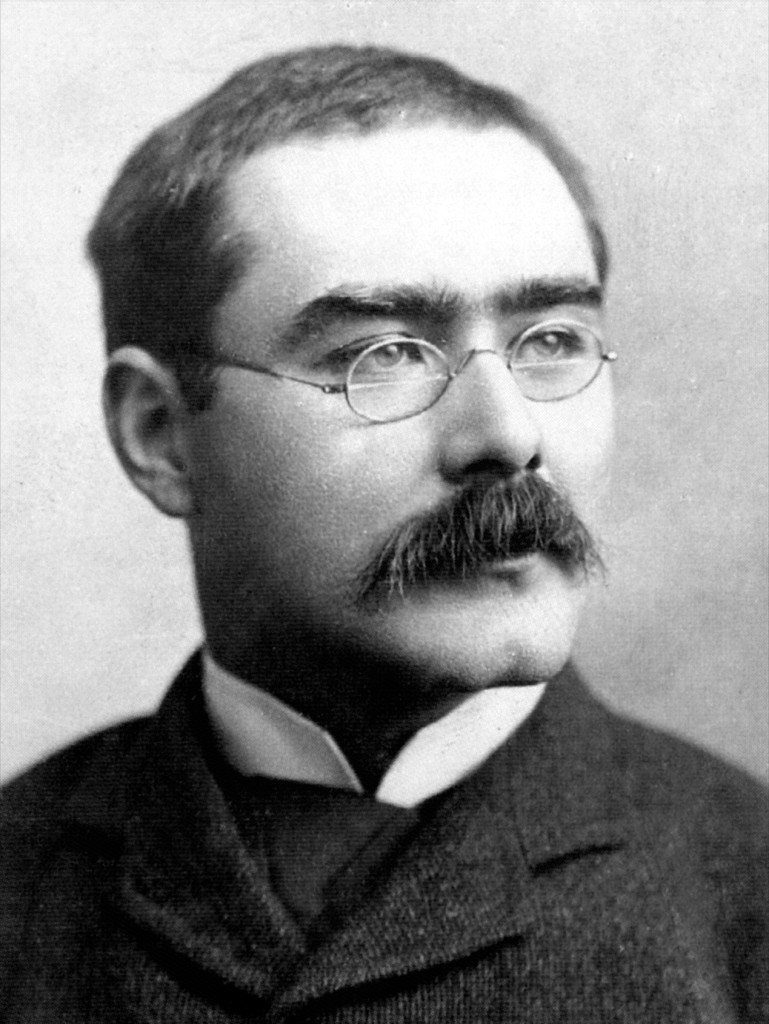
The British author and poet who wrote 'The Jungle Book' and contributed significantly to the literature of the British Empire.
Sujets de conversation
Parcours de vie
Rudyard Kipling was born to John Lockwood Kipling and Alice MacDonald in Bombay, British India. His father was an artist and teacher, and his mother was a talented and social woman.
Kipling and his younger sister Trix were sent to live with a foster family in Southsea, England, while his parents returned to India. This separation had a profound impact on his early life and later writings.
Kipling enrolled at the United Services College, a school for boys aspiring to military careers. Despite initial struggles, he found a supportive environment and developed his writing skills.
Kipling returned to India to work as a sub-editor for the Civil and Military Gazette in Lahore. This experience immersed him in the culture and life of the British Raj, influencing his early writings.
Kipling's first book of verse, 'Departmental Ditties', was published, marking the beginning of his literary career. The collection was well-received and established him as a promising young writer.
Kipling moved to Allahabad to work for 'The Pioneer', a prominent English-language newspaper. He began writing short stories and articles, which were later compiled into 'Plain Tales from the Hills'.
'Plain Tales from the Hills', a collection of short stories, was published, further cementing Kipling's reputation as a storyteller. The book captured the essence of British India and its diverse characters.
Kipling left India to travel the world, visiting the United States and Europe. His journey broadened his horizons and provided material for his future works, including 'The Light That Failed'.
Kipling's first novel, 'The Light That Failed', was published. The book, a tale of an artist's life, was well-received but did not achieve the same success as his short stories and poetry.
Kipling married Caroline 'Carrie' Balestier, the sister of his friend Wolcott Balestier. The couple settled in Vermont, where Kipling wrote some of his most famous works, including 'The Jungle Book'.
'The Jungle Book' was published, a collection of stories that included 'Mowgli's Brothers' and 'Rikki-Tikki-Tavi'. The book was an instant classic and has remained one of Kipling's most beloved works.
'The Second Jungle Book', a sequel to the original, was published. It included more adventures of Mowgli and other animal characters, further solidifying Kipling's reputation as a master storyteller.
Kipling and his family moved to Rottingdean, a village near Brighton, England. This period was marked by continued literary success and the publication of 'Captains Courageous' and 'Stalky & Co.'
'Captains Courageous', a novel about a spoiled boy who learns the value of hard work on a fishing boat, was published. The book was a critical and commercial success, further enhancing Kipling's literary reputation.
'Kim', a novel set in India during the Great Game, was published. The book is considered one of Kipling's masterpieces and provides a vivid portrayal of Indian society and the Anglo-Indian experience.
'Just So Stories', a collection of whimsical and imaginative tales for children, was published. The book includes stories like 'How the Camel Got His Hump' and 'The Elephant's Child', which have become enduring classics.
Kipling was awarded the Nobel Prize in Literature, becoming the first English-language writer to receive the honor. The prize recognized his mastery of narrative and his deep understanding of human nature.
Kipling's son, John, died in the Battle of Loos during World War I. The loss deeply affected Kipling, who had used his influence to help his son join the army despite his poor eyesight.
Rudyard Kipling died at the age of 70 in London, England, after a series of health issues. He was buried in Poets' Corner of Westminster Abbey, a final recognition of his significant contributions to literature.