Informações rápidas
Seventh-century Indian mathematician who formalized arithmetic with zero and advanced astronomy through bold, systematic calculation.
Iniciadores de conversa
Jornada de vida
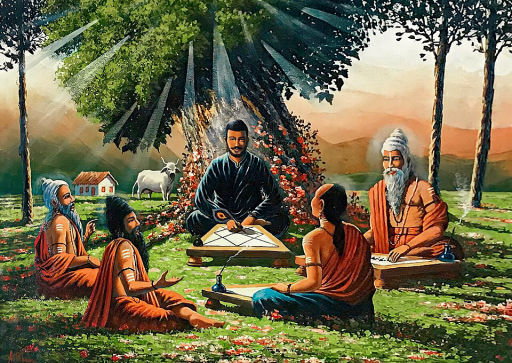
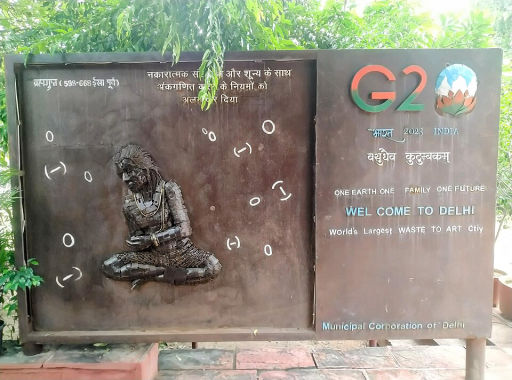
Brahmagupta was born around 598 CE in the region of Bhinmal, a major learning center in present-day Rajasthan. His lifetime overlapped with vibrant Sanskrit scholarship, when astronomy and mathematics were pursued for calendrics and ritual timekeeping.
As a boy he likely studied Sanskrit grammar, verse composition, and computational astronomy used to produce calendars and eclipse tables. Local scholarly networks in Bhinmal introduced him to earlier authorities such as Aryabhata and Varahamihira.
In his early adulthood he refined techniques for handling large-number arithmetic and astronomical parameters. These methods supported practical tasks like predicting conjunctions and computing mean and true planetary positions for regional almanacs.
In 628 CE he authored the Brahmasphutasiddhanta, a foundational treatise blending mathematical rules with astronomical theory. Written in Sanskrit verse, it systematized procedures for computations used by astronomers across the Indian subcontinent.
Within the Brahmasphutasiddhanta he described operations involving debts and fortunes, formalizing negative and positive quantities. He gave clear rules for addition, subtraction, and multiplication with zero, helping stabilize later positional arithmetic practice.
He presented systematic methods for solving quadratic equations and working with unknowns in practical problems. His approach linked arithmetic operations to verbal algebra, enabling compact rule-based solutions that traveled well through later commentaries.
To improve accuracy between tabulated values, he used interpolation methods suited to computations done by hand. These techniques made ephemerides more usable for day-to-day predictions, especially for lunar and planetary corrections.
Brahmagupta criticized parts of Aryabhata's model while also drawing on earlier insights to craft his own computational framework. These disagreements show an active scholarly culture where rival schools argued over constants, methods, and observational fit.
By midlife he was cited and studied as an authoritative siddhanta writer, influencing how practitioners calculated calendrical data. Students and fellow scholars used his verse rules as a mnemonic toolkit for teaching and for producing local almanacs.
He is credited with a celebrated formula for the area of a cyclic quadrilateral expressed through its side lengths. The result extended classical geometric reasoning into a reusable computational rule, later echoed in Sanskrit and Persian mathematical writing.
His works included problems on areas, volumes, and proportional reasoning that matched the needs of surveyors, builders, and traders. By framing them as general rules, he helped connect elite astronomical mathematics with everyday calculation practice.
He composed the Khandakhadyaka to provide a more accessible set of computational steps for astronomy. The text served as a portable guide for working astronomers, emphasizing algorithms for planetary positions and calendrical determinations.
Brahmagupta's parameters and techniques fed into the production of panchangas and specialized eclipse calculations. Through copying and teaching in manuscript culture, his procedures helped standardize a professional toolkit for later Indian astronomers.
Later scholars preserved his verse rules by composing commentaries that explained steps and offered worked examples. This pedagogical tradition ensured his arithmetic with signed numbers and his astronomical algorithms remained central for centuries.
Brahmagupta died around 668 CE, leaving texts that became standard references in Sanskrit astronomy and mathematics. His systematic style made his work easy to copy, teach, and translate, amplifying its reach across Asia.
Centuries later, his astronomical material entered the Abbasid translation movement in Baghdad through Arabic renditions linked to Indian siddhantas. These translations helped transmit Indian computational astronomy and arithmetic ideas into Islamic scientific traditions.