Informações rápidas
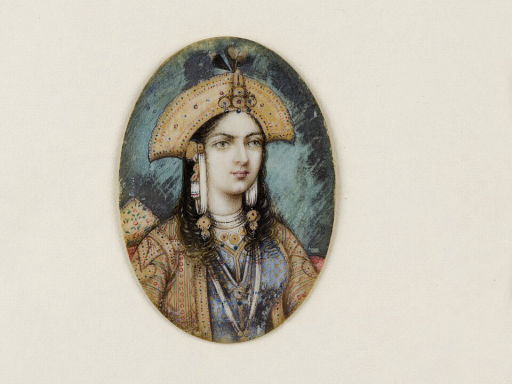
Beloved Mughal empress whose marriage inspired the Taj Mahal, remembered for devotion, influence, and tragic early death.
Iniciadores de conversa
Jornada de vida
Arjumand Banu Begum was born into an influential Persian-origin family tied to the Mughal elite. Her father, Asaf Khan, and her aunt Nur Jahan later shaped imperial politics under Jahangir’s reign.
She was betrothed to Prince Khurram, a rising Mughal prince known for military skill and ambition. The match linked Khurram to Asaf Khan’s powerful household, strengthening his position at the imperial court.
Arjumand married Prince Khurram in a celebrated court ceremony and was given the honorific Mumtaz Mahal, meaning “Chosen One of the Palace.” Contemporary accounts emphasize their closeness and her prominence among his household.
Unlike many royal consorts, Mumtaz frequently traveled with Khurram as he moved between imperial centers and military fronts. Her presence signaled exceptional trust and allowed her to observe governance, diplomacy, and court factions firsthand.
Mumtaz’s early married life included repeated pregnancies, reflecting dynastic expectations for heirs in the Mughal system. Over time she would bear fourteen children, an immense physical burden amid constant movement with the royal camp.
As Nur Jahan’s niece and Asaf Khan’s daughter, Mumtaz sat near the center of Mughal court alliances. She became a trusted intermediary for petitions and favors, balancing her natal family’s interests with Khurram’s ambitions.
Khurram’s relationship with Emperor Jahangir and the Nur Jahan faction grew tense as succession questions sharpened. Mumtaz remained a close counselor, offering stability as court patronage networks shifted around them.
When Prince Khurram rebelled against Jahangir’s court, the family faced danger, negotiation, and retreat across northern India. Mumtaz’s loyalty during this crisis reinforced their bond and her reputation as his constant companion.
As Jahangir’s health declined, factions competed for control of the succession and imperial seal. Asaf Khan worked to secure Khurram’s path, while Mumtaz’s household navigated intense palace intrigue and guarded communications.
After Khurram’s accession as Shah Jahan, Mumtaz became Empress Consort at the height of Mughal power and ceremonial splendor. She was publicly honored and privately influential, with access to petitions and imperial audiences.
Mumtaz managed a large household and dispensed charity, gifts, and patronage in ways that shaped court loyalties. Her endorsements helped courtiers gain audiences, while her discretion preserved harmony among competing nobles and families.
As empress, she continued to accompany Shah Jahan on journeys that showcased Mughal administration and military readiness. The moving court—tents, guards, and officials—carried the empire’s authority into provincial centers.
By 1630, Mumtaz had experienced many pregnancies, reflecting both dynastic pressure and the personal intimacy recorded by later chroniclers. Traveling with the army increased medical risk, as childbirth occurred far from stable palace facilities.
Mumtaz Mahal died after delivering their daughter Gauhara Begum during Shah Jahan’s campaign in the Deccan. She passed in the imperial camp at Burhanpur, and her death devastated the emperor and the court’s emotional center.
Her body was first interred in a garden tomb at Zainabad, a practical decision during wartime logistics and monsoon conditions. Court officials guarded the grave and planned a transfer to a grander resting place chosen by Shah Jahan.
Mumtaz’s remains were moved from Burhanpur to Agra with ceremony, reflecting her status as the emperor’s favored consort. Shah Jahan initiated an unparalleled architectural project to memorialize her, drawing top artisans of the empire.
Construction began on the Taj Mahal at the Yamuna River, combining Persian, Timurid, and Indian design traditions. Master builders, calligraphers, and stone inlay specialists collaborated to create a funerary complex worthy of an empress.
By the late 1640s, the main mausoleum and much of the complex were largely complete, and Mumtaz’s cenotaph stood at its symbolic center. The monument helped define Mughal aesthetics and became an enduring emblem of imperial love and grief.