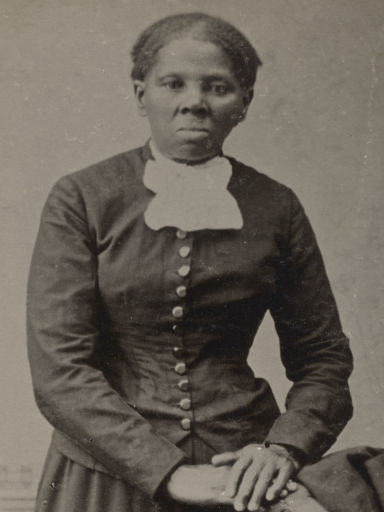
An unyielding freedom fighter who led enslaved people to safety and later served the Union as scout and nurse.
對話開場白
人生歷程
Born into slavery as Araminta "Minty" Ross in Dorchester County, she grew up under the Brodess enslaving family’s control. The Eastern Shore’s plantations and timber camps shaped her early labor and deepened her resolve for freedom.
As a child, she was hired out to white households and work sites, facing harsh punishment and insecurity. These early separations from family taught her endurance and sharpened her awareness of slavery’s violence.
Attempting to protect another enslaved person, she was struck by a heavy metal weight thrown by an overseer. The trauma caused seizures and vivid visions for years, experiences she later interpreted through a strong religious faith.
She married John Tubman, a free Black man, while she remained enslaved under Maryland law. The marriage highlighted the legal imbalance of slavery, because her status—and any future children’s—could still be claimed as property.
After learning she might be sold, she fled north through clandestine networks later known as the Underground Railroad. Her journey ended in Philadelphia, where free Black communities and abolitionists helped her start a new life.
Within a year of escaping, she risked capture by returning to Maryland to guide relatives and others to freedom. The newly passed Fugitive Slave Act increased danger nationwide, making her careful planning and secrecy essential.
She returned to bring her husband John Tubman to safety, but he declined and had formed a new relationship. The disappointment reinforced her independence and pushed her to focus on broader rescue work beyond her immediate household.
She built ties with abolitionist allies, including Frederick Douglass, who respected her courage and tactical discipline. Networks in Black churches and antislavery circles provided funds, safe houses, and intelligence on slave-catchers’ movements.
Working with antislavery supporters, she arranged for her parents, Ben Ross and Rit Green, to be brought out of danger. Securing their safety was both a personal victory and a strategic step, reducing leverage enslavers held over her.
With the help of allies, including William H. Seward, she established a home base in Auburn for her family. The town became a refuge where she could shelter freedom seekers while maintaining contacts across the North.
She met militant abolitionist John Brown and assisted his efforts by sharing contacts and insights from her rescue work. Though illness kept her from joining the Harpers Ferry raid, Brown reportedly praised her as a key ally.
At the outbreak of the Civil War, she traveled south to assist the Union effort and support people escaping to Union lines. She worked among contraband camps, using her experience to organize supplies and reduce suffering in wartime conditions.
Working with Union officers, she gathered local intelligence and guided operations through dangerous waterways. On June 2, 1863, the Combahee River Raid helped free hundreds of enslaved people and disrupted Confederate resources along the coast.
After the war, she returned to Auburn and struggled for years to receive fair pay and recognition for her Union service. Her petitions reflected broader national failures to compensate Black women’s labor despite documented contributions to victory.
She married Nelson Davis, a Union veteran, and continued supporting extended family and people in need at her Auburn home. Their household became a center for community care, even as financial insecurity remained a constant burden.
In later life she joined suffrage organizing, appearing at meetings and sharing her story as moral evidence for women’s political equality. Her activism connected emancipation struggles to voting rights campaigns led by local and national reformers.
She helped establish a care home for elderly and poor African Americans, translating decades of mutual-aid practice into a permanent institution. The project reflected her lifelong commitment to community protection beyond the battlefield and escape routes.
She died after prolonged illness and was mourned as a symbol of abolitionist courage and wartime service. Funeral observances in Auburn reflected respect from Black communities, veterans, and reformers who recognized her extraordinary leadership.