Quick Facts
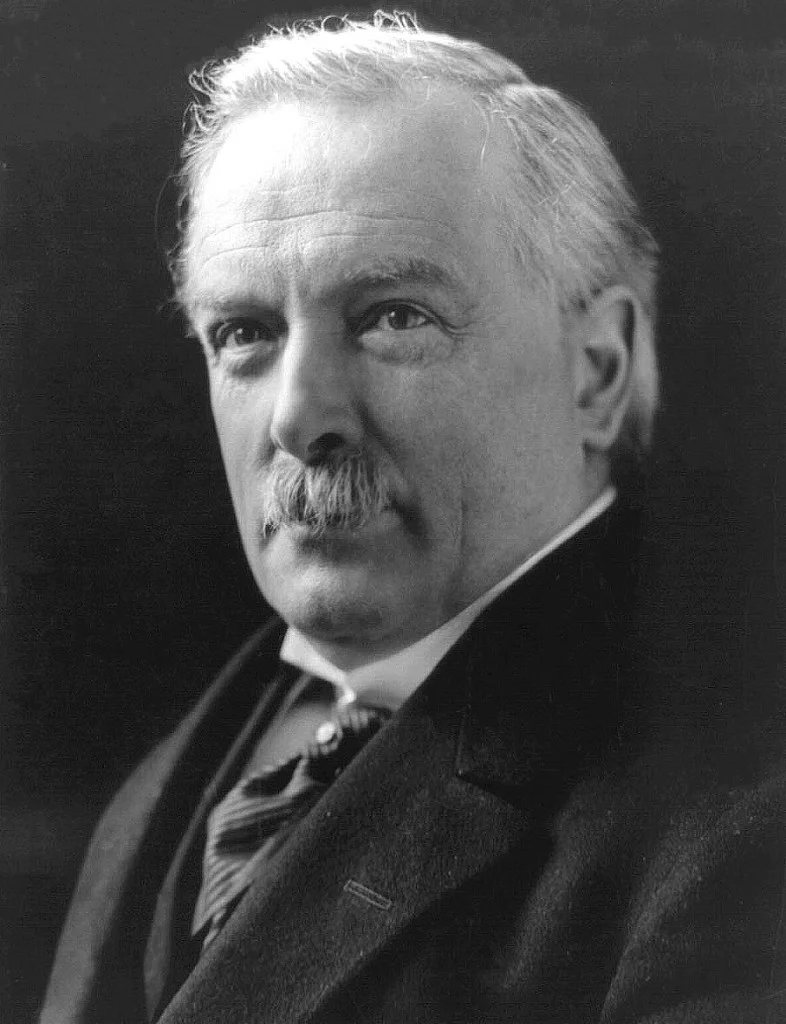
Welsh Wizard. Led Britain through WWI and reshaped the map of Europe at Versailles.
Conversation Starters
Life Journey
David Lloyd George was born to William and Elizabeth George in Manchester, England. His father died a year later.
After his father's death, Lloyd George and his mother moved to Llanystumdwy, North Wales, to live with his uncle, Richard Lloyd.
Lloyd George began his legal career as an apprentice to a local solicitor, Edward Rushton, in Criccieth, North Wales.
Lloyd George was admitted to the Bar, allowing him to practice law as a solicitor in Wales.
Lloyd George married Margaret Owen, the daughter of a wealthy farmer, in Criccieth, North Wales.
Lloyd George was elected as the Liberal MP for Caernarfon Boroughs, beginning his long political career.
Lloyd George was appointed as President of the Board of Trade by Prime Minister Henry Campbell-Bannerman, marking a significant rise in his political career.
Lloyd George succeeded H.H. Asquith as Chancellor of the Exchequer, where he introduced groundbreaking social welfare reforms.
Lloyd George introduced the National Insurance Act, which provided unemployment and health insurance for workers, a major achievement in social reform.
With the outbreak of World War I, Lloyd George played a crucial role in the British war effort, serving in various ministerial roles.
Lloyd George became Prime Minister, leading a coalition government during the most challenging years of World War I.
Lloyd George led Britain to victory in World War I, playing a significant role in the peace negotiations and the Treaty of Versailles.
Facing opposition within his coalition government, Lloyd George resigned as Prime Minister, marking the end of his wartime leadership.
Lloyd George was created 1st Earl Lloyd-George of Dwyfor, recognizing his significant contributions to British politics and society.
David Lloyd George died at his home, Bron-y-de, in Llanystumdwy, Wales, leaving behind a legacy of political and social reform.