Quick Facts
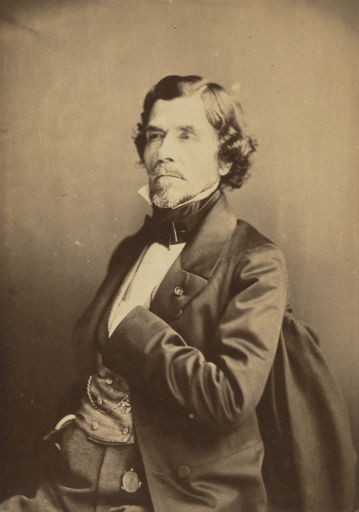
Romantic painter who turned revolutionary politics, literary drama, and exotic travel into vivid, emotionally charged masterpieces.
Conversation Starters
Life Journey
Born on 26 April 1798 into a turbulent post-Revolutionary society marked by political change and war. He grew up between Paris and provincial France, absorbing literature, music, and the ambitions of the Napoleonic age.
He began formal training under Pierre-Narcisse Guérin, a respected teacher who bridged Neoclassicism and emerging Romantic tastes. In Paris he studied anatomy, composition, and museum masterpieces while developing a more expressive style.
At the Louvre he copied Rubens, Veronese, and Titian, focusing on color, energy, and dramatic lighting. These studies helped him reject rigid contour in favor of movement and painterly surface, shaping his lifelong approach.
He exhibited The Barque of Dante at the Paris Salon, drawing attention for its turbulent water, anguished figures, and daring color. The work announced a new Romantic voice and brought him early recognition among critics and patrons.
Inspired by news of the Greek War of Independence, he painted The Massacre at Chios, emphasizing civilian suffering over heroic victory. Exhibited at the Salon, it sparked controversy but established him as a painter of modern political tragedy.
He visited London and encountered the work of John Constable and the English colorists, admiring their fresh handling of landscape and atmosphere. The trip broadened his palette and reinforced his belief that color could build form and emotion.
At the Salon he presented The Death of Sardanapalus, inspired by Lord Byron and staged like a violent operatic finale. Its swirling diagonals, sensual color, and cruelty shocked many viewers yet became a defining Romantic manifesto.
After the July Revolution that overthrew Charles X, he painted Liberty Leading the People, merging allegory with street-fighting realism. The tricolor and barricade corpses captured political urgency, and the image later became a national symbol.
He traveled with the French diplomatic mission led by Charles-Edgar de Mornay, recording Morocco and Algeria in sketchbooks. Encounters in Tangier and elsewhere gave him new ideas about light, costume, and daily ritual, fueling years of paintings.
Back in Paris he transformed North African studies into studio compositions that emphasized texture, pattern, and sunlit color. Works like Women of Algiers offered French audiences a vivid, if filtered, vision of Mediterranean life shaped by his notes.
He secured prestigious decorative commissions, proving he could work on monumental cycles beyond easel painting. These projects demanded complex planning, assistants, and durable technique, and they placed his Romantic style inside official civic architecture.
He developed a celebrated ceiling program for the library of the Palais Bourbon, home of the French Chamber of Deputies. The murals linked literature, philosophy, and history, showcasing his ability to orchestrate color harmonies at architectural scale.
He undertook the Chapelle des Saints-Anges at Saint-Sulpice, painting scenes such as Jacob Wrestling with the Angel with forceful movement and chiaroscuro. The commission tested his religious imagination and his resilience against criticism and illness.
He moved among writers and musicians in Paris, engaging with Romantic culture shaped by figures like Victor Hugo and Lord Byron’s legacy. Alongside painting, he produced prints and writings that clarified his theories of color, emotion, and modern life.
After years of controversy, he was elected to the Académie des Beaux-Arts, a major marker of institutional acceptance in France. The honor confirmed his stature against long-standing rivals in the Neoclassical camp and strengthened his public authority.
Despite worsening health, he continued working intensely, revisiting themes of lions, battles, and literary drama with looser, luminous brushwork. Friends and patrons visited his studio as he refined compositions that later impressed Impressionists for their color.
He died on 13 August 1863, leaving behind paintings, murals, and journals that documented his artistic philosophy. His funeral and subsequent reputation affirmed him as a central figure of French Romanticism and a pioneer of expressive color.