Quick Facts
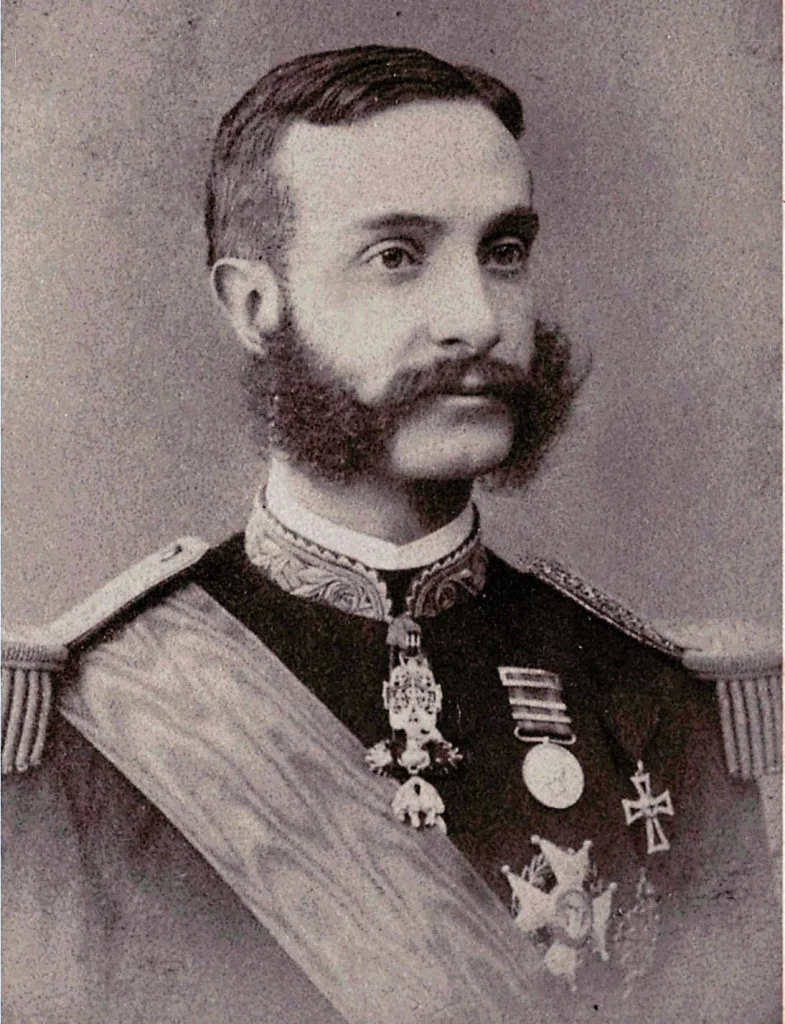
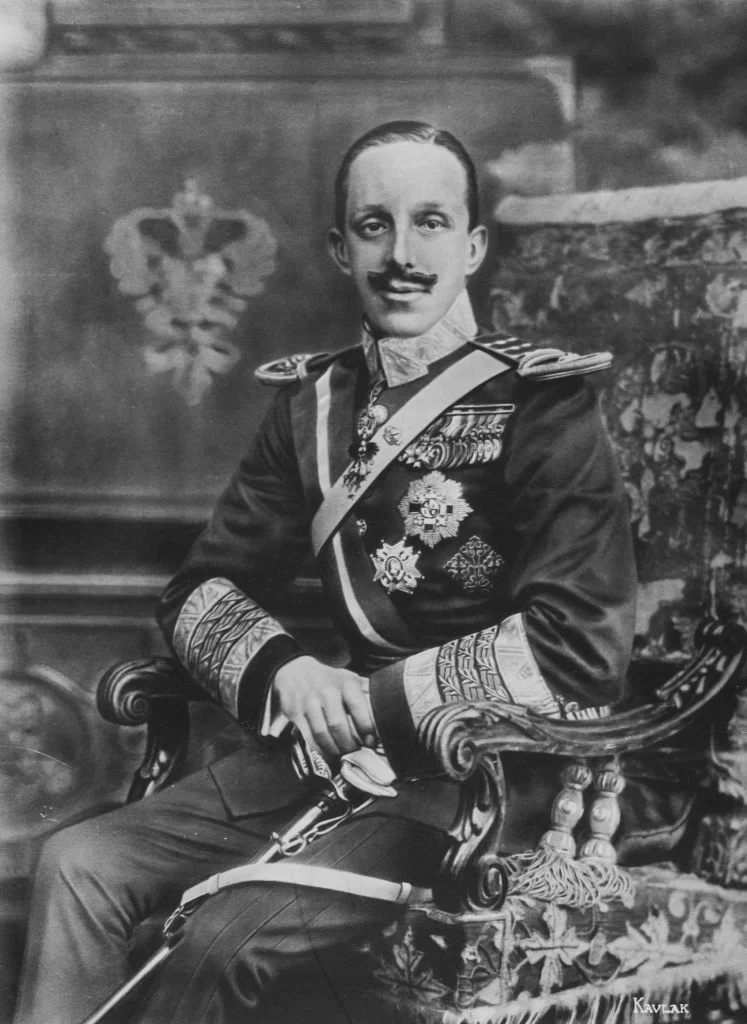
Turbulent reign: Alfonso XIII, last King before Spanish Republic.
Conversation Starters
Life Journey
Alfonso XIII was born King of Spain, the only monarch in modern history to be a king from birth. His father Alfonso XII died before he was born, with his mother Queen Maria Christina serving as regent.
Queen Maria Christina of Austria became regent of Spain, governing on behalf of her infant son. She would guide Spanish affairs through a tumultuous period until Alfonso came of age.
Spain lost the Spanish-American War, ceding Cuba, Puerto Rico, Guam, and the Philippines. The young future king witnessed his nation's painful loss of its remaining colonial empire.
Alfonso XIII came of age and assumed personal rule as King of Spain. He was crowned in an elaborate ceremony at the Church of San Jeronimo el Real in Madrid.
While visiting Paris, an anarchist threw a bomb at Alfonso's carriage. The king escaped unharmed, but several bystanders were injured.
Alfonso married Victoria Eugenie of Battenberg, granddaughter of Queen Victoria. On their wedding day, an anarchist threw a bomb at their carriage, killing 24 people but sparing the royal couple.
Crown Prince Alfonso was born, but he inherited hemophilia from his mother's side. This genetic condition would affect multiple royal children and complicate the succession.
The Tragic Week saw violent anti-government riots in Barcelona. Alfonso's handling of the crisis and the execution of anarchist Francisco Ferrer drew international criticism.
An anarchist shot at Alfonso XIII on the streets of Madrid. The king escaped injury, but the incident highlighted Spain's continuing political instability.
As World War I began, Alfonso XIII maintained Spanish neutrality despite pressure from both sides. Spain prospered economically during the war years.
Alfonso established a humanitarian office to help locate and exchange prisoners of war from all nations. This effort earned him international recognition and gratitude.
Spanish forces suffered a catastrophic defeat at Annual in the Rif War, with over 8,000 soldiers killed. The disaster damaged the monarchy's prestige and fueled political unrest.
Alfonso supported General Miguel Primo de Rivera's military coup, hoping dictatorship would restore order. This decision would later contribute to his downfall.
Alfonso dismissed the increasingly unpopular Primo de Rivera after his dictatorship failed. The king's association with the regime had fatally damaged his reputation.
After republican candidates won municipal elections, Alfonso left Spain to avoid civil war. He never formally abdicated but went into exile, first to Paris, then Rome.
Alfonso XIII died in Rome during World War II, never having returned to Spain. He was initially buried in Rome, but his remains were later transferred to El Escorial in 1980.