Quick Facts
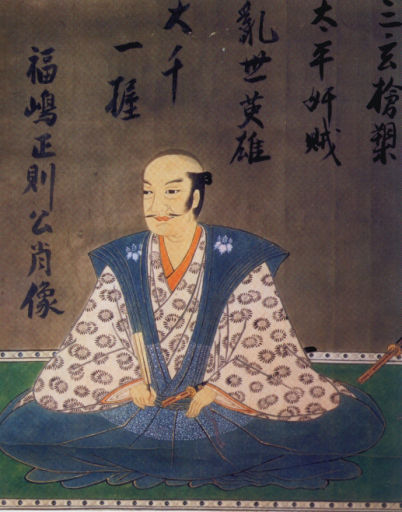
A fiercely loyal Toyotomi general turned powerful daimyo, famed for battlefield courage, rough honesty, and turbulent politics.
Conversation Starters
Life Journey
Born in Owari Province as Japan’s Sengoku conflicts reshaped samurai society. He grew up amid shifting alliances that rewarded boldness and personal military reputation. Local warrior networks would later connect him to Toyotomi Hideyoshi’s rise.
As a youth he was drawn into the household and campaigning world surrounding Toyotomi Hideyoshi. He learned soldiering through marches, supply work, and small-unit fighting typical of Sengoku armies. Early proximity to Hideyoshi shaped his enduring image as a blunt, loyal retainer.
After Oda Nobunaga’s death at Honnō-ji, Hideyoshi moved quickly to secure power, and Masanori followed the turbulent mobilizations. He witnessed how speed, messaging, and decisive violence could overturn the political order. The crisis accelerated his promotion within Hideyoshi’s expanding coalition.
He fought for Hideyoshi against Shibata Katsuie at Shizugatake, a pivotal struggle for control of Nobunaga’s legacy. The battle elevated a cadre of trusted front-line captains later celebrated as the ‘Seven Spears.’ His reputation for aggressive courage and direct speech hardened here.
During Hideyoshi’s campaigns and political settlements, Masanori benefited from the redistribution of lands and offices. He moved between garrison duties and field operations that expanded Toyotomi authority across central Japan. Growing stipends reflected Hideyoshi’s preference for proven battlefield men.
He participated in Hideyoshi’s massive Kyushu invasion, where coordinated armies subdued the powerful Shimazu clan. The campaign tested logistics, siegecraft, and discipline under a centralized command. Success further tied his fortunes to the Toyotomi regime’s promise of national unification.
Masanori served in the long siege of Odawara, the final major step in Hideyoshi’s unification of Japan. He observed the political theater of submission as much as the military blockade of the Hōjō. After victory, Toyotomi governance reached into the Kantō and beyond.
He was sent overseas in Hideyoshi’s invasion of Korea, fighting in harsh terrain far from Japanese supply lines. Commanders faced unfamiliar fortifications and coordinated resistance by Joseon forces and Ming Chinese reinforcements. The war deepened his combat experience but strained Toyotomi resources.
In the renewed invasion, he again operated within large expeditionary armies competing for credit and provisions. Naval pressure and fortified positions limited Japanese mobility, making sieges and garrison warfare central. These years cemented his identity as a hard-fighting general of Hideyoshi’s era.
Hideyoshi’s death left Toyotomi governance contested between councilors and powerful warlords, including Tokugawa Ieyasu. Masanori’s public loyalty to the Toyotomi house collided with the reality of shifting power. He had to balance personal bonds with the need to protect his domain and followers.
He fought on the eastern side under Tokugawa Ieyasu in the decisive battle that determined Japan’s new order. His troops pressed key attacks that helped break Ishida Mitsunari’s coalition amid sudden defections. The victory brought major rewards but complicated his Toyotomi-centered identity.
After Sekigahara, he received the Hiroshima domain in Aki Province, becoming one of western Japan’s most significant lords. He expanded and administered Hiroshima Castle town, managing samurai stipends, river works, and trade routes along the Inland Sea. His rule mixed martial pride with demanding governance.
As Tokugawa institutions tightened, daimyo in the west were watched closely for signs of independence or Toyotomi sympathy. Masanori’s blunt manner and prestige made him politically sensitive despite earlier service to Ieyasu. He managed ceremonies, hostages, and reporting duties meant to ensure compliance.
When conflict erupted between the Tokugawa and Toyotomi Hideyori at Osaka, Masanori’s past loyalties drew intense scrutiny. Even without leading Toyotomi armies, the shogunate treated any ambiguity as dangerous. The campaigns marked the end of the Toyotomi house and hardened Tokugawa control.
After storm damage, he carried out repairs at Hiroshima Castle that the shogunate judged as unauthorized ‘castle expansion,’ a serious breach of Tokugawa security policy. Officials used the incident to curb powerful lords and enforce strict building regulations. He was dispossessed of Hiroshima and reassigned to a smaller holding.
He was moved to a lesser domain in Shinano, a humiliating reduction that curtailed his income and influence. Former retainers faced reassignment, while his household adjusted to Tokugawa oversight and reduced obligations. The transfer symbolized the shogunate’s victory over independent-minded warlords.
He died in the early Edo period after witnessing Japan’s shift from battlefield politics to centralized shogunal rule. Remembered for ferocity in war and an unpolished, forthright character, he became a cautionary example of daimyo constrained by new laws. His legacy endures in histories of Hideyoshi’s generals.