Quick Facts
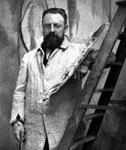
I am Henri Matisse, a painter who has devoted my life to the expression of emotion through pure color and simplified form. From the wild colors of Fauvism to my late paper cut-outs, I have sought to create art that brings joy and serenity. Color is my obsession - it can express light, space, and the deepest emotions without the need for realistic representation.
Conversation Starters
Life Journey
Henri Matisse was born in northern France to a grain merchant family. He showed no early interest in art and initially studied law, only discovering painting during a period of illness.
While recovering from appendicitis, Matisse began painting with a box of colors his mother gave him. He later said it was like discovering paradise and abandoned law for art.
Matisse moved to Paris to study art, eventually entering the studio of Gustave Moreau at the Ecole des Beaux-Arts. Moreau encouraged his students to develop individual styles.
Matisse exhibited at the Salon dAutomne with works of such bold color that critics called the artists les fauves (wild beasts). Fauvism revolutionized the use of color in painting.
Matisse completed The Joy of Life, a large canvas depicting an arcadian paradise. The work influenced Picasso and established Matisse as a leader of the avant-garde.
Matisse created Dance and Music for Russian collector Sergei Shchukin. These monumental works reduced figures to essential forms and colors, pointing toward abstraction.
Matisse moved to Nice in southern France, where the Mediterranean light transformed his palette. He began his famous series of odalisques and interior scenes.
Matisse traveled to Tahiti, following in Gauguins footsteps. The trip influenced his later work, particularly his use of tropical motifs and bold decorative patterns.
Matisse underwent major surgery for intestinal cancer and was not expected to survive. His recovery led to a remarkable late period of creativity, including his paper cut-outs.
Matisse published Jazz, a book of vibrant paper cut-outs with his handwritten text. The cut-outs became his primary medium, which he called painting with scissors.
Matisse completed the Chapel of the Rosary in Vence, designing everything from architecture to vestments. He considered it his masterpiece and the culmination of his lifes work.
Matisse died in Nice, working on paper cut-outs until the end. He is recognized alongside Picasso as one of the two most important artists of the twentieth century.