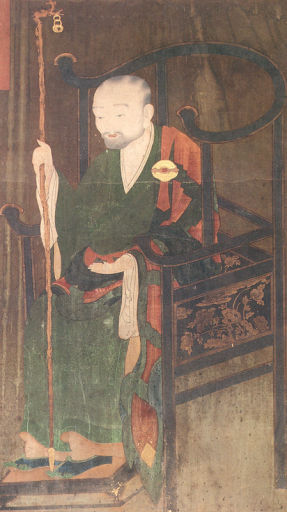
Quick Facts
Korean Seon master who revitalized monastic discipline and taught sudden awakening followed by gradual cultivation at Songgwangsa.
Conversation Starters
Life Journey
Born in the Goryeo kingdom at a time when Buddhism held strong state patronage but monastic standards varied widely. Later biographies place his origins within Korean society shaped by court politics, scholastic temples, and Seon meditation lineages.
As a young boy, he entered a monastery and began learning sutras, ritual forms, and the Vinaya-inspired ideals of monastic conduct. Early exposure to both doctrinal study and meditation communities later fueled his desire to reconcile study with Seon practice.
He received full monastic ordination and took on the responsibilities of communal discipline, chanting, and training under senior monks. The experience convinced him that genuine awakening required both inner practice and a well-ordered sangha.
Dissatisfied with mere scholastic attainment, he increasingly focused on Seon methods aimed at direct realization of mind. He sought teachers, texts, and practice settings that emphasized meditation, moral restraint, and community-based cultivation.
He pursued rigorous practice periods that combined seated meditation, scripture reading, and careful reflection on monastic governance. These years helped him articulate the problem of lax discipline and the need for a focused community dedicated to samadhi and wisdom.
Traditional accounts describe a breakthrough while studying and practicing, which he interpreted through Seon language of realizing one’s original mind. Rather than claiming practice was finished, he emphasized continued cultivation to embody insight in conduct and compassion.
He gathered monks into a reform association dedicated to balanced training in meditation (samadhi) and wisdom (prajna). The society aimed to renew Seon purity in an era of institutional complacency, using clear rules, collective practice, and shared study.
Under his guidance, members adopted structured schedules, ethical commitments, and study plans meant to stabilize awakening in daily life. This model offered an alternative to court-centered temples and became a blueprint for later Korean Seon communities.
He moved his community to a mountain monastery that became the enduring center of his reform lineage. At Songgwangsa, he strengthened training halls and institutional routines, linking intensive practice with a stable monastic economy and governance.
He articulated that awakening can be sudden, yet habits and delusions require gradual training to fully mature realization. This teaching helped bridge debates between meditation-first Seon groups and scholastic communities, shaping a distinctly Korean synthesis.
He studied influential Chinese Chan writings circulating in Goryeo, including works associated with Dahui Zonggao and the huatou-style investigation. Jinul adapted these materials to Korean conditions, emphasizing practical guidance over sectarian rivalry.
He wrote accessible manuals that explained mind cultivation, ethical discipline, and meditation strategy in clear, pastoral language. These works aimed to stabilize practitioners beyond the retreat hall and became enduring classics of Korean Buddhist literature.
He expanded the monastery’s role as a place to educate monks in meditation, precepts, and administrative competence. By mentoring leaders and standardizing routines, he helped Songgwangsa become one of Korea’s most influential Seon centers.
He argued that sutra learning and meditation were mutually reinforcing rather than opposing paths. By framing wisdom as both textual understanding and direct insight, he offered a reconciliatory program suited to Goryeo Buddhism’s diverse institutions.
In later years he focused on passing on leadership, ensuring the reform movement could outlast his own lifetime. He reinforced communal guidelines for conduct, study, and meditation periods, reducing dependence on charismatic authority alone.
He continued teaching methods for investigating a critical phrase (hwadu) while grounding practice in everyday ethical discipline. Students were urged to test insight through humility, service to the community, and vigilance against spiritual complacency.
He died after consolidating the Samadhi and Prajna Society and establishing Songgwangsa as a major Seon training center. His writings and institutional reforms shaped later Korean Buddhism, especially the Jogye tradition’s self-understanding and practice ideals.