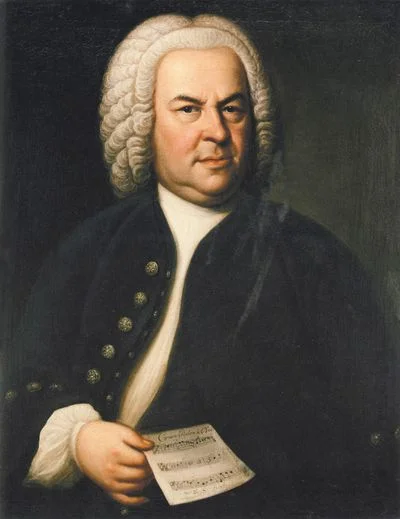
Quick Facts
Toccata and Fugue. Brandenburg Concertos. Supreme architect of Baroque music.
Conversation Starters
Life Journey
Johann Sebastian Bach was born into a musical family. His father was a court musician and taught him violin and harpsichord.
His mother Elisabeth died. Within a year, his father also passed away, leaving Bach orphaned at age 10.
Went to live with his eldest brother Johann Christoph, an organist who became his primary music teacher.
Enrolled at St. Michael's School as a choral scholar, gaining access to the school's music library and organ.
Appointed organist at the New Church in Arnstadt, beginning his professional career as a church musician.
Walked 250 miles to hear organist Dietrich Buxtehude, overstaying his leave by several months to study with the master.
Became organist at St. Blasius Church. Married his cousin Maria Barbara Bach the same year.
Appointed court organist and chamber musician to Duke Wilhelm Ernst. Composed many of his greatest organ works here.
Promoted to Konzertmeister, with duty to compose new cantatas monthly. Began his systematic cantata composition.
Became Kapellmeister to Prince Leopold. Composed Brandenburg Concertos and other secular instrumental works.
His first wife Maria Barbara died suddenly while Bach was traveling with Prince Leopold, leaving four children.
Married soprano singer Anna Magdalena Wilcke, who became his musical partner and bore him 13 more children.
Appointed Cantor of St. Thomas Church and Director of Music for Leipzig, his position for the rest of his life.
Premiered St. John Passion on Good Friday, establishing his reputation for dramatic sacred music.
Completed and premiered St. Matthew Passion, considered one of the greatest works of Western classical music.
Published Goldberg Variations, demonstrating unparalleled mastery of keyboard technique and variation form.
Visited Frederick the Great and improvised on a royal theme, later expanding it into the Musical Offering.
His eyesight deteriorated severely. Underwent two unsuccessful eye surgeries that worsened his condition.
Bach died after a stroke, leaving The Art of Fugue unfinished. He was buried in an unmarked grave at St. John's.
Mendelssohn's 1829 performance of St. Matthew Passion sparked the Bach Revival, establishing him as the supreme composer.